US wildlife managers have set aside vast areas across several states as habitat critical to the survival of a rare songbird that migrates each year from Central and South America to breeding grounds in Mexico and the United States.
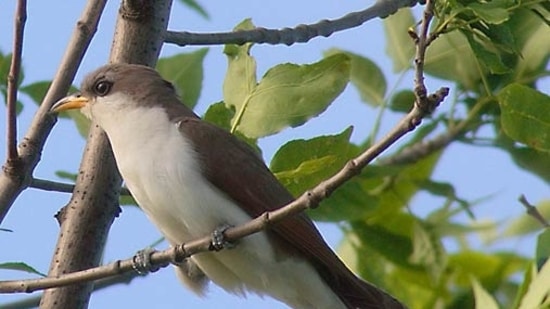
The US Fish and Wildlife Service announced the final habitat designation for the western yellow-billed cuckoo on Tuesday. It covers about 467 square miles (1,210 square kilometers) along hundreds of miles of rivers and streams in the western states.
Most breeding in the U.S. occurs in Arizona and New Mexico, but the habitat designation also includes areas in California, Colorado, Utah, Texas and Idaho.
The designation isn't as big as initially proposed. Wildlife managers opted to exclude more than 300 square miles (777 square kilometers) of potential habitat after considering updated information about ongoing conservation activities, the lack of suitable habitat in some areas and potential interference with critical infrastructure.
“This designation identifies important feeding and breeding grounds for the cuckoo to support the species’ recovery while also balancing the need in finding solutions that support current and future land-use plans,” Michael Fris, field supervisor for the Sacramento Fish and Wildlife Office, said in a statement.
Federal biologists describe the cuckoo as an elusive species. Difficult to observe, it selects its nesting spots based on habitat conditions and the availability of food. That means breeding habitat not suitable one year may become suitable the next due to increased rainfall or flooding, while favorable areas might degrade the next year.
{{/usCountry}}Federal biologists describe the cuckoo as an elusive species. Difficult to observe, it selects its nesting spots based on habitat conditions and the availability of food. That means breeding habitat not suitable one year may become suitable the next due to increased rainfall or flooding, while favorable areas might degrade the next year.
{{/usCountry}}Each spring and fall, the cuckoo uses river corridors as routes to travel between its wintering and breeding grounds. Nesting pairs find refuge in willows, cottonwoods and other trees along waterways and once their chicks hatch, their voracious appetites for insects help them fuel up for the return trip south.
Listed as threatened in 2014, biologists say the bird has seen population declines due to loss of riparian habitat and habitat fragmentation resulting from agriculture, dams and river management, erosion, overgrazing and competition from exotic plants.