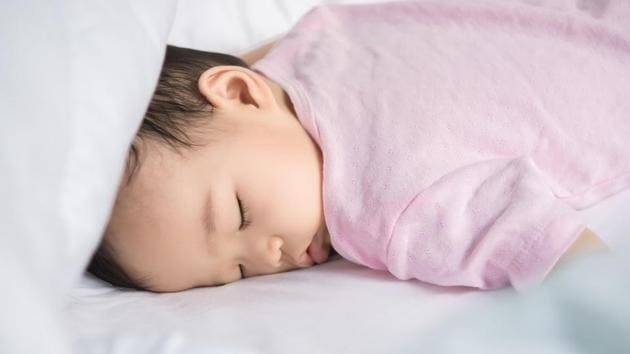
Preterm babies have more medical sleep problems such as nocturnal movement and restlessness during the night as compared to full-term babies. But they are also more likely to fall asleep independently, a new study suggests. “Preterm children needed less support to fall asleep and fell asleep more often alone in their own bed as compared to those born at full term,” said Barbara Caravale, lead author of the study and a researcher in the Department of Developmental and Social Psychology at Sapienza University in Rome, Italy.
Previous research suggested that babies’ sleep habits could make them gain weight and babies should sleep in the same room as their parents but in their own crib.
“However, preterm children showed more frequent sleep difficulties, such as restlessness and breathing problems during the night,” Caravale added. The study, published in the Journal of Clinical Sleep Medicine, involved 51 preterm children with normal cognitive, language and motor development and 57 full-term children. Their average age was 21 months. Mothers completed a series of questionnaires to assess sleep-related difficulties, sleep habits and child temperament.
The study found no differences between the two groups of children in bedtime, rise time or sleep duration. However, Caravale noted that the sleep problems reported by the parents of pre-terms may have resulted in sleep disruption, which could help explain significant differences in attention and emotionality. “Our study found that sleep problems were related to increased negative emotionality and decreased attention,” Caravale mentioned.
According to the authors, these results are consistent with previous studies demonstrating that children born preterm are at risk of attention and learning problems as well as emotional difficulties. For this reason, it is important that pediatricians screen for sleep problems more rigorously in preterm children, especially with respect to sleep-related breathing disorders such as obstructive sleep apnea and sleep-related movement disorders, researchers added.
{{/usCountry}}According to the authors, these results are consistent with previous studies demonstrating that children born preterm are at risk of attention and learning problems as well as emotional difficulties. For this reason, it is important that pediatricians screen for sleep problems more rigorously in preterm children, especially with respect to sleep-related breathing disorders such as obstructive sleep apnea and sleep-related movement disorders, researchers added.
{{/usCountry}}Follow @htlifeandstyle for more
Catch your daily dose of Fashion, Taylor Swift, Health, Festivals, Travel, Relationship, Recipe and all the other Latest Lifestyle News on Hindustan Times Website and APPs.
Catch your daily dose of Fashion, Taylor Swift, Health, Festivals, Travel, Relationship, Recipe and all the other Latest Lifestyle News on Hindustan Times Website and APPs.