Diwali has long symbolised prosperity, fresh beginnings, and financial well-being. For generations, Indian families have celebrated the festival by purchasing gold, or making significant household investments. These traditions continue to hold immense cultural and financial significance. However, as financial aspirations evolve and investment opportunities expand, investors may benefit from looking beyond conventional approaches and adopting a more diversified strategy for long-term wealth creation.
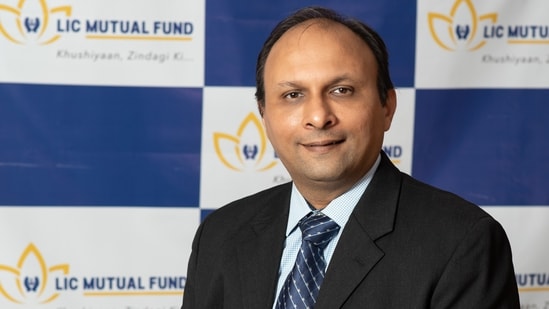
As a fund manager, I often see investors balancing tradition with modern financial planning. Traditionally, Diwali is a time where people do invest in Gold as an asset class. While gold still remains an important part of many Indian households and conventional savings instruments continue to provide comfort and stability, building long-term wealth today requires a broader perspective. Inflation, changing market dynamics, and evolving life goals mean that relying heavily on a single asset class may not always be sufficient to achieve future financial objectives.
The Evolution of Investor Behaviour
India’s investment landscape has witnessed a remarkable transformation over the past decade. Increased financial awareness, digital accessibility, and the growing availability of investment solutions have encouraged investors to explore opportunities beyond traditional savings products. One of the clearest indicators of this shift is the growing participation in mutual funds. According to AMFI, monthly SIP contributions reached ₹32,490 crore in September 2026, demonstrating continued investor confidence in disciplined, long-term investing despite market fluctuations.
That said, successful investing is not about following market trends or investing in what is currently popular. Effective wealth creation begins with understanding personal financial goals and selecting investments that align with those objectives, risk tolerance, and investment horizon.
{{/usCountry}}That said, successful investing is not about following market trends or investing in what is currently popular. Effective wealth creation begins with understanding personal financial goals and selecting investments that align with those objectives, risk tolerance, and investment horizon.
{{/usCountry}}Why Diversification Remains Essential
At the heart of prudent portfolio management lies diversification. Different asset classes respond differently to economic cycles, market movements, and interest rate changes. Concentrating investments in a single asset class can increase vulnerability to asset class-specific risks. Equities, for example, have historically offered the potential for long-term wealth creation, although they can experience periods of volatility. Debt investments may provide greater predictability of returns and income generation, while carrying interest-rate and credit-related risks. Gold, meanwhile, can serve as a useful portfolio diversifier and may provide support during periods of uncertainty, though it too is subject to price fluctuations.
From a portfolio management perspective, the objective is not to identify one winning asset class but to build a balanced allocation across multiple asset categories. A thoughtfully diversified portfolio can help manage risk while improving the potential to achieve long-term financial goals. While diversification cannot eliminate investment risk, it can reduce dependence on the performance of any single asset.
Mutual Funds as a Wealth-Creation Vehicle
For many investors, mutual funds offer an efficient way to access diversified portfolios managed by investment professionals. Depending on their goals and risk profile, investors can choose from equity, debt, or hybrid-oriented solutions. Investors with longer investment horizons may consider equity-oriented funds as part of their wealth creation journey, recognising the associated market risks. Debt-oriented funds may help address certain income or capital preservation objectives, depending on the characteristics of the underlying portfolio.
For those seeking diversification within a single investment, hybrid and multi-asset allocation funds can provide exposure across asset classes such as equities, debt, and gold. These solutions aim to deliver a more balanced investment experience while reducing the complexity of managing individual allocations independently.
Systematic Investment Plans (SIPs) continue to be one of the most effective tools for long-term wealth creation. By investing a fixed amount regularly, investors can build financial discipline, navigate market volatility more effectively, and focus on long-term outcomes rather than short-term market movements.
However, every investment decision should be guided by suitability. Investors should carefully evaluate a scheme’s investment objective, risk profile, asset allocation, and associated costs before investing.
Making Financial Planning a Diwali Tradition
Diwali presents an ideal opportunity not only to celebrate prosperity but also to reflect on financial well-being. Along with festive purchases and family celebrations, investors can use this occasion to review their financial plans and assess whether their investments remain aligned with their long-term objectives.
Life goals such as funding children's education, buying a home, creating a retirement corpus, or building generational wealth often require years of disciplined investing. Starting early, remaining invested through market cycles, and periodically reviewing asset allocation can significantly improve the likelihood of achieving these aspirations.
Importantly, embracing modern financial planning does not mean abandoning traditional preferences. Gold, fixed deposits, and other conventional savings instruments can continue to play a meaningful role within a well-structured portfolio. The key lies in maintaining the right balance between stability, liquidity, and growth.
As we celebrate Diwali and look ahead to new opportunities, investors should remember that true prosperity is not defined by the assets we accumulate, but by the quality of the financial decisions we make. A thoughtful, diversified, and disciplined investment approach can help transform festive optimism into lasting financial success.
Wishing you and your family a prosperous and financially secure Diwali.
Source: AMFI
SEBI Reg: LIC Mutual Fund | Reg No: MF/012/94/5
Disclaimer:
For preparation of this material, LIC Mutual Fund Asset Management Limited has relied on publicly available information and other information sources that are believed to be reliable and information developed in-house. Due care has been taken to ensure that the facts are accurate and opinions given are fair and reasonable. The information is meant for general reading purposes only. The views expressed herein do not constitute any recommendation on any course of action to be followed by the reader and must not be construed as an investment advice. The information in this article alone is not sufficient and should not be used for the development or implementation of an investment strategy. Any calculations made are approximations, meant as guidelines only, which you must confirm before relying on them. Past performance may or may not be sustained in the future. The recipients, before acting on any information herein should make his/her/their own analysis, interpretations and investigations. Investors are requested to consult their financial, tax and other advisors before taking any investment decision(s). Entities & their affiliates shall not be liable for any direct, indirect, special, incidental, consequential, punitive or exemplary damages, including loss of profits, arising in any way from the information contained in this material.
Mutual Fund investments are subject to market risks, read all scheme related documents carefully.
The article is written by Sumit Bhatnagar, Fund Manager – Equity, LIC Mutual Fund Asset Management Ltd.
Note to the Reader: This article is part of Hindustan Times' promotional consumer connect initiative and is independently created by the brand. Hindustan Times assumes no editorial responsibility for the content.