
 E-Paper



Fractional ownership: An accessible way to own prime commercial property
Fractional ownership can allow individual investors to invest in high-value, rent-yielding commercial properties with a small investment.

 Prefer HTon Google


Have you ever looked at a big glass-walled office building or a bustling tech park and wished you could own a piece of it? For most individual investors, the sky-high price tags of Grade-A commercial real estate have made that dream feel impossible.
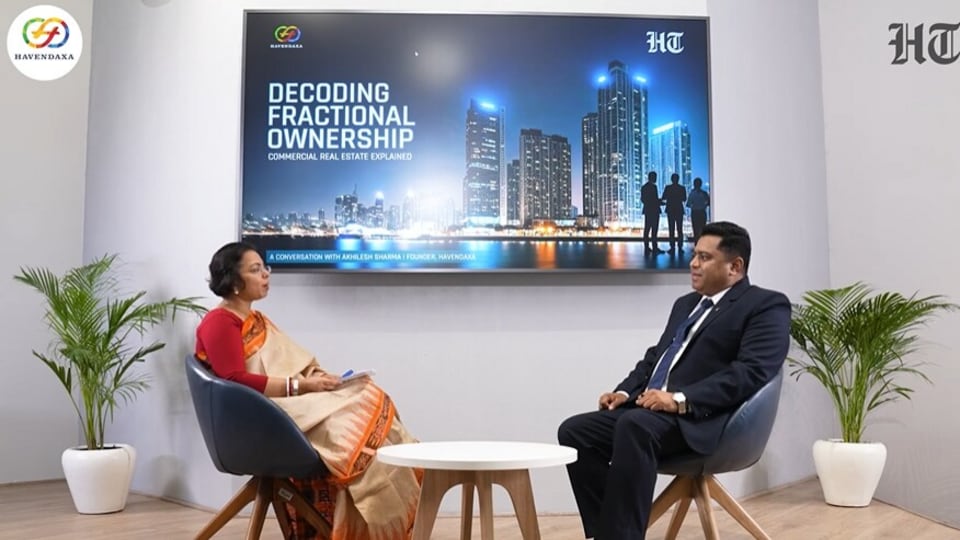
Traditionally, these high-yield assets were reserved for institutional giants or the ultra-wealthy. However, this trend is changing. Fractional ownership of commercial real estate now allows you to invest in premium, rent-yielding commercial spaces by paying just a fraction of the total property cost.
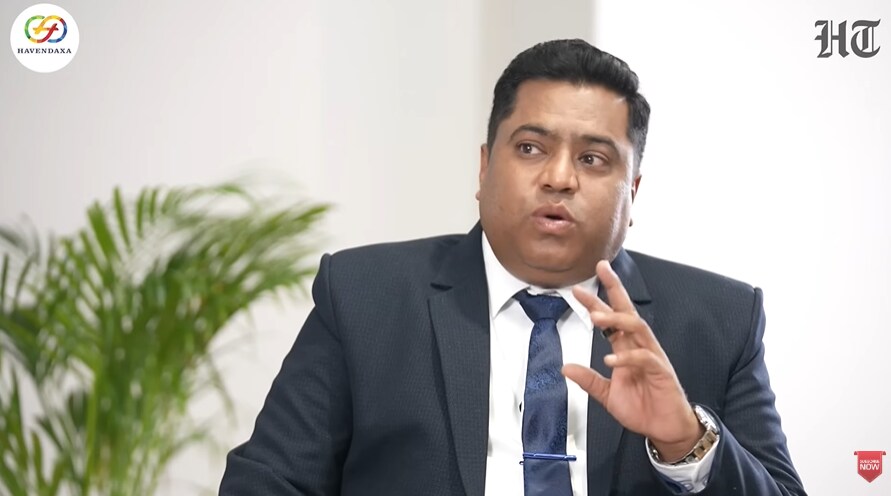
In an exclusive conversation with Hindustan Times, Akhilesh Sharma, Founder and Chief Executive Officer (CEO) of Havendaxa, explains how this model is changing the way we invest into real estate and making it a financial asset for every kind of investor.
What is Fractional Ownership?
Simply put, fractional ownership is when a group of like-minded investors pools their capital to purchase a high-value property. This can be premium office spaces or retail centres. So, instead of one investor needing a corpus of ₹50 crore, a group of investors can contribute ₹25-50 lakh each. Sharma emphasised that this isn’t about “breaking” a building into pieces, but rather about joining forces. It is about strength in numbers.
Sharma believes that it should be viewed as a “pool of investment” rather than fractional ownership because they are pooling investors to buy Grade-A assets in developed areas. This approach breaks the traditional monopoly of the developer and places the individual investor in a much stronger, more informed position.
Why should traditional investors pay attention?
If you are amongst those who have previously faced disappointments with delayed residential projects or low-yielding Fixed Deposits, fractional ownership offers a more structured alternative. According to Sharma, nearly 50-60 per cent of traditional real estate transactions in India are currently in disputes.
Fractional ownership bypasses a lot of this risk by focusing on Ready-to-Move-in (RTM) assets that are already generating income. This is not just a concept for diversification. It is a critical market need for those who have faced disappointments in real estate before. Many investors also mistake buying a small shop in a mall for a “safe” commercial bet, but the gap between Super Area and Carpet Area can eat up to 50 per cent of the total value of the asset. Fractional ownership solves this by focusing on large-scale corporate leases where terms are professional, transparent and managed by experts.
Can you build trust through transparency?
For any investor, the first concern is safety of their money. Sharma said that in this model, trust isn’t built on “blind faith” but on verifiable data. Trust is built when the thing is both visible and understandable. Before committing a single rupee, investors have the right to physically visit the property, see the daily operations, and verify all legal titles and ownership documents.
They can also inspect the specific lease agreements of existing corporate tenants and understand the asset management framework. This ensures that from day one, there is total clarity regarding where the money is going and how the returns are being generated.
Is there a way to manage the risks?
When asked if fractional ownership is risk free, he said that while no investment is 100 per cent risk-free, fractional ownership is designed to minimise exposure. The biggest risk is that of a tenant moving out. This can be mitigated by choosing the nature of tenants that the property is leased out to.
These are usually large MNCs or reputed brands that sign long-term leases and spend crores on their own office interiors. Because these companies have high fixed costs in their office setup, they rarely move out due to routine market fluctuations. Even in the worst-case scenario where a tenant leaves, the investors still own the physical land and building, meaning the asset value never hits zero. While you cannot eliminate investment risk, you can certainly minimise it before entering by choosing the right asset class.
Listing some golden rules for success
To help investors cut through marketing hype, Sharma offers a simple formula to check if a property is priced fairly. The property value should ideally be the annual rent divided by the expected ROI (yield).
In under-construction projects, developers often inflate future rent numbers to make the property seem more valuable than it is. Sharma’s advice is to always opt for developed, ready-to-move-in properties. This ensures your ROI is based on a real check arriving every month rather than a promise on a brochure. This mathematical approach removes the emotional FOMO that often leads to bad investment decisions in underdeveloped areas.
Offering a vision for the future
As we look into the future, Sharma sees fractional ownership as a way to create a balanced portfolio that stands strong even when the stock market is volatile. For Havendaxa, the vision is simple – bringing together a small group of big investors and a large group of small investors to share in India’s growth. He identifies the biggest mistakes as buying into under-construction properties and suggests that the golden rule is always to stick with developed, ready-to-move-in assets. The future of commercial real estate will be both growth-driven and income-driven, providing a stable anchor for long-term wealth.
Sharma concluded the interview with a mantra for the modern investor: “Real Estate se kam nahi, aur shares girne ka gham nahi. (It’s no less than traditional real estate, without the grief of falling shares)”.
Watch the full interview now:
Note to the Reader: This article has been produced on behalf of the brand by HT Brand Studio and does not have journalistic/ editorial involvement of Hindustan Times.


