Most student proposals that reach the India Vision Foundation (IVF) already have projects decided. A donation drive. A workshop. A fundraiser. However, a student named Meher Gupta wrote differently. She had studied the foundation's work and asked for an internship to learn from it. Her application carried a concept note for a livelihood venture for formerly incarcerated women.
IVF is founded by former IPS officer Dr. Kiran Bedi together with her parents. Today it runs 5 core programmes in 172 prisons across 16 states and 2 union territories, and has reached over 27 lakh beneficiaries.
How a concept note became Phoenix Creations
Gupta joined the foundation's headquarters in June 2025 and stayed for three weeks. She asked how permissions move through a jail administration. She asked why rehabilitation efforts tend to collapse within six months of release. She also wanted to know what field staff deal with that never reaches a report.
The foundation's team told her that its deepest reach lay with currently incarcerated persons. Gupta spent the better part of an hour asking about staffing and recidivism. She then reshaped her plan and chose to carry it out in collaboration with IVF. The result was Phoenix Creations.
The project was built around three design principles:
{{/usCountry}}The project was built around three design principles:
{{/usCountry}}● Participants' existing skills were mapped before any product was chosen.
● Crafts were picked for low equipment needs and short learning curves.
● Craft training ran alongside sessions on digital and financial literacy.
What was made, and how
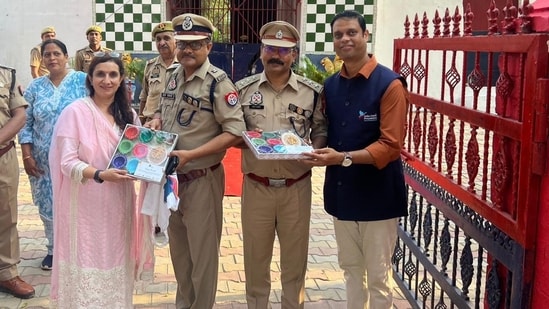
Under a formal understanding between IVF and Phoenix Creations, Gupta implemented the project at Faridabad District Jail with over 100 inmates, both men and women. The product was an earth-themed Diwali gift hamper. Its contents drew on the crafts taught, including candle making, diya (earthen lamp) making, crochet, bandhanwar (traditional door decoration) and baking.
A design partner was onboarded, and 7 structured workshops were held. About ₹2.5 lakh was raised from external sources to cover raw materials, training and participant incentives. The cohort went on to produce more than 250 curated hampers.
Gupta designed the brand identity, packaging and cards herself. She also took on quality control, procurement and production scheduling, all planned around the jail's timetable.
Learning to work inside a jail
The setting demanded patience. Noise, long waits and short-notice withdrawal of permissions were routine. Sessions were cut short more than once for reasons outside her control. Gupta had prepared
through podcasts and reading in the behavioural sciences, and she absorbed each setback without complaint.
Her conduct with participants drew the most attention. She learned their names. She asked what they wanted to make. She took instruction from women who had been crocheting for longer than she had been alive. IVF staff noticed and mentioned it to the Director without being asked.
“Meher learned every participant's name. She asked what they wanted to make before she told anyone what to produce. Inmates who have spent years being processed rather than consulted notice that difference at once, and they respond to her,” said Monica Dhawan, Director, India Vision Foundation.
Recognition beyond the jail walls
The finished hampers were distributed through IVF's network to senior government and judicial stakeholders. Work made by incarcerated hands left the jail and was received with respect by the institutions connected to it. Several participants asked whether the project would continue.
In light of her contribution to Social good, IVF has also recognised Gupta as a “Youth ambassador” in alignment with their vision of #Savethenextvictim.