The Punjab Cabinet, chaired by Chief Minister Bhagwant Singh Mann, has strongly opposed the appointment of Justice Ashwani Kumar Mishra as Chief Justice of the Punjab and Haryana High Court without awaiting the state government’s views. The Cabinet has demanded that the appointment and oath-taking be kept on hold until Punjab’s views are obtained and duly considered.
State cites procedure
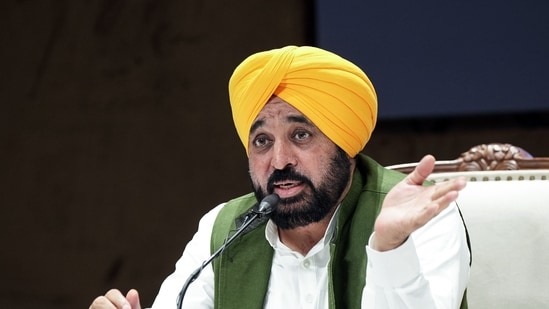
The Cabinet said the appointment bypassed Para 6 of the Memorandum of Procedure, which requires the concerned state government’s views to be obtained after the Supreme Court Collegium’s recommendation and before the proposal is submitted to the Prime Minister for presidential decision. It said the Centre notified the appointment without waiting for Punjab’s response.
The Chief Minister’s Office said the state had received a letter from Union Minister of State for Law and Justice Arjun Ram Meghwal on August 12 seeking its consent under Para 6. The Supreme Court Collegium had recommended Justice Mishra for the post on August 6.
Cabinet raises wider concerns
The Cabinet also cited other issues, including withholding of more than ₹9,000 crore in Rural Development Fund dues and a ₹1,600 crore flood relief package announced after the 2025 floods. It alleged that changes to Bhakra Beas Management Board rules had weakened Punjab’s representation.
The Cabinet further referred to the 2024 handling of Justice Gurmeet Singh Sandhawalia’s recommendation for Chief Justice of Madhya Pradesh High Court, alleging differential treatment. It said no clear time limit is prescribed for the state or Governor to send recommendations in such appointments.
{{/usCountry}}The Cabinet further referred to the 2024 handling of Justice Gurmeet Singh Sandhawalia’s recommendation for Chief Justice of Madhya Pradesh High Court, alleging differential treatment. It said no clear time limit is prescribed for the state or Governor to send recommendations in such appointments.
{{/usCountry}}The Cabinet maintained that keeping the appointment and oath-taking on hold would help ensure transparency, procedural propriety and equitable treatment within India’s federal framework for Punjab.