What is a hair follicle?
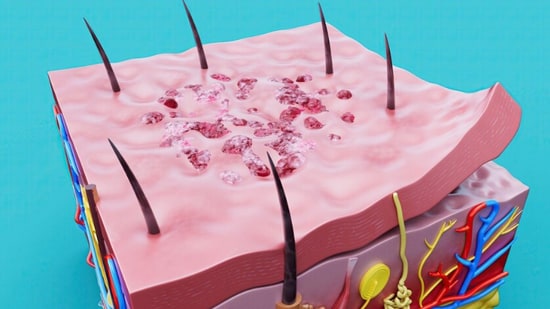
A hair follicle is a small tunnel-like structure embedded in the skin. It anchors the hair strand and houses the cells responsible for producing new hair. At the base of each follicle sits the dermal papilla — a cluster of specialised cells that communicate with the bloodstream and signal when hair should grow.
Each follicle has its own blood supply, sebaceous gland, and a small muscle called the arrector pili.. It's a functioning mini-organ, and like any organ, it needs the right inputs to perform well.
The growth cycle every follicle goes through
Hair doesn't grow continuously. Every follicle cycles through three distinct phases:
- Anagen — the active growth phase, lasting 2 to 7 years depending on genetics and health.
- Catagen — a short transitional phase, lasting about 2 to 3 weeks, where growth slows and the follicle shrinks.
- Telogen — the resting phase, lasting roughly 3 months, after which the hair sheds naturally.
At any given time, around 85 to 90 percent of your scalp hairs are in the anagen phase. When something disrupts this balance — illness, stress, hormonal shifts, nutritional gaps — more follicles get pushed into telogen prematurely. The result is what doctors call telogen effluvium, a condition where hair falls out in larger amounts than usual.
Why follicles get damaged or stop producing hair
In androgenetic alopecia, which is the most common form of hair loss in both men and women, a hormone called DHT (dihydrotestosterone) binds to receptors in genetically sensitive follicles. Over time, this causes the follicle to shrink — a process called miniaturisation. Hairs become finer and shorter with each cycle until the follicle eventually becomes dormant.
{{/usCountry}}In androgenetic alopecia, which is the most common form of hair loss in both men and women, a hormone called DHT (dihydrotestosterone) binds to receptors in genetically sensitive follicles. Over time, this causes the follicle to shrink — a process called miniaturisation. Hairs become finer and shorter with each cycle until the follicle eventually becomes dormant.
{{/usCountry}}In other conditions like alopecia areata, the immune system mistakenly attacks the follicle, interrupting growth entirely. Scalp inflammation, fungal infections, and chronic physical tension from tight hairstyles can also damage follicle structure over time.
The important distinction here is whether the follicle is dormant or permanently damaged. Dormant follicles can often be revived with the right approach. Permanently scarred follicles generally cannot.
What follicles need to function well
Follicles are sensitive to internal health. They respond to what's circulating in your blood — nutrients, hormones, oxygen, and inflammatory signals.
Some of the key things follicles depend on include:
- Adequate iron and ferritin levels, which support oxygen delivery to the follicle base.
- Proteins and amino acids, particularly keratin precursors, since hair is almost entirely made of protein.
- Zinc and biotin, which play roles in cell regeneration and follicle repair.
- A balanced hormonal environment, especially stable thyroid and androgen levels.
- Low scalp inflammation, which allows follicles to stay in their growth phase longer.
Deficiencies in any of these areas don't just cause generalised fatigue or skin issues. They directly affect how long your follicles stay in anagen, how fast they cycle, and whether the hair they produce is thick or weak.
How root cause thinking changes the approach
Most people dealing with hair loss reach for a shampoo or a supplement without understanding what's actually going wrong.
Traya have built their approach around identifying the internal causes driving hair loss, rather than offering one-size-fits-all solutions. Before anything else, taking a Traya free hair test can help identify what specifically is affecting your follicle health — whether it's hormonal, nutritional, stress-related, or a combination.
Final Thoughts
Hair follicles are far more complex than most people realise. They respond to your body's internal environment, cycle through phases on their own schedule, and can be affected by factors completely unrelated to your scalp. Understanding this doesn't just make you more informed — it makes you better equipped to take action that actually works.