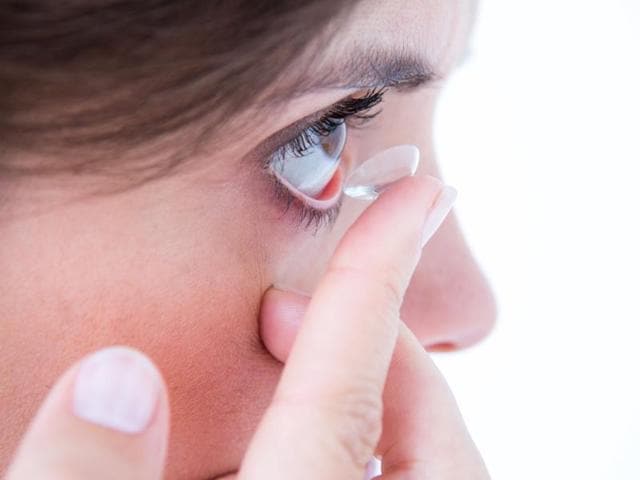
Use of contact lenses may increase the risk of infections, a new study has warned.
Researchers studied 58 adults seeking outpatient eye care and found that contact lenses make the eye microbiome more skin-like, with high proportions of skin bacteria.
“It is unclear how these changes occur, if these bacteria are transferred from the fingers to the lens and to the eye surface, or if the lenses exert selective pressures on the eye bacterial community in favour of skin bacteria,” said Maria Dominguez-Bello from New York University.
Read: Eyes wide shut: Getting more sleep may help you look more intelligent
“Wearing contact lenses has been identified as a risk factor for the development of eye infections such as giant papillary conjunctivitis and keratitis, so these questions are important,” she said.
“Our study has the potential to help future studies explore novel insights into a possible role of the microbiome in the increased risk for eye infections in contact lens wearers,” she added.
Researchers used a laboratory technique called 16s rRNA sequencing to compare the bacterial communities of the conjunctiva (the eye surface) and the skin under the eye from 58 adults.
{{/usCountry}}Researchers used a laboratory technique called 16s rRNA sequencing to compare the bacterial communities of the conjunctiva (the eye surface) and the skin under the eye from 58 adults.
{{/usCountry}}They also analysed samples from 20 of the study participants (9 lens wearers and 11 non-lens wearers) at three time points over the course of six weeks.
Looking at 250 samples in the lab (116 from cotton swabs of the conjunctiva, 114 from cotton swabs of skin under the eye, and 20 contact lenses), researchers found a higher diversity of bacteria on the ocular surface than on the skin under the eye or on the contact lenses.
Read: Don’t take snoring lightly, it could lead to cancer
Comparing the conjunctival microbiota with that in the skin under the eye, researchers found that the conjunctiva of non-contact lens wearers had a higher abundance of the bacteria Haemophilus, Neisseria, Streptococcus, Rothia, Staphylococcus and Corynebacterium and lower abundance of Pseudomonas, Acinetobacter, Sphingobium, and Methylobacterium.
There were no significant differences in bacterial diversity and composition between the conjunctiva or skin microbiota at different time points, researchers said.
The findings were published in the journal mBio.
Follow @htlifeandstyle for more.
Catch your daily dose of Fashion, Taylor Swift, Health, Festivals, Travel, Relationship, Recipe and all the other Latest Lifestyle News on Hindustan Times Website and APPs.
Catch your daily dose of Fashion, Taylor Swift, Health, Festivals, Travel, Relationship, Recipe and all the other Latest Lifestyle News on Hindustan Times Website and APPs.