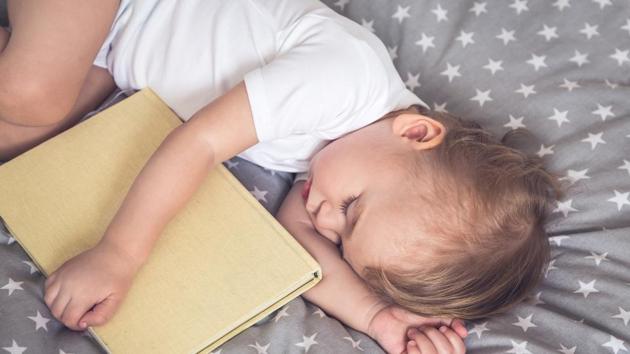
Is your three-year-old kid learning to speak new words? Let them take a nap within an hour of learning the verbs. This will help them retain their learning better.
Researchers at the University of Arizona in the US found that when tested 24 hours later, children who napped within an hour of learning the verbs performed better than those who stayed awake for at least five hours after learning. This was regardless of whether they were habitual nappers or not.
The findings, published in the journal Child Development, suggests that parents may want to consider maintaining regular naptimes for preschoolers, who are at an age at which naps have a tendency to dwindle, said lead study author Michelle Sandoval.
The team tested 39 typically developing three-year-olds and divided them into two groups—habitual nappers (those who nap four or more days a week) and non-habitual nappers (those who nap three or fewer days per week).
Within each group, children were randomly assigned to either a napping condition—in which they would nap for at least 30 minutes after learning a new verb—or a wakefulness condition, in which they would not nap after learning.
They taught the children two made-up verbs—“blicking” and “rooping”. They were also shown a video in which two different actors performed separately. Twenty-four hours later, the children were shown videos of two new actors performing the same actions that they learned on the previous day and were asked which person was “blicking” and which was “rooping.”
“Regardless of typical napping behaviour, children who were in the sleep condition—who were asked to nap after learning—were the ones who generalised, and those who stayed awake were not able to generalise 24 hours later,” Sandova explained.
{{/usCountry}}“Regardless of typical napping behaviour, children who were in the sleep condition—who were asked to nap after learning—were the ones who generalised, and those who stayed awake were not able to generalise 24 hours later,” Sandova explained.
{{/usCountry}}What’s really important about this phase is that essentially what the brain is doing is replaying memories during sleep. So those brain rhythms that occur during slow-wave sleep and other phases of non-REM sleep are actually reactivating those memories—and replaying and strengthening them,” explained study co-author Rebecca Gomez.
Follow @htlifeandstyle for more.
Catch your daily dose of Fashion, Taylor Swift, Health, Festivals, Travel, Relationship, Recipe and all the other Latest Lifestyle News on Hindustan Times Website and APPs.
Catch your daily dose of Fashion, Taylor Swift, Health, Festivals, Travel, Relationship, Recipe and all the other Latest Lifestyle News on Hindustan Times Website and APPs.