
The inclusion of carbon capture, a technology that traps carbon dioxide at factory and power-plant chimneys, in a proposed COP31 climate deal that doesn’t mention fossil fuels has become a flashpoint, which critics say would help polluters go on burning.
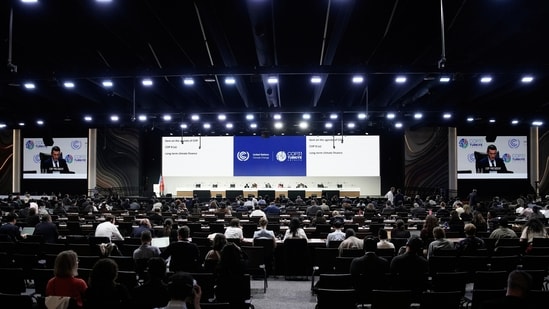
The goal of capturing 1 billion tonnes of carbon is in a text that the hosts of COP31, Türkiye and Australia, released early on Sunday after talks in Antalya went past their November 20 deadline. It is aimed at industrial polluters that cannot easily switch to renewable energy.
An earlier version of the draft, released on Thursday, had already dropped all mention of coal, oil and gas while keeping the push for carbon capture.
Critics of carbon capture point to its high cost and limited record in cutting emissions. They warn that it risks prolonging the use of fossil fuelsx.
Carbon capture is often discussed together with carbon dioxide removal, which is a different technology that draws down the gas already in the atmosphere. The capture goal is a more localised exercise than large-scale carbon removal.
CO2 removal
Carbon dioxide removal (CDR) refers to processes that take carbon dioxide already present in the atmosphere and store it for a long period.
{{/usCountry}}Carbon dioxide removal (CDR) refers to processes that take carbon dioxide already present in the atmosphere and store it for a long period.
{{/usCountry}}It is different from measures that prevent fresh emissions from entering the atmosphere. Switching from coal to renewable energy, for instance, can reduce the amount of carbon dioxide released. CDR, by contrast, is intended to remove some of the carbon dioxide that has already accumulated.
The world removes about 2.2 billion tonnes of carbon dioxide from the air each year, almost all of it through forests and soils, according to the State of Carbon Dioxide Removal, an independent scientific assessment by researchers, including from the University of Oxford. Newer methods, including machines that pull the gas from the air, account for about 0.1% of that, the assessment found.
The approaches range from nature-based methods, such as restoring forests and mangroves, to engineered systems that capture carbon directly from the air. The captured carbon may then be stored underground or locked away in other ways.
Under the 2015 Paris Agreement, countries agreed to pursue efforts to limit warming to 1.5°C above pre-industrial levels. The UN Environment Programme (UNEP) said in its Emissions Gap Report 2026, published on October 21, that the global temperature rise is now set to exceed that mark. Scientists call this overshoot, a period in which warming passes the limit before being brought back below it. UNEP said that returning to 1.5°C would need increasing levels of carbon dioxide removal through the century, alongside steep cuts in emissions.
The report modelled it on the “lowest possible” overshoot scenario, in which warming peaks at 1.7-1.8°C around the middle of the century and returns to 1.5°C or below by 2100. Even that path would require removing and permanently storing roughly 320 billion tonnes of carbon dioxide over the century, the report found.
PBL Netherlands Environmental Assessment Agency, which did the modelling for the report, put that at about eight years of the world’s carbon dioxide emissions at 2024 levels.
Also read: COP31 goes into overtime: Fossil fuel, adaptation finance impasse persists
Carbon capture
CDR removes carbon dioxide that is already in the atmosphere. Carbon capture and storage (CCS) generally captures carbon dioxide produced by an industrial facility or power plant before it is released into the atmosphere, and stores it, usually underground.
Carbon capture, utilisation and storage (CCUS) is a broader term that also includes using captured carbon dioxide in industrial products or processes. However, using carbon dioxide does not automatically mean it has been permanently removed from the atmosphere. The climate benefit depends on the source of the carbon and what happens to it afterwards.
Capturing emissions at the source can prevent some new carbon dioxide from entering the atmosphere, but only removal lowers the amount already there. The two also overlap. The State of CDR authors noted in the report's 2024 edition that some removal methods described below, including BECCS and direct air capture, would use the same pipelines and underground storage as CCS.
Ways of removing carbon
Carbon removal includes several approaches, with different levels of technological development and potential environmental impacts.
Forests and mangroves. Trees and mangroves absorb carbon dioxide as they grow and store carbon in their biomass and surrounding ecosystems. Protecting existing forests, restoring degraded land and expanding mangrove cover are among the nature-based approaches to carbon removal. However, the amount of carbon stored depends on factors such as the health and permanence of the ecosystem. Carbon stored in vegetation can also be released if forests burn or are cleared.
Direct air capture. These systems use chemical processes to extract carbon dioxide directly from ambient air. The captured gas can then be compressed and stored, including in deep geological formations, such as depleted oil and gas fields. Unlike equipment installed at a power plant or factory, direct air capture targets carbon dioxide already present in the atmosphere. The State of CDR classifies it as a “novel” method, one of the newer approaches that together make up about 0.1% of removal.
Enhanced rock weathering. Another approach involves crushing certain types of rocks and spreading the material over land. The aim is to speed up natural chemical processes through which rocks react with carbon dioxide and help lock carbon away. The State of CDR also counts it among the novel methods. Its efficacy depends on factors such as the type of rock and local conditions.
Bioenergy with carbon capture and storage (BECCS). This approach combines the use of biomass, plant material such as wood or crop waste, for energy with the capture and storage of carbon dioxide released during the process. It is considered a carbon-removal method when the biomass has absorbed carbon dioxide from the atmosphere as it grew and the resulting emissions are captured and stored.
The State of CDR found that the novel methods removed about 2 million tonnes in 2025. Two of them accounted for almost all of it: BECCS, and biochar, a charcoal made by heating plant waste with little oxygen and then burying it or mixing it into soil. By the report’s figures, direct air capture removed less than either.
Also read: Talks go into overtime as COP31 deal remains elusive
Contested technologies
One concern is whether the technologies can be expanded quickly enough to remove carbon dioxide at the scale required. The State of CDR found that national pledges fall short of pathways that limit warming to 1.5°C by 5.2 billion tonnes of carbon dioxide a year by 2050. Closing that gap, the authors said, would need removal to grow as fast as, or faster than, solar power and electric vehicles have.
The same assessment warned that the side effects of removal grow with scale, including for biodiversity and food production, and that relying on very high levels of it risks crossing sustainability thresholds.
The Center for International Environmental Law (CIEL), an environmental advocacy group, has argued that the promise of removing emissions later distracts governments and industries from phasing out fossil fuels. The COP31 presidency wrote into its drafts that removal “should complement, and not substitute for or delay, deep emission reductions”.
The deal struck at COP28 in Dubai in 2023, in which countries agreed to “transition away from fossil fuels”, had listed “abatement and removal technologies such as carbon capture and utilization and storage” among those to accelerate, though without any goal or figures. The latest COP31 text opens by recalling that Dubai deal but does not name fossil fuels, the Associated Press reported.
CIEL’s objection to carbon capture is sharper. "Carbon capture is not a climate solution; it is a lifeline for polluters,” Rachel Kennerley, a senior carbon capture campaigner at CIEL Switzerland, said in a statement on November 16.
CIEL said its analysis of the provisional COP31 participant list identified 700 lobbyists linked to the carbon capture and storage industry, higher than the 531 it counted at COP30 in Belém, Brazil, last year. Its count included some direct air capture and BECCS organisations that rely on the same underground storage.
But supporters of the technology point to heavy industries that cannot easily switch to clean power. The COP31 drafts too recognised the role of carbon capture, "particularly in hard to abate sectors", and the Intergovernmental Panel on Climate Change (IPCC), the UN's climate science body, says it is one option for reducing emissions from industries such as cement and steel, AFP has reported.
ABOUT THE AUTHOR
Prerna Madan leads the explainers and immersives team at Hindustan Times, bringing more than eight years of editorial experience across India's three largest English-language newsrooms — Hindustan Times, The Times of India and The Indian Express. Her career spans the full range of modern news journalism: digital-first production, print news desks covering metro, national, and front-page, and editorial decision-making at the planning and commissioning stage. From managing coverage of Assembly elections and the Union Budget to steering the reporting, editing and production of in-depth reporting into the Delhi-NCR’s pressing issues, Prerna has honed journalistic storytelling that spans genres, topics and formats. Running through her current work is a facility for complexity — translating consequential, difficult material in the fields of policy, science, environment and politics into rigorous, accessible journalism that sets out to answer two critical questions: why it matters, and what happens now. Prerna holds a degree in English Literature from the University of Delhi and a postgraduate diploma from the Indian Institute of Mass Communication.
Prakriti Deb is a journalist at Hindustan Times Digital, where she is part of the US Desk. She works on stories related to American politics, crime, sports, entertainment and weather. She particularly enjoys covering political developments that have global ripples. Through her work, she aims to break down complex events in a way that feels simple and understandable. Before joining the Hindustan Times, she worked with The Indian Express Digital, where she covered world affairs. She holds a postgraduate degree in Mass Communication with a specialisation in Journalism, along with a bachelor’s degree in English Literature. Outside the newsroom, Prakriti enjoys travelling and stepping out of her comfort zone. She finds her sense of being through storytelling in all its forms, including conversations, painting, theatre, dance and photography. She appreciates discussions that challenge her perspective and help her see the world a little differently.