Investors have rushed to back Nvidia’s rivals after Jensen Huang resigned as its chief executive, but the contest to be the main supplier for the AI industry involves different chips, and some of the strongest challengers are big technology companies building processors for their own data centres.
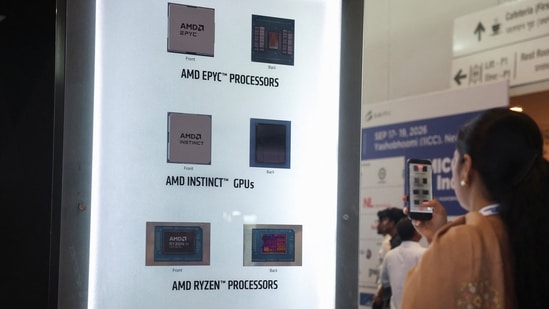
Shares of AMD and Broadcom rose in premarket trading on Thursday, Reuters reported, as investors bet the turmoil at Nvidia – after reports emerged of Huang’s affair with a woman that US officials believe was spying for China – could help them win business.
The turmoil did not end with Huang’s resignation. Later the same day that Nvidia named finance chief Colette Kress as interim chief executive, another report said Huang had a relationship with a second Nvidia employee, the third to be reported in recent days.
Analysts say competitors AMD, Google and Amazon could improve their market share as Nvidia tries to steer the company to calmer waters.
Nvidia’s chips, however, accounted for 62.5% of the AI computing power shipped by the major chipmakers between April and June, against 25.4% for Google, according to estimates by research group Epoch AI.
{{/usCountry}}Nvidia’s chips, however, accounted for 62.5% of the AI computing power shipped by the major chipmakers between April and June, against 25.4% for Google, according to estimates by research group Epoch AI.
{{/usCountry}}Also read: Nvidia without Jensen Huang, and what next for an industry that leaned on this ‘Bank of AI’?
The rivals
AMD, which like Nvidia sells graphics processing units (GPUs), is its closest rival in AI chips. AMD’s data-centre business earned a record $8.5 billion in the three months to September, up 97% from a year earlier, helped by the launch of its new MI450 series GPUs.
Nvidia’s data-centre revenue was $89 billion in the three months to July.
By computing power, Nvidia’s key challenger is Google, which designs its own tensor processing units (TPUs). Amazon makes chips called Trainium. Both companies rent their chips to other businesses through their cloud services. Anthropic, the maker of the Claude chatbot, leases TPUs and lists Trainium among the four kinds of chip it runs on.
Google works with chip design specialists. Broadcom, which makes TPUs with Google, has a growing role in custom AI chips and networking. Its AI chip revenue reached $16.7 billion in the three months to August, more than three times the figure a year earlier.
“Demand for our custom AI accelerators and networking continues to be very strong,” Broadcom chief executive Hock Tan said in its results statement. Taiwan’s MediaTek works with Google on custom chips, and smaller Taiwanese design houses such as Alchip Technologies and Global Unichip do similar work, according to Bloomberg.
Many rely on the same manufacturer. Taiwan’s TSMC, the world’s largest contract chipmaker, also makes most of Nvidia’s processors, AFP reported, and supplies its rivals too.
Nvidia’s main supplier of high-bandwidth memory (HBM), the fast memory that feeds AI chips, is SK Hynix.
South Korea’s Samsung has forged closer ties with AMD, agreeing in March to work with it on next-generation AI memory, Bloomberg reported. In the Asian country, start-ups such as FuriosaAI are also trying to chip away at Nvidia’s lead with alternative technologies.
Different technologies
Nvidia’s GPUs were first built to render graphics in video games, and remain multi-purpose chips. Their ability to perform many calculations at once made them “the oil of the AI boom”.
Custom chips are built for narrower jobs. Google says its TPUs are “custom-developed, application-specific integrated circuits (ASICs)”, chips built for a narrow set of tasks, in this case machine learning. Amazon says Trainium is “a purpose-built AI chip designed for one goal: the best economics”. Their makers pitch them on cost, but TPUs cannot replace GPUs across the board, Anna Wu, an investment strategist and founder of Floodlines Research, said, according to Bloomberg.
The chips also differ in the software developers use to program them. Nvidia says its CUDA platform is “the software layer that enables applications to harness the power of GPUs”.
AMD offers its own open software, ROCm, but says on its website that the two platforms’ tools “are not directly interchangeable”, although a tool called HIPIFY “helps translate supported CUDA code”.
Amazon says widely used AI tools such as PyTorch run on Trainium “without modification”.
Even so, moving AI work away from Nvidia is slow and costly, Wu said.
Chipmakers now also sell their processors linked together in racks and pods. AMD’s Helios system connects 72 of its GPUs, and Google’s latest widely available TPU, Ironwood, comes in pods of 9,216 chips. Amazon’s Trainium3 servers link up to 144 chips. That makes networking, the equipment that ties thousands of chips together, part of the competition, and Broadcom sells both custom chips and networking gear.
Nvidia’s lead
By Epoch AI’s estimates of computing power shipped between April and June, Nvidia had 62.5%, Google 25.4%, Amazon 4.6%, AMD 4.1% and China’s Huawei 3.2%. Nvidia’s share has been at least 58% in every quarter since the start of 2025.
Epoch, however, flags that there may be “significant uncertainty” about its data, and it counts different things for different companies, such as shipments for Nvidia and deliveries for Amazon.
Revenue figures show a different gap. Nvidia earned $89 billion from data centres in its latest quarter, against Broadcom’s $16.7 billion in AI chips and AMD’s $8.5 billion from its data-centre business, though each company’s quarter ends at a different time.
The New York Times has estimated that Nvidia makes about 90% of the chips used in big AI projects. Nvidia forecast revenue of about $108 billion for the quarter that ended in October, and will report its results on November 17.
Also read: Nvidia’s $10bn bet on Anthropic IPO, and chip guarantees behind AI borrowings
Can Huang’s exit tilt the balance?
“AI leadership could broaden, rather than the boom ending,” Charu Chanana of Saxo Markets told AFP, naming AMD, Broadcom, Alphabet and Samsung as possible gainers. Mandeep Singh, global head of technology research at Bloomberg Intelligence, said Nvidia was unlikely to be “as aggressive” as it has been in the past two to three years under the new leadership.
Others were more cautious. “Nvidia’s core asset is its advanced GPUs, which still have no real substitute in the market,” Wu told Reuters. Michael Feldman, portfolio manager at ClearBridge Investments, also said that Nvidia’s product roadmap “is largely visible for the next several years”.
Supply is another limit. “I have heard from some data-center folks that they can buy chips from other companies as long as those companies can supply them,” Joe Saluzzi, partner at Themis Trading, said, adding: “But if there’s a supply shortage, then you have a problem.”
Broadcom is also competing on finance. It has offered lenders far bigger guarantees than Nvidia on deals to finance AI chips, backing $30 billion of a $35 billion deal under which Anthropic leases TPUs, Bloomberg reported. Nvidia has said it would cover up to 25% of a deal.
In memory, new management at Nvidia could reassess its suppliers and give Samsung a chance to win more orders, Jung In Yun, chief executive of Fibonacci Asset Management Global, told Bloomberg.
Also read: The chip war behind Nvidia's Jenson Huang scandal, from Dutch machines to dummy servers
China’s separate race
Nvidia’s latest sales forecast assumes no data-centre chip revenue from China, where US export controls restrict its most advanced products. Shares of Chinese GPU makers Moore Threads, MetaX and Cambricon jumped nearly 10% on Thursday, Reuters reported.
Wu was sceptical that China could make gains. “But structurally, unless Chinese tech found a fix for advanced chips, I’d say it is difficult to penetrate Nvidia’s market share,” she said.