Tesla and SpaceX, two of Elon Musk's largest companies, are exploring a merger that would create a business worth about $3.5 trillion. The terms of any deal would decide how much Tesla shareholders are paid, how much control Musk keeps, and whether the deal can win a demanding shareholder vote.
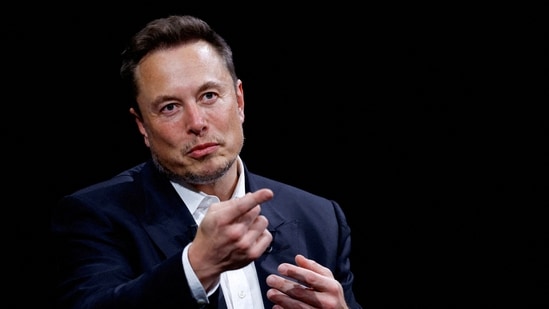
At shareholders' request, both companies have set up special committees of independent directors to examine a combination. Musk runs both companies, has called himself a "conflicted party" and is staying out of the committees' discussions. The committees have not agreed terms, and Musk has said that assuming a merger is certain would be overstating the situation.
His public backing for the idea has also worried people involved in the talks, who fear it could draw more scrutiny and cause delays, Reuters reported on October 22.
What is on the table
The companies are weighing different structures, including SpaceX buying Tesla or a merger under a newly formed holding company, a parent that would own both, Reuters reported. One option is an all-stock deal, in which Tesla shareholders would swap their shares for shares in the combined company. The talks were at an early stage, advisers were involved and no structure had been announced.
Tesla was valued at about $1.5 trillion and SpaceX at about $2 trillion. Together they were worth roughly $3.5 trillion before any premium paid to Tesla shareholders, which would make the deal one of the largest corporate transactions ever proposed.
{{/usCountry}}Tesla was valued at about $1.5 trillion and SpaceX at about $2 trillion. Together they were worth roughly $3.5 trillion before any premium paid to Tesla shareholders, which would make the deal one of the largest corporate transactions ever proposed.
{{/usCountry}}Musk has said there is "a lot of merit" in combining the companies, and has pointed to their work in AI software, chip design, robotics and satellite connectivity.
How a share swap decides who owns what
In an all-stock deal, the exchange ratio sets how many shares in the combined company each Tesla share becomes. That ratio decides how much of the merged business Tesla's investors would own, and so how much voting power Musk would keep.
On the valuations above, with no premium, Tesla shareholders would own about 43% of the combined company. A premium means offering them more than the market value of their shares. Analysts' estimates varied widely, Reuters reported on October 21. Some expected little or no premium, while analysts at RBC Capital Markets and JPMorgan expected Tesla shareholders could seek 20% to 35%. On a $1.5 trillion valuation, that range is worth $300 billion to $525 billion. A premium of that size would raise Tesla holders' share of the combined company to roughly 47% to 50%. In an all-stock deal, the premium would be paid out of SpaceX shareholders' share.
Why control matters most
A shareholder's financial stake in a company, called economic ownership, can differ from their say over decisions put to shareholders, called voting power. Musk's stakes show the gap. According to Reuters, he holds about 20% of the voting power at Tesla and about 85% at SpaceX, where he owns super-voting shares that carry more votes than ordinary shares.
Estimates cited by Reuters suggest Musk could hold about 57% to 58% of the voting power in a combined company, depending on the structure and the exchange ratio. That would give him majority control of a business that includes Tesla, where he now holds about a fifth of the votes.
Also read: Elon Musk says ‘people will find ways to be happy’ if AI makes money and work obsolete in future
The Tesla vote
Musk has said Tesla would need the support of a majority of all its shares, rather than a majority of the votes cast. Under that rule, shares that are not voted count against the deal, so the deal could fail even if most of the shareholders who vote back it. Musk has called the threshold a "quite high hurdle". SpaceX's approval depends largely on Musk, who holds the overwhelming majority of its voting power.
Because Musk is on both sides of the deal, the committees' independence matters. Reuters' October 22 report drew comparisons with Tesla's 2016 acquisition of SolarCity, a solar-energy company in which Musk also held a large stake. That deal led to years of litigation over Musk's role in a related-party transaction, meaning a deal between companies that share a controlling figure. The acquisition was eventually upheld as fair.
What a merger would combine, and what it would cost
Tesla and SpaceX already work in several of the same areas:
Tesla develops AI for self-driving cars, and SpaceX has its own AI business.
The two companies are jointly developing Terafab, a chip-manufacturing project.
Tesla is building Optimus humanoid robots and makes energy-storage products as well as cars.
SpaceX runs Starlink, its satellite broadband network.
A merger would bring this work under one corporate structure. Any savings or performance gains would depend on how the businesses were integrated, and integration would take substantial investment.
SpaceX's AI business is growing quickly. According to Reuters, the company reported third-quarter revenue of $14.58 billion, up 161% from a year earlier, of which $7.56 billion came from AI. SpaceX's capital expenditure nearly tripled to $19.6 billion in the quarter, and the company projected $35 billion to $40 billion for the fourth quarter, much of it for AI and space infrastructure. Several of the projects the combined company would carry have yet to reach commercial scale, including:
- orbital data centres (computing facilities in space)
- robotaxis (self-driving taxis)
- humanoid robots
The deal would also bring together two different sets of outside ties. SpaceX works with the US government, Nasa and intelligence agencies, while Tesla has large manufacturing and business interests in China.
Also read: The rocket science behind Tesla's flying Roadster, and the air thrusters that SpaceX helped build
What happens next
The independent committees must first decide whether they can agree terms. The companies would then need to settle a structure and an exchange ratio, address governance questions, win the Tesla vote and obtain any regulatory clearances. Until formal terms are announced, the premium, the split of voting control and the outcome of the vote remain unresolved.