A chemical that hardens gel nail polish under ultraviolet lamps has been pulled from shelves across Britain from August 15, joining a European Union ban imposed last year over concerns that it can damage male reproductive organs at high doses.
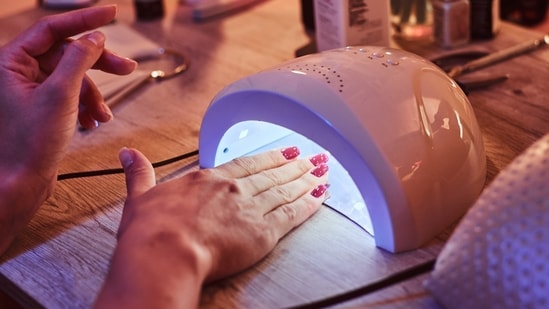
The compound, trimethylbenzoyl diphenylphosphine oxide, or TPO, is a near-universal ingredient in the UV and LED gel systems used by nail salons worldwide, including across India.
What the ban covers
The UK’s prohibition applies to the manufacture and sale of TPO-containing nail polishes. Salons have a grace window until February 14 next year to exhaust the existing stock, but cannot order fresh supplies of the chemical from August 15. The rule applies to England, Scotland and Wales; Northern Ireland already followed the EU ban.
The move follows a 2025 EU decision that swept TPO into a wider prohibition on cosmetics ingredients classified as CMR — carcinogenic, mutagenic or reprotoxic (capable of causing or spreading cancer, altering DNA, or damaging fertility and sexual health).
Once a substance is formally classified as CMR under the EU system, the bloc’s rules require it to be phased out of cosmetics from the same moment the classification takes effect, unless an explicit exemption is granted. None was sought for TPO.
What TPO actually does
{{/usCountry}}Once a substance is formally classified as CMR under the EU system, the bloc’s rules require it to be phased out of cosmetics from the same moment the classification takes effect, unless an explicit exemption is granted. None was sought for TPO.
What TPO actually does
{{/usCountry}}TPO — chemically, diphenyl (2,4,6-trimethylbenzoyl phosphine oxide) — is a photo-initiator, a compound that triggers a chemical reaction the moment it is hit with light. In gel manicures, it is the ingredient that lets liquid polish set into a hard film as soon as a customer’s hand is placed under a UV or LED lamp, according to France’s Public Service portal.
The chemical has broader industrial reach than salons. The European Chemicals Agency (ECHA) lists it in fabrics and apparel — clothing, mattresses, curtains, carpets and textile toys — in paper products including tissues, feminine hygiene items, nappies, books, magazines and wallpaper, and in plastics used for food packaging and storage, toys and mobile phones. Dentists also use it in light-cured resins and cements.
The toxicity evidence
The case against TPO is based on animal-feeding studies at high doses. According to a review by the EU’s Scientific Committee on Consumer Safety (SCCS), single-dose tests found very low acute toxicity. But when rats were fed the chemical daily for weeks at 250 to 1,000 milligrams per kilogram of body weight, they developed liver and kidney damage. Male rats also showed testicular atrophy — a finding that recurred consistently across multiple studies and became the central plank of the precautionary case. At lower repeat doses of 50 to 100 mg/kg per day, no harmful effects appeared, giving regulators a safety threshold of 100 mg/kg per day.
Genetic-damage tests came back clean. Two bacterial assays — one with and one without liver enzymes added to mimic how the human body would metabolise the compound — showed no mutation-causing activity. Hamster-cell tests found neither gene mutations nor chromosome damage, even at doses toxic enough to kill the cells. Taken together, the SCCS said, the evidence indicates TPO poses no meaningful genetic risk to humans.
Then why ban it?
Because CMR classification in the EU is triggered by hazard, not by realistic consumer exposure. The reproductive-organ damage in rats is enough for the chemical to be flagged as a reproductive toxicant, and once that classification is made, the cosmetics prohibition follows automatically.
Experts say that a typical consumer’s occasional gel manicure delivers doses far below the levels of concern. Salon workers, who handle the chemical daily, are the group that regulators have been more anxious about.
ECHA has separately flagged high potential for worker exposure from routine tasks such as roller application, brushing, non-industrial spraying, and dipping or pouring — the kinds of hands-on contact that would be typical of a professional nail technician’s day.
Where India stands
India and the US are among the countries with no similar restriction on the compound.
TPO is not named as a regulated ingredient under India's Cosmetics Rules, 2020, and does not fall within the legal-metrology framework that governs how pre-packaged goods must be labelled.
UV and LED gel systems sold in Indian salons for gel extensions and gel applications continue to use TPO, and because it is a workhorse photo-initiator rather than a proprietary formulation, it appears across brands rather than in any single signature product.
What is replacing it abroad
Brands reformulating for the EU and British markets have largely turned to a close chemical cousin, TPO-L — ethyl (2,4,6-trimethylbenzoyl) phenylphosphinate — which performs the same UV-triggered hardening job but has a toxicity profile that regulators have judged less concerning. The “TPO-free” labels appearing on gel polishes overseas since the EU ban largely refer to this switch.
Domestic Indian nail-care ranges that focus on traditional lacquers — the chip-preventive polishes that do not require a UV lamp — are outside the TPO question entirely, because they do not rely on light-activated chemistry.