The Associated Press (AP) had not called the Senate races in Alaska or Mississippi by Thursday, two days after the US midterm elections, and the counts in both states will run well into November for different reasons.
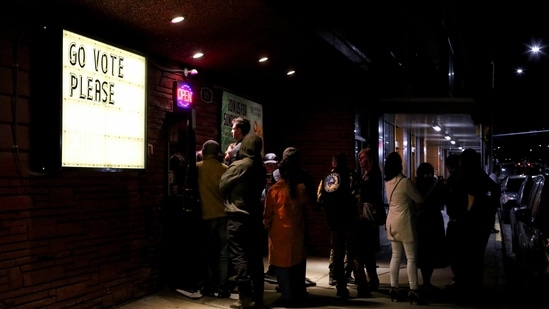
In Mississippi, election officials are still verifying and counting provisional and mail-in ballots. In Alaska, the initial count is incomplete, and a second stage of counting under the state’s ranked-choice voting system may follow.
Democrats have already won enough seats to control the Senate. The Alaska and Mississippi results will not decide which party runs the chamber, though each will change the size of the majority.
AP calls a race only when the trailing candidate has no remaining path to close the gap.
Mississippi: Provisional ballots could decide the Senate race
Democrat Scott Colom, a district attorney in north Mississippi, was leading the Republican incumbent, Senator Cindy Hyde-Smith, by 1,138 votes, according to AP’s November 5 results. With an estimated 96% of votes counted, Colom had 464,926 votes (49%) and Hyde-Smith 463,788 (48.9%).
Neither candidate has a majority as yet. Mississippi does not require one in a regular federal general election, so the candidate with the most votes will win without a runoff.
{{/usCountry}}Neither candidate has a majority as yet. Mississippi does not require one in a regular federal general election, so the candidate with the most votes will win without a runoff.
{{/usCountry}}The remaining ballots could prove decisive. AP said several thousand provisional ballots remain to be counted before the state can finalise the result. Election workers hold back a provisional ballot when a voter’s eligibility cannot be confirmed at the polling station, and count it once eligibility is verified.
Mississippi calls them affidavit ballots. According to the Mississippi secretary of state’s office, a voter who cast one for lack of acceptable photo identification can still have it counted by showing that identification at the circuit or municipal clerk’s office within five business days of Election Day. This deadline is November 10.
In a November 4 statement, Michael Watson, Mississippi’s secretary of state and its chief election official, wrote: “There are approximately 3,600 outstanding absentee-by-mail ballots that must be received within five business days and an unknown number of affidavit ballots that will be processed within the 10-day window counties have to certify their results.” Counties have until November 13 to submit certified results to the state.
Mail ballots that reach officials after election day count under a state law the US Supreme Court upheld on June 29. The Republican National Committee had argued that federal law required ballots to be received by election day, and the court ruled that it did not.
Mississippi does not hold automatic recounts. A candidate seeking one would have to obtain a court order, AP reported.
Also read: Sensex 1,600 points up; oil eases as US midterm results lift hope of Iran war's end
Alaska: Ranked-choice voting could mean another round
In Alaska, Democrat Mary Peltola, a former US representative for the state, was leading the Republican incumbent, Senator Dan Sullivan, by 626 votes with an estimated 74% of ballots counted, according to AP. Alaska accepts mailed ballots for up to 10 days after election day, and those posted from abroad for up to 15 days, provided they were sent by November 3.
Alaska also uses ranked-choice voting, under which voters rank candidates in order of preference. If no candidate wins more than 50% of first-choice votes, the candidate with the fewest votes is eliminated, and their voters’ ballots are transferred to the next candidate they ranked. The rounds continue until one candidate has a majority of the ballots still in play.
Four candidates are on the Senate ballot. Besides Peltola and the senator, they are Republican Gerald Heikes and Dan J Sullivan, a retired teacher who shares the senator’s name. AP reported that both had done little campaigning, but their voters’ second choices could decide the result if Peltola and the senator both stay below 50%.
The second Sullivan’s candidacy is also in the courts. The New York Times reported that Peltola’s campaign was involved in efforts to recruit him. Peltola has said her campaign had no involvement, and Dan J Sullivan said after entering the race in June that he had no contact with her campaign about running, according to AP.
At President Donald Trump’s urging, the US Justice Department sued to block certification of the result if the senator lost. US district judge Sharon Gleason dismissed the suit on November 1, ruling that the government had offered no workable plan to investigate ballots cast for the second Sullivan while preserving ballot secrecy. The department has said it will appeal. Alaska’s Republican governor, Mike Dunleavy, has ordered a state investigation and suggested he may not certify a Peltola victory, AP reported.
According to the Alaska Division of Elections, ranked-choice tabulation for the November 3 election is scheduled for November 18, to give eligible overseas ballots time to be received and reviewed.
The state’s race for governor could also go to a ranked-choice count. Democrat Jonathan Kreiss-Tomkins, a former member of the Alaska House of Representatives, had 49.2% of the vote with about 74% counted, according to AP. Three Republicans make up the rest of the field. Businesswoman Bernadette Wilson was second, with about 29% in the state’s early returns.
Also read: The electorate strikes back: America back to democracy and Democrats
When results are due
In Mississippi, affidavit voters have until November 10 to show identification, and counties must certify their results by November 13. Alaska must first finish its initial count and, if no candidate has a majority, run its ranked-choice tabulation on November 18. AP may call either race before those dates if the outstanding ballots can no longer change the result.