
For generations, the Indian farmer has looked to the sky before looking at the ledger. The monsoon decides when we sow, what we sow and whether the outcomes will be positive. In recent seasons, that old relationship has become harder to rely upon. El Niño years bring delayed onset, long dry spells and rain that arrives in violent bursts instead of steady showers. Planning has become guesswork, making it expensive for a farmer who has borrowed against the crop. The threat of loan repayment cycles loom large during such years.
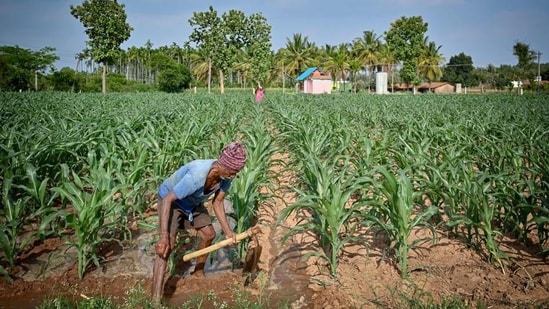
The economics have shifted too--water-hungry crops are riskier, input costs keep rising, and prices for commodity grains swing with the weather and with the market. A farmer can do everything right and still lose, because neither the rain nor the price is under his control. This is the real crisis of climate uncertainty: it is not only agronomic, it is financial and deeply human.
The answer lies not in asking farmers to bear more risk, but in building solid systems that share it. That is where specialised crop value chains matter.
A commodity crop sold in an open market leaves the farmer exposed at every step. A specialised crop, with a defined end use, works differently. When a buyer needs a specific quality, and a processor has built capacity around it, demand stops being a hope and becomes a commitment. The farmer knows who will purchase his produce, to what specification and, ideally, at what price before a single seed goes into the ground.
Popcorn maize is a good example of this in practice. It is a short-duration crop that is comparatively efficient in its water use, and it fits well into rotations in many regions, given India's climatic conditions. More importantly, it does not depend on the vagaries of an open market. Popcorn demands particular traits, such as expansion volume, kernel quality and uniformity. Those can be met only through good seed, good agronomy and disciplined post-harvest handling. Since the buyer seeks that quality, the buyer has every reason to invest in the farmer's success. R&D and science must serve the farmer, and the farmer must be connected to the market from the start.
{{/usCountry}}Popcorn maize is a good example of this in practice. It is a short-duration crop that is comparatively efficient in its water use, and it fits well into rotations in many regions, given India's climatic conditions. More importantly, it does not depend on the vagaries of an open market. Popcorn demands particular traits, such as expansion volume, kernel quality and uniformity. Those can be met only through good seed, good agronomy and disciplined post-harvest handling. Since the buyer seeks that quality, the buyer has every reason to invest in the farmer's success. R&D and science must serve the farmer, and the farmer must be connected to the market from the start.
{{/usCountry}}Value chains need fair pricing, transparent quality norms, timely payments and honest partnerships. Extension support and climate-aware advisory must be an integral part of the contract. Without trust, a value chain is only a transaction.
The direction, however, is clear. Climate uncertainty will not go away, so resilience must be built into how we organise agriculture, and not left to chance. If we can give farmers a crop that suits changing conditions, a buyer who stands behind it and a fair share of the value created, we move from dependence on the monsoon toward partnership with the market.
That is how we make Aatmanirbhar Bharat real, one farm and one season at a time.
(The views expressed are personal)
This article is authored by Pattabhi Rama Rao, agriculturist and expert on farmer livelihoods and value chains.