A promise of climate finance for 2035 does not tell a developing country what it can fund in next year’s budget. That uncertainty goes to the heart of the bargain being tested at COP31 in Antalya. Governments are expected to turn climate commitments into spending decisions. They need reasonable confidence about the support available to carry them out. Adaptation will show how much practical value the new financing arrangements offer.
The Paris Agreement connects collective climate action with differentiated responsibilities. Article 9 requires developed countries to provide financial resources for developing countries’ mitigation and adaptation, alongside a broader effort to mobilise finance. Providing public resources and mobilising private investment serve related goals but involve different responsibilities. Public contributions depend on government decisions; private investment also depends on expected returns. Implementing the agreement requires keeping that distinction visible.
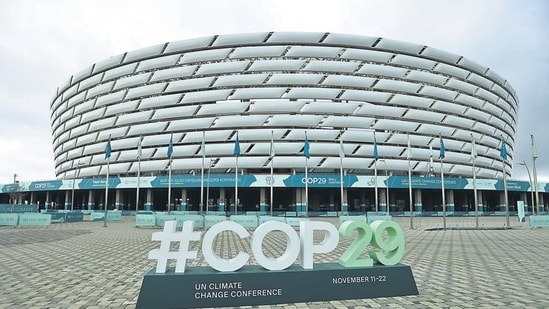
At COP29, countries adopted the New Collective Quantified Goal on climate finance, setting a target of at least $ 300 billion annually for developing countries by 2035, with developed countries taking the lead. They also called for total financing to developing countries from public and private sources to reach at least $ 1.3 trillion annually by 2035. The $ 300 billion goal itself allows multiple sources. Neither figure is a promise of government grants alone.
The danger is that rising investment is presented as evidence of shared responsibility even when governments still lack dependable support for essential adaptation. Success against a global total should therefore be examined alongside the support available for activities that protect people but cannot generate sufficient commercial revenue.
{{/usCountry}}The danger is that rising investment is presented as evidence of shared responsibility even when governments still lack dependable support for essential adaptation. Success against a global total should therefore be examined alongside the support available for activities that protect people but cannot generate sufficient commercial revenue.
{{/usCountry}}Consider the financing of a village water supply or an early-warning service. Their economic value includes losses avoided and livelihoods protected. That value does not automatically produce a stream of payments to an investor. Private capital has an essential role where viable returns exist. Governments and public institutions must finance benefits that markets cannot adequately capture, especially where the people needing protection have limited ability to pay.
The scale of this challenge is clear in UNEP’s Adaptation Gap Report 2026. International public adaptation finance to developing countries reached $ 28.2–31.7 billion in 2024. COP30 called for efforts to at least triple adaptation finance by 2035, without specifying a baseline. UNEP estimates that even tripling would cover only 20–29% of developing countries’ estimated adaptation needs after accounting for inflation. Domestic resources and other financing sources will also be necessary.
Tripling must, therefore, be treated as a step towards meeting needs. Parties need to agree on a common baseline and a credible path through the intervening years. An adaptation programme needs funding for preparation, implementation and maintenance; uncertainty at any stage can compromise the whole investment. Governments cannot plan that sequence from a distant collective endpoint alone.
COP31 has an institutional opportunity in the two-year climate finance work programme established at COP30. Its work should make contributions and delivery more predictable. Developed countries should publish financing plans for the period to 2030, identifying what they expect to provide publicly and what they aim to mobilise. Parties should require an annual assessment of how these plans add up. Shortfalls should be made public, with explanations and plans to address them.
Existing reporting can support this task. The Paris Agreement already requires developed countries to communicate forward-looking finance information every two years. Those submissions should become more useful to recipient governments by distinguishing firm commitments from projections and showing when funds are expected to be disbursed. Reporting should identify grants, concessional lending and commercial mobilisation separately. A loan’s face value alone cannot explain the support it provides or the repayment burden it creates.
Adaptation needs a clearly identified financing trajectory within this wider effort. Predictable public commitments should prioritise grants for essential services and community protection that cannot sustain repayment. Concessional loans can serve investments with appropriate revenues or fiscal returns, provided debt risks are assessed. The test is whether the financing instrument fits the activity and the recipient’s capacity to carry it.
For India, this is a concrete negotiating proposition. In its announced COP31 position, the government has called for predictable finance that is largely public and concessional, without adding to debt burdens. It has also sought the commencement of the climate finance work programme. India should use that process to press for identifiable public contributions, an explicit adaptation funding path and transparent assessment of the terms on which finance reaches developing countries.
That position would be stronger alongside a domestic commitment to show how additional support would be used. States should connect the adaptation priorities in their climate plans to costed programmes and budgets, with clear responsibilities for implementation and maintenance. In agriculture and forest-dependent regions, priorities could include drought preparedness, water security and protection of livelihoods. Local institutions need a role in deciding priorities and monitoring expenditure, supported by technical assistance. Programmes should publish allocations, disbursements and independently assessed results, so that accountability accompanies the demand for additional support.
The global climate bargain ultimately rests on whether responsibility is shared in practice. Developing countries must sustain climate action while meeting urgent development needs. Developed countries must make their financial support sufficiently dependable to expand what that action can achieve. The credibility of a promise for 2035 will be decided by the budgets it helps fund well before then.
(The views expressed are personal)
This article is authored by Sayanta Ghosh, senior associate fellow, The Energy and Resources Institute (TERI).