Somewhere in rural India right now, a solar pump has finished its morning's work. The field is irrigated. The farmer has moved on to something else. But the panel hasn't stopped, it's still catching every bit of the afternoon sun, still generating power, with nowhere in particular to send it. Multiply that single unclaimed hour across roughly 11 lakh solar pumps already installed under PM-KUSUM, and you begin to see the shape of something remarkable: A distributed power plant, larger than most conventional ones, already built and already running , except most of the people who own a piece of it don't yet think of themselves as owning a power plant at all. That's the real story hiding inside India's solar irrigation numbers. The hardware got ahead of the imagination.
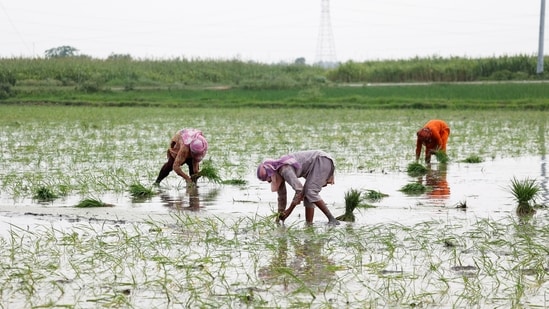
Here's what makes this worth pausing on: The upside was never a secret, it was simply mislabelled. Under PM-KUSUM's Component C, a farmer who solarises a grid pump and sends surplus power back through net metering can earn ₹5,000–15,000 a year, money that shows up whether or not that season's harvest does. Under Component A, land that has never produced a single crop dry, fallow, written off as useless can be leased for a decentralised solar plant and earn ₹60,000–1,20,000 per acre annually, for 25 years. Read that again: barren land, for a quarter of a century, paying rent. Most farmers who've adopted Component B, the standalone-pump route, know their pump as the thing that ended their dependence on diesel. Very few yet know it as the thing that could also pay them like a second, quieter harvest, one that doesn't need rain, doesn't need a season, and doesn't stop for anything except nightfall.
This is precisely the shift PM-KUSUM 2.0 is positioned to catalyse. Adoption stories rarely spread through pamphlets, they spread through the farmer down the road whose net-metering cheque became the talk of the village. That's how Component B itself scaled from a handful of installations to over a million: not through announcement, but through visible proof next door. Component A and C are standing at exactly that inflection point now early, but with every ingredient already in place for the same curve to repeat, only steeper. Layer battery storage into that picture, and the transformation compounds: the same idle afternoon hour that once produced power with nowhere to go can instead run a chiller, a sprayer, a cold-storage unit, or simply bank itself for the evening. Every additional hour of sunlight starts converting directly into either savings or income, the panel stops being a seasonal tool and starts behaving like infrastructure that never clocks off.
{{/usCountry}}This is precisely the shift PM-KUSUM 2.0 is positioned to catalyse. Adoption stories rarely spread through pamphlets, they spread through the farmer down the road whose net-metering cheque became the talk of the village. That's how Component B itself scaled from a handful of installations to over a million: not through announcement, but through visible proof next door. Component A and C are standing at exactly that inflection point now early, but with every ingredient already in place for the same curve to repeat, only steeper. Layer battery storage into that picture, and the transformation compounds: the same idle afternoon hour that once produced power with nowhere to go can instead run a chiller, a sprayer, a cold-storage unit, or simply bank itself for the evening. Every additional hour of sunlight starts converting directly into either savings or income, the panel stops being a seasonal tool and starts behaving like infrastructure that never clocks off.
{{/usCountry}}None of this scales on ambition alone, it scales on what's inside the box. India has already proven it can assemble and install solar pumps at a pace few countries have matched. The next test is subtler: building real depth in controllers, high-efficiency panels and storage systems on home soil, so that the income sitting inside Components A and C stays within reach of a two-acre farmer, not just a large landholding. Get this right, and manufacturing stops being a back-office concern and becomes the quiet decision-maker of who gets to join the energy-producer economy and how many of them there eventually are.
There's a version of this story India hasn't fully told the world yet, and BRICS's growing focus on solar PV cooperation, shared technology, manufacturing capacity, and knowledge exchange is the perfect stage for it. Plenty of countries can show off panels and megawatts. Far fewer can say they've spent years teaching over a million smallholders, across wildly different soils, climates and grid conditions, how to read their own rooftop as a revenue line. That know-how not just the hardware is what emerging economies from Africa to Southeast Asia will actually want to learn from. India's export here isn't only equipment. It's a working playbook for turning farmers into power producers at a scale nobody else has attempted.
Which brings it back to that one idle panel in the afternoon sun. Phase one of India's solar irrigation story was about proving the technology and earning trust and it worked, at a scale the world is still catching up to understand. Phase two isn't a bigger version of the same idea. It's a different question altogether: what if every farmer who already owns a solar pump started thinking of themselves, quite literally, as someone the grid pays? That's not a distant possibility, it's sitting in a scheme that already exists, waiting for enough people to notice. The sun isn't the story anymore. What farmers choose to do with the hours it gives them is.
(The views expressed are personal)
This article is authored by Vivek Gupta, managing director, Oswal Pumps.