If a banking application doesn't process payments, an online shopping site crashes during a sale, or a business application suddenly slows down, a quick answer is easy: What happened? But, the answer may take hours to find. Engineers need to review the logs and understand how the system behaves, as well as trace back recent code changes and determine which component is to blame. The process will be faster and more systematic if the system is more complex, requiring more than one assistant.
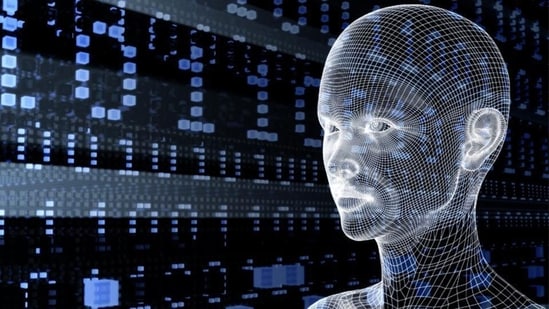
It's not about making AI take the place of software engineers. To provide them with a team of specialised AI agents to explore various aspects of a problem, share insights, and assist in pinpointing potential causes of failure.
One agent can analyse application logs, another can compare changes in the application code, and a third can analyse the performance in the database or on the network. A coordinating agent would then be able to gather these together and then present the most probable explanations to the engineering team.
It is a good solution when the application is composed of multiple systems dependent on each other, like in microservices. A failed payment might be due to an application failure, to a database timeout or to an authentication service failure, for example. Each part must be assessed separately as the whole may not be the sum of the parts.
The trend of software development with AI is already taking place. Nearly 5,000 technology professionals and over 100 hours of qualitative research in Google's 2025 DORA report linked to the uptake of AI with positive results in software delivery throughput and product performance. There were also ongoing issues with delivery stability reported, however. This means, however, that writing faster is not the only thing that matters; also, making systems reliable is crucial.
{{/usCountry}}The trend of software development with AI is already taking place. Nearly 5,000 technology professionals and over 100 hours of qualitative research in Google's 2025 DORA report linked to the uptake of AI with positive results in software delivery throughput and product performance. There were also ongoing issues with delivery stability reported, however. This means, however, that writing faster is not the only thing that matters; also, making systems reliable is crucial.
{{/usCountry}}Multi-agent debugging is also being studied. At CHI 2025, a Microsoft Research study was conducted that looked at the problems faced by developers in the debugging process for teams of AI agents. Interviews with five agent developers and a user study with 14 participants identified two issues that become challenging when trying to trace errors through long conversations: the need for tools to inspect and correct agent behaviour.
Think about an online shopper whose checkout takes longer than normal. Imagine an online retailer whose checkout process suddenly slows down. An AI agent may have a suspicion of the payment service in the first place. Digging deeper might uncover it's really a database query, which might have been added in a recent update. A different agent can then check and see if that change enhances performance and a third agent can check for similar failures in other places.
A better way would be to let AI agents collect evidence and rank the potential causes and recommend corrective measures. Engineers need to look at the evidence and give thumbs up to the major changes, particularly those affecting customer information, payments and critical infrastructure.
For organisations, the benefit of using AI to help with debugging should be evaluated by the actual results: Investigations take less time, recovery is quicker, repeated incidents are less frequent and users are not as disrupted.
To get these results, clean logs, meaningful monitoring, documentation processes, and reliable testing processes are necessary. AI may not always be able to complete the pieces of the puzzle or a poorly designed system. It is very dependent on the information and tools that it uses to make its recommendations.
Organisations should also obtain more sensitive data, control the data access of agents and monitor their activities. Automated systems must be kept within certain parameters and there must be human oversight on any decisions that could affect customer/business processes.
Rather than dealing with disorganised data, a group of AI assistants can help an engineer get an investigation started when an app is down. Specialized agents can then review logs, compare changes, conduct hypothesis testing and arrange evidence so that engineers can concentrate on diagnosis and decision making.
The technology, so far, is very good but it is not an instant answer. Based on best engineering methods, measurable data and ethical human management. In the end, the best model is not one of AI alone, but of AI agents and engineers collaborating to enhance software reliability.
(The views expressed are personal)
This article is authored by Sneha Gullapalli, principal software engineer, Dell.