The truest metric of a Viksit Bharat will be the quality of life for its varied and diverse groups and communities. Progress achieved without the involvement or by disregarding the marginalised communities only serves to perpetuate the status quo and creates uneven progress, and the inequalities that follow in its wake. This is why as India starts to pay attention to accelerate economic growth, an equal focus on social development is required in order to make India equivalent to developed nations.
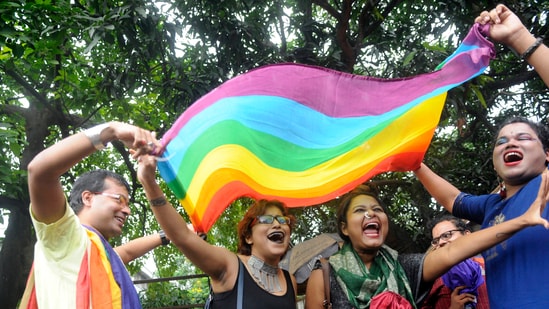
Since the Indian Supreme Court's landmark decision to decriminalise homosexuality in 2018, the trend from other institutional efforts to support the LGBTQIA+ community has been sporadic. In April last year, the government established a high-level committee for the welfare of the queer community. With all of this momentum, it is critical that both philanthropy and civil society organisations (CSOs) collaborate to create a new quality of life for queer people all over India (both urban and rural). Their new quality of life could extend beyond health care and equal opportunities, to include basic rights that all other citizens enjoy, including the right to marriage equality. A collective and well-considered effort with clear objectives must be pursued with clear timelines, to continue strengthening State commitment to implement welfare measures and accompanying protective legislations on behalf of India’s visible and invisible queer communities.
Defining the key cornerstones of progress for the LGBTQIA+ community is a first step in allowing ground-based organisations, funders and policymakers to come together and measurably accelerate action towards queer rights. Such cornerstones work as starting points for real change towards a healthy, dignified life for all queer individuals. They also serve as nudges to the government and funders to encourage greater mobilisation for queer rights, which at their core are fundamental rights, such as right to equality and freedom.
{{/usCountry}}Defining the key cornerstones of progress for the LGBTQIA+ community is a first step in allowing ground-based organisations, funders and policymakers to come together and measurably accelerate action towards queer rights. Such cornerstones work as starting points for real change towards a healthy, dignified life for all queer individuals. They also serve as nudges to the government and funders to encourage greater mobilisation for queer rights, which at their core are fundamental rights, such as right to equality and freedom.
{{/usCountry}}Firstly, LGBTQIA+ affirming basic services must be universalised by addressing the queer communities’ on-ground needs and ensuring last-mile reach. Queer-trans affirmative health care requires sensitisation of medical professionals both at a rural and urban level. Such healthcare needs to be accessible and affordable to benefit the communities it’s meant to serve, as queer people cut across all intersectionality’s of India. Government and philanthropic funders are key players in this area. Policymakers need to create governmental processes that reduce the burden on queer citizens to gain access to gender affirming documents, institutionalise sensitisation training, particularly in public-facing departments, (police, for example) and put robust anti-discriminatory systems in place. Funders, for their part, must take the lead in civil society: Supporting pilot grants, particularly for solving queer issues, incorporating sharpened inclusion lenses in traditional sectors, and investing patiently in grassroots narrative improvement towards wide behaviour change in Indian society. Additionally, medical boards and policymakers must crack down stronger on pseudo-scientific methods (such as conversion therapy) and adopt an informed approach to queer healthcare. Philanthropy can play a critical role by building collaboratives of queer leaders and medical practitioners who can offer advisory support to health care policies.
Secondly, community-led crisis response mechanisms such as shelter, legal aid, and peer networks need increased investment. Helping communities exercise their agency creates inclusive solutions and best practices for on-ground programming. This requires flexible funding for community-led crisis management infrastructure and a pool of queer-friendly legal and mental health practitioners. The government can enhance schemes like the Garima Greh shelters and embrace its ability to train queer-affirming first responders across diverse geographies.
Thirdly, supporting solutions that connect the dots between policy reform and behaviour change to enable narrative change. This requires hyperlocal approaches to reach queer people in their communities and their tongues. This is a long-term goal, but equally important. If government stakeholders promote participatory policymaking and strengthen queer representation in governance steadily, it will strengthen other interventions for queer rights. The impact that public visibility creates cannot be understated, especially for queer issues on which wide public consensus is yet to be built. This will also help battle the misconception of the LGBTQIA+ community as a monolith and create better visibility for the multitudes that exist within, highlighting diversity and different lived experiences. This is also where investors come in, as they have the power to shift from target-driven funding to patient capital for behaviour change. No-strings-attached funds from philanthropic grants are essential to create real change, which takes time and trust.
Last, but certainly not least, community-centric evidence must be generated at scale to inspire action that responds to queer lived experiences and realities. Including queer groups and communities in the upcoming census could yield valuable data on living conditions and the population size of diverse queer communities. This is essential for understanding how to enable progress. It will also help design solutions for the ‘invisible’ LGBTQIA+ individuals, particularly those from rural, / low-income, tribal and Dalit communities. The government must prioritise building gender-disaggregated data as a public resource and foster culturally sensitive research, which can facilitate key solutions for queer people. Funders, for their part, can strengthen funding for grassroots evidence-building, enhance documentation, and enable collaborative research among partners.
Achieving these four key cornerstones is the first step in what will be a longer journey to equality and inclusion. What will define progress on queer rights in India will be the diligence with which those in government, across local, states and national, address broader issues of access and sensitisation, and how much the philanthropic sector embraces the act of supporting queer communities through patient and strategic giving. Earlier this year in February 2025, we announced a small initiative called the Pride Fund. This pilot initiative was launched by Godrej Industries Group, Radhika Piramal, and the Keshav Suri Foundation to enable sustained, structured, and patient philanthropy, enabling change on-the-ground for India’s LGBTQIA+ community.
Nevertheless, this is but the first step, we will need many more initiatives such as this to support and sustain the transformative work of queer CSOs across India.
Legal reforms or fragmented initiatives alone cannot suffice to empower queer communities. While quick-and-easy wins will remain the more attractive option, it’s often the slower and steadier work that achieves a truer transformation of outcomes and public awareness. As all of India joins the race towards a Viksit Bharat by 2047, it’s time for us to work together to build an inclusive Bharat, where each citizen, invisible or not, has the right to thrive.
This article is authored by Parmesh Shahani, head, Godrej DEI Lab.