Development has no shortage of vocabulary. We speak of equity, gender, sustainability, participation, inclusion and resilience, and rightly so. But after nearly four decades of observing rural development, there is a more fundamental question beneath all of them: does development work when it encounters the complexity of real life? A village is not a controlled environment. Circumstances differ from one community to another, resources are limited, and communities have their own knowledge and ways of doing things. An intervention that looks compelling on paper can, therefore, behave very differently on the ground. The real test of development is whether it can survive contact with reality.
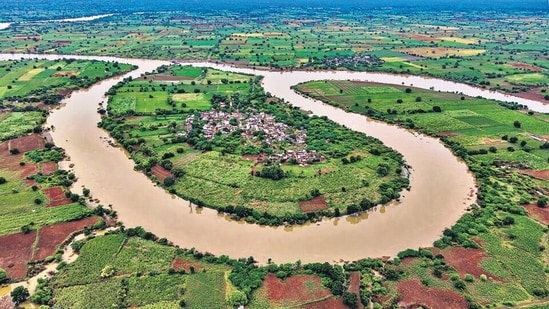
This became clear through my association with the Aga Khan Rural Support Programme (India), or AKRSP(I), which began in 1987 when I was pursuing my PhD. What stayed with me was not one particular intervention, but a way of working. In villages around Junagadh, I saw efforts to reduce well depth and prevent salinity ingress, alongside rooftop rainwater harvesting structures. Not far away, a powerful farmer was sinking a deep tubewell, creating the kind of contradiction that development theory can struggle to capture. Yet the team continued its work quietly, recognising the limits of its influence while trying to improve people's circumstances. Years later, I saw the same quiet approach in projects such as the Diversion Based Irrigation scheme and the stream-bed deepening work in Pandhana, based on the ‘Sirpur model.’ There was no grand claim around them, just work that needed to be done.
That quietness is not incidental. Perhaps the most important quality in development work is humility. I remember hearing an early instruction given to field staff: Do not preach or advise farmers. Farmers have lived on their land for generations and have probably tried many things already. First learn from them, and only then suggest what they might consider doing differently. The person who arrives with expertise may understand a technology or financial model, but the person living with the problem understands its context. Listening, therefore, is not a courtesy before the real work begins; it is part of the work itself.
{{/usCountry}}That quietness is not incidental. Perhaps the most important quality in development work is humility. I remember hearing an early instruction given to field staff: Do not preach or advise farmers. Farmers have lived on their land for generations and have probably tried many things already. First learn from them, and only then suggest what they might consider doing differently. The person who arrives with expertise may understand a technology or financial model, but the person living with the problem understands its context. Listening, therefore, is not a courtesy before the real work begins; it is part of the work itself.
{{/usCountry}}There is also a danger in searching for a single, replicable model of rural development. India's villages differ enormously in geography, water availability, social structures, livelihoods and institutional capacity. What works in one place may require considerable adaptation elsewhere. Adaptation should not be mistaken for a weakness in development; often, it is evidence that an intervention understands its context. The same principle should shape how success is measured. We rightly count households reached, assets created, farmers trained and infrastructure built, but these are only outputs. A water system that stops functioning after a few years cannot be considered successful simply because it met its implementation target. Development must ask whether the intended outcome has endured.
There is another quality that deserves attention: The willingness to let the work speak for itself. Some of the most effective interventions are practical, sometimes modest and almost invisible, but they work. AKRSP(I) reinforced this lesson through its willingness to experiment, adapt and remain focused on functionality rather than being wedded to a particular method. Some of its work in areas such as women's welfare and land rights was not necessarily the most visible part of its public identity. That says something about the difference between doing development and talking about development. Communication, measurement and accountability matter, but they should not be confused with impact.
India's rural development challenges are becoming more complex. Climate variability, water stress, changing agricultural patterns, rural livelihoods, women's economic participation and stronger local institutions will require new ideas and technologies. There is nothing wrong with that. What we should resist is the temptation to believe every new challenge requires a fashionable new framework. After decades of watching development work at close quarters, a simpler discipline seems more valuable: listen before prescribing, adapt rather than impose, measure what lasts and remain honest about what works. Development will continue to acquire new language, but beneath all the terminology, the most important question remains simple: does it work for the people it is meant to serve?
(The views expressed are personal)
This article is authored by Sanjiv Phansalkar, head, Philanthropy, Tata Trusts.