The recent controversy surrounding Nvidia, the global semiconductor giant, over the transfer of advanced AI chips to China via third parties that flout US export control regimes has sparked fresh debate on global chip geopolitics. Chip geopolitics refers to countries competing over chip production, circulation, technology, and rare earth materials. Chips have triggered intense geopolitical competition in recent years due to their critical role in Artificial Intelligence (AI) and their use in everyday electronic appliances. It is a critical resource for modern technology and a strong determinant of today's global economy. The global economy has increasingly depended on semiconductors. The AI boom requires strong computing power. Modern, advanced AI depends on critical, high-performance semiconductors, namely Graphics Processing Units (GPUs). Conventional processors are inadequate for processing large quantities of data and the complex math required. Cutting-edge chips are critical for cloud services, AI workloads, and data centres. Tech companies now invest billions to build data centres.
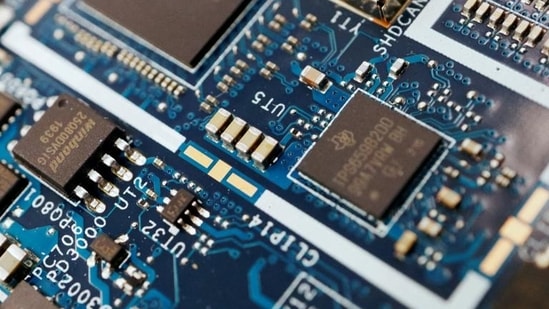
The world is turning smart. From smartphones, electric appliances, and smartwatches to industrial robots and medical equipment, semiconductors are the most critical components. A single high-tech electric vehicle requires 3000 chips for battery management, safety sensors, navigation and self-driving features. Highly advanced chips are the key to high-tech defence systems, cybersecurity, aviation and space exploration. The countries with manufacturing power gain global economic leverage. Taiwan is the world's leading chip manufacturer. The world depends on Taiwan for semiconductors. The ongoing global tensions, geopolitical churn and supply chain disruption have forced the US, China, the European Union and India to develop domestic capacity to decouple from the singular dependence on Taiwan. The weaponisation of the Strait of Hormuz in the US-Iran conflict has set a precedent for reducing dependence on a single source. The complex engineering, intensive capital investment, and intricate technology make it difficult to scale up chip manufacturing. The complex geopolitics of chip production stems from the demand-supply asymmetry. In the age of AI, semiconductors are the most vital components. Their production is capital-intensive and requires a consortium of countries. Rare earth materials are difficult to access because they are both labour- and capital-intensive. Semiconductor production is impossible without the use of rare earth.
Taiwan Semiconductor Manufacturing Company (TSMC) tops the list in chip manufacturing. Taiwan produces 90% of the world’s advanced semiconductors. The Netherlands monopolises the production of extreme ultraviolet (EUV) lithography machines. South Korea's Samsung and SK Hynix control the supply of the world's memory chips. Japan's Shin-Etsu and Sumco control the supply of high-purity silicon wafers. The US leads in chip design and electronic design automation (EDA) software, with Nvidia, Intel, and Qualcomm. The scandal surrounding Nvidia co-founder and CEO Jensen Huang and his resignation on November 12, 2026, China connection, security concerns, and chip competition signify the importance of semiconductors and the intense geopolitics surrounding them.
{{/usCountry}}Taiwan Semiconductor Manufacturing Company (TSMC) tops the list in chip manufacturing. Taiwan produces 90% of the world’s advanced semiconductors. The Netherlands monopolises the production of extreme ultraviolet (EUV) lithography machines. South Korea's Samsung and SK Hynix control the supply of the world's memory chips. Japan's Shin-Etsu and Sumco control the supply of high-purity silicon wafers. The US leads in chip design and electronic design automation (EDA) software, with Nvidia, Intel, and Qualcomm. The scandal surrounding Nvidia co-founder and CEO Jensen Huang and his resignation on November 12, 2026, China connection, security concerns, and chip competition signify the importance of semiconductors and the intense geopolitics surrounding them.
{{/usCountry}}The world's top 10 semiconductor companies are NVIDIA (US), TSMC (Taiwan), Broadcom (US), Samsung Electronics (South Korea), AMD (US), SK Hynix (South Korea), Micron Technology (US), ASML (Netherlands), Intel (US), and Applied Materials (US). The list suggests that Taiwan, the US, South Korea and the Netherlands dominate the chip market. It is no surprise that the alleged targeting of NVIDIA and the China connection reflects the chip race. Given the critical importance of chips, it is clear that one who controls the chip market controls the world. Therefore, targeting NVIDIA underscores the search for shortcuts to dominate the chip world. Since the path to global dominance is through semiconductors, the NVIDIA incident is not an isolated occurrence; many more are to follow in the time to come. The US-China competition may become more vicious in the future as both sides seek to secure dominance in semiconductor technology. The US Bureau of Industry and Security exercises export control over chips and prevents China from accessing cutting-edge AI processors and Electronic Design Automation (EDA) software. The US's CHIPS Act aims to keep advanced semiconductor manufacturing under its control. Therefore, China allegedly tried to use other means to penetrate the US chip sector. The NVIDIA incident illustrates this. China's Huawei-led AI accelerators and domestic chip firms are also competing to gain relevance in the global chip market.
Semiconductors will determine in the days to come who will run the global show in the chips business. China dominates and also controls critical minerals--silicon, gallium, germanium and rare earth elements. It builds geopolitical pressure by curbing their circulation. Since Taiwan and the US dominate advanced chip production and distribution, the US may weaponise them to compel countries to comply with its demands, as China does with critical minerals and rare earths. In the event of China’s war with Taiwan, Taiwan may weaponise semiconductors as Iran does with the Strait of Hormuz. The US’s tariff coercion is known worldwide, and it is no surprise that it may restrict chip supply. China’s debt trap model is also known worldwide. Once it acquires chip technology, as it already has access to rare earths, it may bend countries into complying with its demands. Curtailing the supply of chips and rare earths has become a new geopolitical weapon in the pursuit of world dominance. AI has revolutionised the world. To remain relevant in the age of AI, it is important to secure the chip market.
Critical chip production requires complex interdependence. No country can claim to have complete control over semiconductor production. It is a complex process that involves many countries in design and software, equipment and machinery, raw materials and chemicals, wafer fabrication, and assembly, testing, and packaging. Production of a single chip involves many countries. The US controls design and software. The Netherlands, Japan and the US dominate equipment and machinery. Taiwan and South Korea manage wafer fabrication. China, Malaysia, and Vietnam do the assembly, testing, and packaging. Therefore, semiconductor production requires complex interdependence. It is apparent that in the time of conflict, any country may weaponise this complex interdependence to paralyse chip production and the supply chain. Chip production involves multilateralism, despite the US and China trying to exert exclusive control over the chip ecosystem.
Given this interdependence, China's strategy is aggressive reverse engineering. The process involves disassembling foreign hardware and analysing design blueprints. This helps China achieve self-reliance by producing cheaper copies of expensive products and building a China-centric supply chain. Counterfeiting marks China's reverse engineering. Making cheaper variants of an expensive product helps China expand its market. Beijing extends this strategy to semiconductors, aerospace, robotics, and electric vehicles. Therefore, chip competition will intensify in the future, as global dominance hinges on chip production.
(The views expressed are personal)
This article is authored by Jajati K Pattnaik, professor and chairperson, Centre for West Asian Studies, School of International Studies, Jawaharlal Nehru University, New Delhi and Chandan Panda, professor, Central University of Karnataka, Karnataka.