Diesel diplomacy, crafted by US President Donald Trump in October 2026 against the backdrop of West Asian energy supply chain disruptions, is designed to mitigate strategic pressure on diesel prices and ward off possible ramifications of soaring diesel prices on the mid-term election. Therefore, the sanctions waiver for Russia is followed by US secretary of State Marco Rubio's visit to India from October 17 to 22 to discuss energy cooperation. US vice president JD Vance's undiplomatic language about Indian H-1B visa holders as foreign indentured servants, and other statements about India related to tariffs and the Russia-Ukraine war, are expected to be kept aside as the focus shifts to diesel diplomacy. As the old saying goes, the US's problem is the world's problem, not vice versa. The lifting of sanctions against Russia to sign an energy deal struck between Trump and Russian President Vladimir Putin for the reduction of diesel prices is ironically not feeding the Russian war machine in Ukraine.
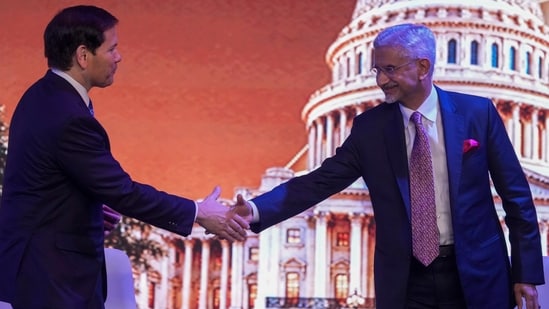
Marco Rubio's visit to India so far centres on energy cooperation, trade, investment, and the broader US–India strategic partnership. Discussions on energy cooperation assume importance given the surge in diesel prices in the US. Pumping crude is as important as refining it. India plays a crucial role in refining crude. India buys Russian crude, refines it, and exports it to destinations other than meeting its domestic requirements. Jamnagar refinery in Gujarat featured prominently in Rubio's itinerary. It is the world's largest single-site oil refinery, operated by Mukesh Ambani's Reliance Industries Limited (RIL). The Trump administration engages with Reliance to secure Reliance's investments in US refining and expand diesel exports to ease diesel prices in the US.
The retail price of diesel in the US is $6.21 to $6.32 per gallon. The price surge has reached a historic high due to complex geopolitics stemming from the US-Iran war. The surge in price has affected trucking companies, freight carriers and the agricultural sector. Transport and agriculture are two important sectors that impact the US economy. The strain on the economy will have political ramifications. The mid-term election is not far away. Trump intends to quick-fix the problem. He reaches out to Russia for crude and India for refining.
India's robust crude refining industry has been processing relatively thick Russian crude. It can ease the diesel crisis in the US by unleashing its massive oil refining capacity. By doing so, it may inject more diesel into the American markets. The main purpose of Rubio's visit is to leverage India's refining infrastructure as a cushion to address the record-high rise in domestic diesel prices quickly. India can stabilise the global energy market, especially the US market, through its refining capacity. To plug western supply deficits, India's refining complexes can play a key role, especially Reliance Industries' Jamnagar refinery. The Jamnagar refinery processes 1.4 million barrels of crude oil per day. India cuts its export duty on diesel from ₹16 to ₹8.50 per litre to ensure the availability of affordable and competitive energy in global markets. This policy shift is strategic and timely, and aims to reduce conflict-driven disruption of the diesel supply chain. Russian crude and Indian refineries play complementary roles as catalysts in easing the global diesel crisis and in American markets. Rubio's visit to India is high-stakes and underscores India's growing importance in global energy security and cooperation.
{{/usCountry}}India's robust crude refining industry has been processing relatively thick Russian crude. It can ease the diesel crisis in the US by unleashing its massive oil refining capacity. By doing so, it may inject more diesel into the American markets. The main purpose of Rubio's visit is to leverage India's refining infrastructure as a cushion to address the record-high rise in domestic diesel prices quickly. India can stabilise the global energy market, especially the US market, through its refining capacity. To plug western supply deficits, India's refining complexes can play a key role, especially Reliance Industries' Jamnagar refinery. The Jamnagar refinery processes 1.4 million barrels of crude oil per day. India cuts its export duty on diesel from ₹16 to ₹8.50 per litre to ensure the availability of affordable and competitive energy in global markets. This policy shift is strategic and timely, and aims to reduce conflict-driven disruption of the diesel supply chain. Russian crude and Indian refineries play complementary roles as catalysts in easing the global diesel crisis and in American markets. Rubio's visit to India is high-stakes and underscores India's growing importance in global energy security and cooperation.
{{/usCountry}}Trump waived sanctions on Russian oil in October 2026 to bring domestic fuel prices, economic instability and inflation under control. The US Department of the Treasury has lifted the embargo on Russian diesel exports. The waiver continues till April 2027. It offers immense benefits to India to ramp up its crude imports, refine them, and export them to Euro-American destinations. India will earn substantial foreign exchange reserves by exporting diesel to the international markets. Moreover, the American diesel crisis will provide India with an opportunity to establish its strategic diplomatic leverage, easing Trump’s punitive tariff pressure. Reliance's likely investment in US refineries, such as the Brownsville, Texas, refinery project, marks a shift in the architecture of India-US trade negotiations, despite the occasional ranting against India that Washington, D.C., engages in. Despite all unwarranted drama, India deepens its economic ties.
Assessing India's current standing, it ranks second globally as a seaborne diesel exporter. This establishes India's global standing and its irreversible position as an indispensable international energy hub. India's market share of global diesel shipments is roughly 10%. It may go up as western economies depend on Indian fuel exports. India’s crude refining capacity is nearly 5.4 million barrels per day. It not only ensures domestic energy security but also guarantees the export of fuel to stabilise the global energy crisis. The sanction waiver on the import of Russian crude and export of high-quality diesel from India's refineries presents a unique opportunity for India to strengthen its economic, strategic and diplomatic leverage. Therefore, the diesel crisis has created a situation that is akin to a rush for black gold. Here, India is well-positioned to rescue the US and the global market from a deepening crisis by exporting diesel at competitive prices. The Russian crude and Indian refineries emerge as catalysts in stabilising the global diesel crisis.
(The views expressed are personal)
This article is authored by Jajati K Pattnaik, professor and chairperson, Centre for West Asian Studies, School of International Studies, Jawaharlal Nehru University, New Delhi and Chandan Panda, professor, Central University of Karnataka, Karnataka.