The Shanghai Cooperation Organisation’s (SCO) 26th summit in Bishkek on September 1, 2026, came at an important moment for Eurasia. The organisation, marking its 25th anniversary, now brings together 10 member-States including India, China, Russia, Iran, Pakistan and the Central Asian republics and represents more than 40 per cent of the world’s population and roughly a quarter of global GDP. The Bishkek Declaration is, therefore, more than another diplomatic communiqué. It is an attempt to define what the SCO should become in its next 25 years: A platform for security cooperation, connectivity, economic coordination and a more multipolar international order. Yet its real significance will depend not on the breadth of its language, but on whether its members can translate consensus into implementation.
The declaration’s strongest message concerns security. SCO leaders rejected what they described as “double standards” in combating terrorism and reaffirmed opposition to terrorism in all its forms, including cross-border terrorism. For India, this language carries particular significance. New Delhi has consistently argued that terrorism cannot be selectively condemned depending on the identity or geopolitical usefulness of the perpetrators. The declaration’s emphasis on dismantling terrorist ecosystems and preventing the political exploitation of extremist organisations, therefore, broadly reinforces India’s long-standing position. The summit also produced institutional mechanisms intended to make security cooperation more practical. Among the decisions was the establishment of a Universal Centre for Countering Security Challenges and Threats, alongside strengthened cooperation against narcotics and synthetic drugs. The member-States also adopted programmes extending cooperation on drug addiction and synthetic drugs until 2030.
This is important because the security environment surrounding the SCO has become considerably more complex. Terrorism, radicalisation, organised crime, narcotics trafficking, cyber threats and instability in Afghanistan increasingly overlap. The SCO's original security mandate, therefore, remains relevant, but it must evolve beyond traditional counter-terrorism declarations towards intelligence-sharing, financial tracking, border management and coordinated law enforcement. The declaration is equally significant for what it says about the international order. The SCO reiterated support for multilateralism, sovereignty, non-interference and a more representative and multipolar world. This reflects a broader geopolitical transformation in which emerging powers are demanding greater influence over the rules and institutions of global governance. The organisation's foreign ministers had already described 2026 as a period of strengthening Global South influence and new economic and political centres.
{{/usCountry}}This is important because the security environment surrounding the SCO has become considerably more complex. Terrorism, radicalisation, organised crime, narcotics trafficking, cyber threats and instability in Afghanistan increasingly overlap. The SCO's original security mandate, therefore, remains relevant, but it must evolve beyond traditional counter-terrorism declarations towards intelligence-sharing, financial tracking, border management and coordinated law enforcement. The declaration is equally significant for what it says about the international order. The SCO reiterated support for multilateralism, sovereignty, non-interference and a more representative and multipolar world. This reflects a broader geopolitical transformation in which emerging powers are demanding greater influence over the rules and institutions of global governance. The organisation's foreign ministers had already described 2026 as a period of strengthening Global South influence and new economic and political centres.
{{/usCountry}}Yet the SCO must be careful. Multipolarity should not become merely another vocabulary for bloc politics. The Bishkek Declaration itself stresses that the SCO is not a military-political bloc and is not directed against other States or organisations. This distinction matters. The organisation includes countries with sharply divergent interests, making it unlikely to evolve into a NATO-style alliance. Its strength lies precisely in its ability to provide a diplomatic space where competing powers can engage without requiring ideological alignment. The issue of connectivity illustrates both the promise and the contradiction.
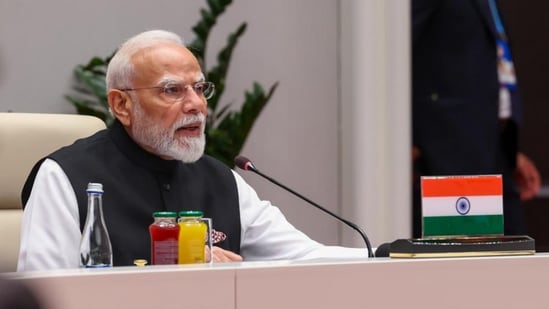
For India, Eurasian connectivity is strategically indispensable. Central Asia offers access to energy, minerals, markets and geopolitical space, but India's physical access remains constrained by geography and its difficult relationship with Pakistan. New Delhi, therefore, supports connectivity initiatives while insisting that they respect national sovereignty and territorial integrity. Prime Minister Narendra Modi reiterated this principle at Bishkek, linking India's SCO vision to Security, Connectivity and Opportunity. This is where the SCO's ambitions will face their hardest test. China possesses enormous economic influence across Eurasia, while Russia retains deep strategic and historical ties with Central Asia. India, meanwhile, has sought to deepen its engagement through projects such as the International North-South Transport Corridor and its partnership with Iran's Chabahar port. The SCO can facilitate dialogue on transport corridors, customs, logistics and energy, but it cannot automatically resolve the political disputes that obstruct connectivity.
The Bishkek summit nevertheless produced an encouraging expansion of the SCO's agenda. Alongside the declaration, more than 20 decisions and statements and four memoranda of understanding covered areas ranging from climate change and nuclear safety to energy conservation, technology and drug control. One of the more consequential developments for India is the incorporation of several Indian-led initiatives into the SCO framework. These include the SCO Young Scientist Forum, Young Author's Conclave and Civilisation Dialogue Forum. The inclusion of English as an official language through an amendment to the SCO Charter is also symbolically important. It could make the organisation more accessible to a wider international audience and improve institutional communication, although the charter amendment must follow the relevant ratification process before it takes effect.
The declaration's treatment of the West Asian crisis also reveals the SCO's growing geopolitical reach. Its condemnation of military attacks on Iran and emphasis on diplomatic solutions demonstrate that the organisation increasingly sees developments beyond its traditional Eurasian security theatre as relevant to its members. This is understandable: Conflict in West Asia affects energy prices, maritime routes, trade and global supply chains. For India, whose energy security and diaspora interests are deeply connected to the region, instability around the Persian Gulf and Strait of Hormuz has direct economic consequences. But here lies the SCO's fundamental dilemma. Its members are far from united on major international questions. India and China remain locked in strategic competition; India and Pakistan have a deeply adversarial relationship; Russia's confrontation with the West continues; and Iran's relations with western powers remain highly contentious. Consensus documents can therefore sometimes represent the lowest common denominator rather than genuine strategic convergence.
The real test begins after Bishkek. Pakistan is set to assume the SCO presidency for 2026-27, creating an additional challenge for India. New Delhi will have to balance participation in an institution where Islamabad has considerable influence with its broader strategic interests in Central Asia and beyond. India should, therefore, approach the SCO neither as an anti-western bloc nor as an organisation dominated by China and Russia. It should use the platform pragmatically—to expand Central Asian partnerships, strengthen counter-terrorism cooperation, advance sovereign connectivity, promote technology and innovation, and maintain channels of dialogue with competing powers.
The Bishkek Declaration gives the SCO an ambitious vocabulary for its next quarter-century. But declarations do not build corridors, defeat terrorism or create prosperity. The SCO's credibility will ultimately depend on whether its members can convert diplomatic consensus into institutions, infrastructure and measurable cooperation. Bishkek has provided the roadmap. The difficult journey starts now.
(The views expressed are personal)
This article is authored by Monalisa Deka, assistant professor, Department of Public Administration, Assam Don Bosco University.