Among the roughly 300,000 Indians living and studying in Germany, a good number have watched the recent political turmoil with a curious detachment, as though it were happening to someone else's country and someone else's community. That detachment is the real subject of this piece, more than the election results themselves. Germany went to the polls twice on Sunday, and came back with two outcomes that pull in opposite directions without cancelling each other out. In Berlin, the far-Left Die Linke topped the vote with roughly a quarter of the ballot, pushing Chancellor Friedrich Merz's Christian Democrats into second place and the far-Right Alternative for Germany into third. In Mecklenburg-Western Pomerania, the AfD won outright, overtaking a Social Democratic Party that had governed the state for decades. It came two weeks after the AfD's best state result anywhere, 44.5% in Saxony-Anhalt, just short of a majority. Read together, Sunday did not announce a shift in German politics. It confirmed one already under way. A party parts of which Germany's own domestic intelligence agency classify as extremist is now the leading force across the former East, and it is building toward national power in 2029.
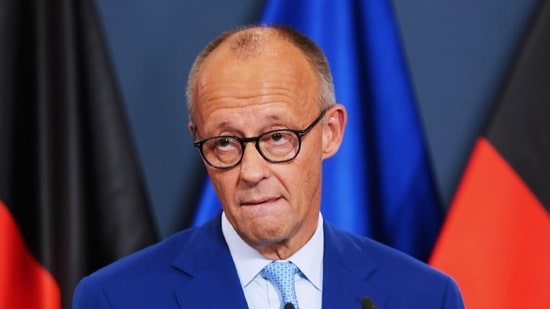
Merz called the Mecklenburg-Western Pomerania result a "disaster," an accurate word from a chancellor 16 months into office whose approval has fallen to around 14%. The AfD's co-leader used the moment to demand his resignation. But the more durable story here is not Mr. Merz's troubles. It is the slow collapse of the so-called firewall, the understanding among Germany's mainstream parties that none of them will govern with the AfD. That understanding has held at the federal level, but only just, and conventions of this kind do not survive on their own strength. They survive as long as enough people keep choosing to honour them. Every state election in which the AfD's vote share climbs makes it a little easier, inside the CDU and outside it, to treat the firewall as an obstacle rather than a principle.
This is where India's stake in the story begins. Indians are now one of the largest immigrant communities in Germany, drawn in on skilled-worker and student visas because German industry and German universities need them. Many of them, as recent reporting on the diaspora has pointed out, come from Hindu and dominant-caste backgrounds, and they bring with them an instinct familiar from home: A party organised around hostility to Islam is a problem for Muslims, not for them.
{{/usCountry}}This is where India's stake in the story begins. Indians are now one of the largest immigrant communities in Germany, drawn in on skilled-worker and student visas because German industry and German universities need them. Many of them, as recent reporting on the diaspora has pointed out, come from Hindu and dominant-caste backgrounds, and they bring with them an instinct familiar from home: A party organised around hostility to Islam is a problem for Muslims, not for them.
{{/usCountry}}The AfD’s politics are not a single-issue campaign against one religion. They rest on a claim about who counts as authentically German, by blood, culture and history, and who does not, and that line has never run cleanly along the edge of any one faith. The party's intellectual roots reach back to the race science of interwar Europe, doctrines that ranked Indians, upper castes included, below Europeans. A Hindu engineer in Dresden and a Syrian asylum seeker sit on the same side of that ledger, whatever either one believes about the other. Being seen as the acceptable kind of foreigner is not protection. It is a debt someone else will eventually be asked to collect. There is a plainer argument too, one that needs no history lesson. Immigration policy does not stay divided into good migrants and bad migrants once a party built on restricting immigration takes power. It tightens the system as a whole, visa categories, family reunification, the path to permanent residency, the very routes Indian students are counting on to build a life in Germany. Feeling exempt from that today is not the same as being exempt from it later. It only means the reckoning has not arrived yet.
None of this makes the diaspora a single mind with a single instinct. Indian students in Berlin have marched for pro-democracy movements back home, and some have stood with anti-racist causes in their adopted city as readily as their German classmates. That instinct toward solidarity is real. It simply competes, in the same hostels and the same WhatsApp groups, with a majoritarian reflex carried over intact from Indian politics, where drawing a line between "us" and a threatening minority is second nature.
Germany's firewall is cracking because enough voters decided the AfD's targets were an acceptable price. Indian migrants who think Islamophobia is someone else's fight are not watching from the sidelines. They are, whether they say so or not, part of what is making this possible.
(The views expressed are personal)
This article is authored by Amit Kumar Sharma, doctoral candidate, Centre of German Studies, Jawaharlal Nehru University, New Delhi.