
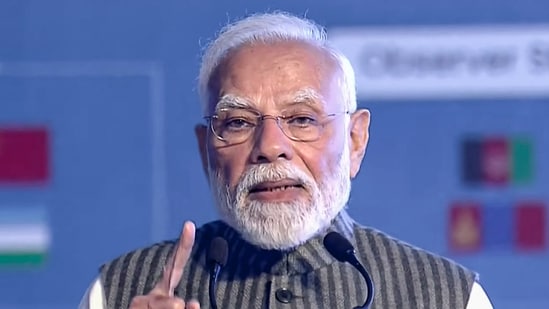
The first Shanghai Cooperation Organisation (SCO) Civilisational Dialogue Forum, held in New Delhi from 20 to 22 November 2026 at the historic Purana Qila, marks more than a cultural event. Proposed by Prime Minister (PM) Narendra Modi at the 2025 SCO Summit in Tianjin and welcomed in the Bishkek Declaration, the three-day gathering of scholars, ministers, artists, and experts from member states, observers, and partners signals India’s deliberate return to the role of civilisational leader in Eurasia. Inaugurated by the PM, the forum focused on shared heritage in art, architecture, literature, music, manuscripts, and philosophical traditions under the overarching spirit of Vasudhaiva Kutumbakam. Its quiet but profound significance lies in how it re-centres the narrative of Eurasian connectivity around India’s deep, continuous historical relationships with the region. This relationship long predates and transcends the Silk Road story often promoted as a primarily Chinese construct.
Pakistan’s participation in this forum underscores the forum’s practical diplomacy. Despite strained bilateral relations, Islamabad sent federal minister for climate change and environmental coordination, Musadik Masood Malik, to lead its delegation. This marked a rare high-level Pakistani presence in Delhi. Central Asian SCO members; Kazakhstan, Tajikistan, and Uzbekistan were present alongside China, Iran, Belarus, and others. Their attendance was not merely protocol. These societies, today Muslim majorities, maintained centuries of intense contact with the Indian subcontinent well before the later medieval trade routes that China has sought to brand and dominate in contemporary discourse.
The historical record is unambiguous. Long before the popular image of caravans linking Chang’an to the Mediterranean, Indian ideas, goods, languages, and religious traditions flowed northward through the Hindu Kush, the Pamirs, and the steppes. Buddhist missionaries from the Gangetic plains and later from Kashmir and Gandhara carried ideas, Philosophies into Central Asia from the time of Ashoka and especially under the Kushans. The great centres of Balkh, Termez, and the Tarim Basin oasis cities absorbed Indian philosophy, art, and scripts. Indian mathematics, astronomy, and medicine travelled with traders and monks. These exchanges were not one-way. Central Asian horses, gold, and artistic motifs reached India; Sogdian merchants became vital intermediaries; and the Kushan empire itself fused Indian, Iranian, and steppe elements while ruling from a power base that straddled both regions.
Even after the rise of Islam in Central Asia, the contact never ceased. Sufi orders carried spiritual idioms that resonated with Indian bhakti traditions. Persianate culture, already deeply shaped by Indian influences in earlier centuries, continued to mediate elite exchanges. Indian textiles, spices, and intellectual traditions remained prized. The Mughal empire’s Central Asian origins only reinforced these older patterns rather than inventing them. Cities that are today in Uzbekistan, Tajikistan, and Kazakhstan were nodes in networks that treated the Indian subcontinent as a civilisational pole, not a peripheral market at the end of a Chinese-dominated road. The Silk Road narrative, while capturing real commercial activity in later centuries, risks flattening this richer, older, multi-directional history into a linear east-west corridor with China at its conceptual centre. India’s hosting of the SCO forum quietly corrects the imbalance by placing shared civilisational memory, rather than any single national brand, at the centre of discussion.
{{/usCountry}}Even after the rise of Islam in Central Asia, the contact never ceased. Sufi orders carried spiritual idioms that resonated with Indian bhakti traditions. Persianate culture, already deeply shaped by Indian influences in earlier centuries, continued to mediate elite exchanges. Indian textiles, spices, and intellectual traditions remained prized. The Mughal empire’s Central Asian origins only reinforced these older patterns rather than inventing them. Cities that are today in Uzbekistan, Tajikistan, and Kazakhstan were nodes in networks that treated the Indian subcontinent as a civilisational pole, not a peripheral market at the end of a Chinese-dominated road. The Silk Road narrative, while capturing real commercial activity in later centuries, risks flattening this richer, older, multi-directional history into a linear east-west corridor with China at its conceptual centre. India’s hosting of the SCO forum quietly corrects the imbalance by placing shared civilisational memory, rather than any single national brand, at the centre of discussion.
{{/usCountry}}By inviting all SCO members, including Pakistan and by staging the event at Purana Qila, a site layered with millennia of continuous habitation and successive cultural overlays, India demonstrated both confidence and inclusivity. The forum’s thematic sessions on performing arts, textiles, cuisine, architecture, manuscripts, and monastic and philosophical trails allowed participants to rediscover common vocabularies. For Central Asian nations navigating their post-Soviet identities and seeking diversified partnerships, engagement with India’s living civilisational continuity offers a counterweight to any single dominant influence. For Pakistan, participation, however limited by current tensions, acknowledges a shared civilisational substratum that political partitions cannot erase. Culture minister Gajendra Singh Shekhawat’s public remarks about the deep civilisational commonality between India and Pakistan reflected this underlying reality.
This initiative is not just nostalgic revivalism but is a strategic civilisational statecraft suited to the 21st century. In an SCO that has expanded and matured, soft power rooted in authentic historical depth carries weight. While security and economic cooperation remain core SCO pillars, cultural dialogue builds the societal trust necessary for durable partnerships. India’s proposal and successful hosting assert that Eurasia’s civilisational map is plural. Indian traditions of pluralism, philosophical inquiry, and adaptive cultural synthesis provide a natural platform for such dialogue; one that does not require subordination to any single narrative of connectivity.
The forum also arrives at a moment when global conversations are dominated by conflict and fragmentation. PM Modi’s emphasis that cultural connection is the strongest guarantee of peace frames the event as more than regional networking. It positions India as a convener capable of elevating discourse beyond immediate geopolitics. The presence of delegates from beyond core SCO members further expands the circle of civilisational conversation.
One may also dismiss cultural forums as symbolic, yet symbols shape identity and ambition. By reclaiming the space of civilisational dialogue, India reminds its partners—and itself—that its historical role was never confined to the subcontinent. The constant, centuries-long contact with the lands that are now Central Asia, and the shared substratum with the territory of modern Pakistan, form a reservoir of mutual recognition that pure commercial or strategic logic cannot manufacture. China’s Silk Road framing has utility for infrastructure and soft-power projection; it should not monopolise the historical imagination of the region.
The first SCO Civilisational Dialogue Forum is, therefore, an early chapter in a longer story. India has taken the initiative to host, set the intellectual agenda, and demonstrate openness even toward difficult neighbours. If sustained through follow-up exchanges, joint research on manuscripts and archaeological sites, youth and artistic collaborations, and honest scholarly conversation about pre-modern networks, this platform can gradually rebalance how Eurasia understands its own past. In doing so, India does not merely participate in the SCO; it helps define the civilizational terms on which the organisation’s people-to-people dimension will rest. That is the quiet assertion of leadership the forum represents—rooted not in dominance, but in the recovery of a deeper, older, and more inclusive historical truth.
(The views expressed are personal)
This article is authored by Pravesh Kumar Gupta, associate fellow, Vivekananda International Foundation, New Delhi.