The Shanghai Cooperation Organization SCO celebrates its 25th anniversary with the forthcoming summit in Bishkek, the capital of Kyrgyzstan. It will be held on August 31–September 1. Prime Minister (PM) Narendra Modi will represent India. Prior to that, he will undertake a bilateral visit to Uzbekistan on August 29–30.
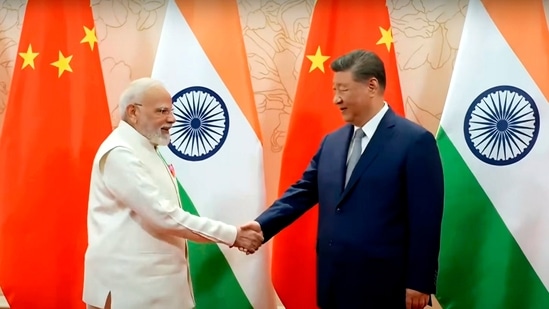
Among the key plurilateral groupings, India has shown consistent interest in the SCO, although to a lesser degree than its engagement with G20 or BRICS. After all, India is not a founding member of the SCO; it joined it as an observer in 2005 and became a full member in 2017. But given Central Asia's proximity, its deep historical and cultural connections with South Asia, especially India, and the expanding geopolitical stakes in the region, the SCO's development holds great significance for New Delhi.
A look at its membership makes it clear why the SCO is important to India. It has 10 member-States – China, Russia, Kazakhstan, Kyrgyzstan, Tajikistan, Uzbekistan, India, Pakistan, Iran, and Belarus, and two observer states – Afghanistan and Mongolia. Besides, it has 15 ‘dialogue partners’ ranging from Azerbaijan, Armenia and Türkiye, through Bahrain and Egypt to Nepal, Sri Lanka, and Myanmar. Together, the SCO family accounts for a significant share of the global population, land area, GDP, and international trade.
Unlike the groupings mentioned above, the SCO has an elaborate institutional architecture. Regular meetings of its heads of state and the heads of government, backed by ministerial and official meetings, have been its defining feature. The SCO also takes pride in its well-functioning secretariat. Rashid Alimov, a former SCO secretary general, observed that the core appeal of this organisation stems from the principles of equality, with decisions made through consultation and dialogue rather than by one side imposing its will on others.
{{/usCountry}}Unlike the groupings mentioned above, the SCO has an elaborate institutional architecture. Regular meetings of its heads of state and the heads of government, backed by ministerial and official meetings, have been its defining feature. The SCO also takes pride in its well-functioning secretariat. Rashid Alimov, a former SCO secretary general, observed that the core appeal of this organisation stems from the principles of equality, with decisions made through consultation and dialogue rather than by one side imposing its will on others.
{{/usCountry}}For the forthcoming summit, the host country – Kyrgyzstan – has chosen the theme: 25 years of the SCO: Together for Sustainable Peace, Development, and Prosperity. As is the usual practice, a long series of preparatory events has taken place in Bishkek and elsewhere, with a focus on assessing the SCO's development over the past quarter century and charting an inclusive and ambitious path for its future. Nurlan Yermekbayev, the organisation’s secretary general, noted that Kyrgyzstan’s priorities include strengthening regional stability, boosting economic cooperation, improving transportation links, accelerating digital transformation, and expanding cultural exchanges. The host country hopes to secure progress on establishing an SCO development bank, building new transportation corridors, and creating stronger mechanisms for responding to climate–related and emerging challenges
The SCO operates in a geopolitical environment marked by the dominance of Russia and China, as well as the rising agency of the Central Asian Republics, according to domain experts. One of its members – Iran – has been a party to the US-Israel war waged against Iran, triggering significant repercussions on the region and beyond. Some of its members have been taking increased interest in the affairs of West Asia, especially Gaza. Azerbaijan, Kazakhstan, and Uzbekistan signed the Charter of the Board of Peace, floated by the US President. Of late, US influence among the Central Asian Republics appears to be on the rise.
India faces two obvious constraints in managing its ties with the SCO: a lack of geographic and transport connectivity to its core area, namely Central Asia, and a paucity of financial resources. Nevertheless, India has shown both creativity and pro-activism in forging cooperation with the SCO's heartland.
In this context, a quick recall of initiatives taken by India is relevant here. In 2020, India held the chair of the SCO Council of Heads of Government. During 2022–23, India successfully managed its first presidency of the SCO Council of Heads of State. As it held the G20 presidency at the time, and with little likelihood that the top leaders of China and Russia would participate in the SCO summit in India, the latter chose to host it virtually. The theme chosen by New Delhi was a SECURE SCO, which stood for security, economy and trade, connectivity, unity, respect for sovereignty and territorial integrity, and environment.
Under its chairship, India established new pillars of cooperation in start-ups and innovation, traditional medicine, digital inclusion, youth empowerment, and shared Buddhist heritage. By hosting over 140 meetings and events, India also added new dimensions to the SCO's work, such as cooperation on emerging fuels in the energy sector, collaboration on decarbonization in the transportation sector and on digital transformation, and cooperation in the field of digital public infrastructure. The forthcoming summit should provide a useful opportunity for the Indian delegation to take stock of the current status of these initiatives and to advance them in a practical and effective manner.
Another issue on which India has been lobbying actively is the use of English as the third working language, besides Russian and Mandarin, in all SCO business. This effort has not succeeded so far; therefore, it is likely to continue.
Reports suggest that the summit participants may have about 27 documents to consider for adoption, including the Bishkek Declaration and other protocols and agreements. One document may relate to the establishment of a new cooperation mechanism between the SCO and the African Union.
Another important feature of the summit will be the convening of the SCO Plus meeting, which will involve all observer states as well as several important international organisations, including the UN, CIS, CSTO, EEC, and CICA. An important theme for participants will relate to the UN as a key element of a just world order and the contribution of SCO Plus states to the formation of a multipolar world.
During his visit to Nalanda University in Bihar in May 2026, Secretary General Yermekbayev noted that the SCO was not only a platform for political dialogue but also an important venue for developing economic, scientific, educational, and humanitarian cooperation. Referring to the last summit held in Tianjin, China, he stressed that it demonstrated “the SCO’s transition to a new quality – from a coordination platform to a full-fledged transregional institution capable of making a significant contribution to both global governance and practical cooperation.”
The Bishkek summit is set to help shape the SCO's future trajectory.
(The views expressed are personal)
This article is authored by Rajiv Bhatia, Distinguished Fellow, Gateway House and former ambassador.