As a longevity physician, I am thrilled when a patient walks into my clinic actively engaged in their health. Today, that engagement usually comes strapped to a wrist or a finger. India shipped over 114 million wearables in 2025, including nearly 29 million smartwatches. What started as simple step counters has morphed into a premium market of smartwatches, rings, and headbands promising to monitor heart rhythms, estimate blood oxygen, and even detect biological age or brain blood flow.
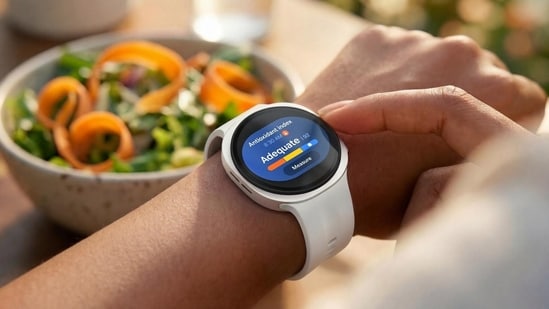
I want my patients using wearables. Simple, reliable metrics like daily step counts and resting heart rate are powerful tools for preventive medicine. However, as the industry shifts its growth strategy from selling basic fitness trackers to marketing diagnosis-sounding health insights, a dangerous gap has opened up. India’s regulatory conversation is stuck in the past, regulating what a device is on paper, rather than what it claims to do in its marketing.
The recent launch of a new wearable perfectly illustrates this loophole. Marketed heavily around tracking BrainFlow and a proprietary Entropy biomarker to measure the cost of being alive, the device has sparked fierce debate among Indian doctors regarding its anatomical and clinical validity. Yet, legally, it sidesteps medical scrutiny because its terms of service classify it as a wellness product.
In July 2026, the Central Drugs Standard Control Organisation (CDSCO) issued its final guidance on Medical Device Software, explicitly keeping fitness and general-wellness software outside medical regulation. The US FDA made a similar move earlier this year, widening its wellness exemption to allow devices to show blood pressure and glucose estimates without FDA clearance for wellness use, provided they avoid explicit disease claims. Meanwhile, the European Union is moving in the opposite direction, treating algorithmic updates and post-market monitoring as part of the medical device under its AI Act. Washington has widened the wellness door; Brussels has added a second lock. India has not yet decided on this yet.
{{/usCountry}}In July 2026, the Central Drugs Standard Control Organisation (CDSCO) issued its final guidance on Medical Device Software, explicitly keeping fitness and general-wellness software outside medical regulation. The US FDA made a similar move earlier this year, widening its wellness exemption to allow devices to show blood pressure and glucose estimates without FDA clearance for wellness use, provided they avoid explicit disease claims. Meanwhile, the European Union is moving in the opposite direction, treating algorithmic updates and post-market monitoring as part of the medical device under its AI Act. Washington has widened the wellness door; Brussels has added a second lock. India has not yet decided on this yet.
{{/usCountry}}For now, this wellness carve-out has become a backdoor for medical-sounding claims with little to no clinical evidence. A simple step counter and a device claiming to detect a cardiac abnormality cannot be treated equally. A wellness disclaimer in the fine print cannot cancel out a medical claim on a billboard.
India urgently needs a modernised framework built on five uncompromising pillars.
- First, we must regulate the claim, not just the label: We do not let a pharmacy sell an untested drug simply because the label says supplement. If a wearable’s advertising implies diagnosis, disease risk, or organ function, it must be assessed as a medical device. We don’t necessarily need new laws to start this process. The Consumer Protection Act already bans misleading advertising, and the Central Consumer Protection Authority (CCPA) can demand proof for any factual claim. Applying these existing rules against unsubstantiated wearable tech claims needs will, not new law.
- Second, clinical validation must be transparent and representative: A wearable’s ability to capture a signal does not establish its clinical accuracy. For instance, research from Stanford University has shown that wrist-device error rates are significantly higher in men, individuals with higher BMIs, and those with darker skin tones. Yet, many premium devices entering our market base their accuracy claims on homogenous, western populations. During Covid, millions of Indians relied on home oximeters never tested on skin like theirs; US studies later found they missed hidden hypoxaemia nearly three times as often in darker-skinned patients. India should mandate a public evidence label for health features—similar to a nutrition label. This would force manufacturers to disclose their error margins, funding sources, and crucially, whether the device was validated across the diverse Indian population, including the full spectrum of our skin tones.
- Third, we must address the silent dangers of false alarms and false reassurance: As a physician, I see the dual risks of unvalidated data daily. False alarms cost the healthcare system time and create immense anxiety. A Mayo Clinic review of patients who came to the clinic after an abnormal-pulse alert found that only 11.4% resulted in a clinically actionable diagnosis, driving up unnecessary tests.
Conversely, false reassurance is arguably more dangerous. The ICMR-INDIAB study revealed that a staggering 35.5% of Indian adults have hypertension. The most dangerous reading is not a false alarm; it is a reassuring number that keeps a hypertensive patient away from a blood-pressure cuff. Manufacturers must clearly label consumer eligibility.
- Fourth, adverse event reporting must cover the wellness sector: Policy debates often call for new reporting mechanisms, forgetting that India already launched the Materiovigilance Programme of India (MvPI) in 2015 to report faulty medical devices. The problem? Wellness-classified wearables fall outside its purview, and neither doctors nor patients know it exists. The MvPI must be explicitly extended to capture health-feature failures, missed alerts, and physical injuries from consumer wearables, complete with an accessible, in-app reporting mechanism.
- Fifth, we must empower clinicians with clear guidance: When wearable data enters a clinical consultation, it often creates confusion. Physicians vary widely in how they respond to an algorithmic alert. The National Medical Commission (NMC) or leading medical societies must issue practical clinical protocols for doctors on how to interpret, verify, or dismiss wearable-generated alerts. Furthermore, as the Digital Personal Data Protection (DPDP) Act’s consent-manager provisions take effect on November 14, 2026, the governance of this intimate health data can no longer be ignored. Wearables are generating millions of data points daily; the government should designate large health-wearable firms as Significant Data Fiduciaries under the DPDP Act to strictly regulate how this data is owned and securely shared.
More data does not automatically translate into better health. The true value lies in knowing which measurements are reliable and what actions should follow. The next phase of India’s wearable revolution must not be defined by how much data these devices can harvest, but by how safely, accurately, and accountably that data is used to protect the patients who wear them.
(The views expressed are personal)
This article is authored by Dr Navin Gnanasekaran, longevity physician, Head of Radiology & Clinical Services Apollo Hospitals, Chennai.