We know what a heart attack looks like: The flashing ambulance lights, the frantic hospital corridor, the frightened family, a life violently interrupted. Cardiometabolic disease has rightfully become one of the most visible public health crises of our time.
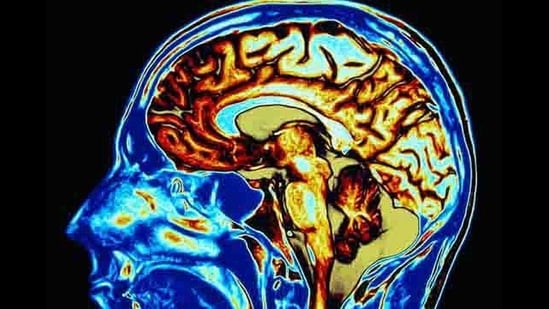
But the same metabolic forces are also damaging an organ that offers no such drama. There is no ambulance for a struggling neuron. No emergency ward for a slowly weakened synapse. No single moment when anyone can point to the exact instant cognitive reserve began to erode.
Public conversation will centre, as it should, on psychological stress, anxiety, and burnout. Yet a parallel, less visible crisis is unfolding underneath them - one that ties our metabolic state directly to our cognitive vitality.
Neurodegeneration is no longer only a story of the elderly. A landmark meta-analysis in JAMA Neurology, covering 74 studies and 2.8 million adults aged 30 to 64, estimated the prevalence of young-onset dementia at 119 per 100,000 people, roughly 3.9 million cases worldwide.
Why are people in their prime showing up in these numbers? While genetics and aging play undeniable roles, the risk factors we can actively influence share a distinct metabolic thread: type 2 diabetes, midlife obesity, and systemic insulin resistance all significantly raise the odds of cognitive decline. The exact same biology that strains the heart is straining the brain.
{{/usCountry}}Why are people in their prime showing up in these numbers? While genetics and aging play undeniable roles, the risk factors we can actively influence share a distinct metabolic thread: type 2 diabetes, midlife obesity, and systemic insulin resistance all significantly raise the odds of cognitive decline. The exact same biology that strains the heart is straining the brain.
{{/usCountry}}Many of us experienced a preview of this vulnerability post-COVID. A large-scale community study in The New England Journal of Medicine (Hampshire et al., 2024) confirmed that post-Covid cognitive deficits, particularly in memory retrieval, spatial planning, and executive function can persist for months, leaving measurable deficits in neural processing speed. In daily life, this often manifests as a reliance on relational, contextual cues to retrieve memories, like trying to jump-start a specific node in an interconnected neural network neighborhood.
Beyond individual fog, something structural feels altered in our collective social dynamics. Observe any active WhatsApp group today: the sudden shifts in polarity, heightened sensitivity, altered orientation, and abrupt behavioral changes among friends and colleagues are palpable. While post-Covid fog or digital fatigue may reflect reversible functional strain rather than structural decay, these modern disruptions act as systemic accelerants. When layered onto an under-fuelled, metabolically compromised brain, they lower our threshold for cognitive resilience and unmask early biological vulnerabilities.
This acceleration toward functional decay does not occur in a vacuum. The brain evolved for high-order, challenging, and meaningful work. When we feed it a constant diet of digital noise and cognitive clutter, it responds as evolution programmed it to: it simply downregulates what it isn't asked to use, discarding inactive neural pathways.
Yet an under-challenged brain is also a brain running on an unstable fuel supply. A mind starved of high-level engagement and a body drifting toward metabolic dysfunction compound each other. This distinction is vital: The resulting fog or fatigue is not merely a personal failure of attention or willpower. It is an environment and a biology working in concert.
If metabolic strain is wearing down the brain, where do the first signs show up? Often in behaviors we casually dismiss as personality quirks or lifestyle slumps: Inertia, emotional detachment, a pervasive sense of disenchantment, or apathy.
While occasional procrastination has countless harmless causes, a sustained, uncharacteristic loss of drive and initiative is a recognised early feature of neurodegeneration. In Frontotemporal Dementia (FTD), Alzheimer’s disease, and Parkinson’s disease, these behavioral shifts stem directly from physical changes in the frontal-subcortical circuits and the salience network, the neural architecture governing motivation and emotional processing.
Over time, these microscopic disruptions manifest in the physical structure of the brain itself. Research increasingly links metabolic strain to structural brain shrinkage, with one clinical metric standing out: Visceral belly fat is inversely proportional to overall brain volume and directly associated with accelerated neurodegeneration. The fat we measure at the waist is a window into what is happening where we cannot see.
Something is unfolding quietly inside us, one neuron at a time, one synapse at a time, while we go about our daily routines.
We have grown accustomed to treating diabetes, obesity, insulin resistance, and cardiovascular disease as problems confined to the torso. But metabolism does not stop at the neck.
The brain is extraordinarily energy-hungry, consuming roughly 20% of the body’s energy while making up only 2% of its mass. It requires a finely calibrated internal environment to sustain its neurons, synapses, and communication networks. When insulin signaling falters, small blood vessels weaken, chronic low-grade inflammation simmers, or cellular energy production fails, the brain feels it immediately. Metabolic health and brain health are deeply, inextricably intertwined.
This is why distinguishing between mental wellness and mental illness is so critical. Mental illness has diverse origins and often requires psychiatric or psychological intervention. Mental wellness, the everyday capacity to focus, stay motivated, and maintain emotional equilibrium depends heavily on a body that is metabolically sound. Understanding this difference explains why a person can be completely free of a formal clinical diagnosis and yet operate on a severely depleted brain.
Consider the explicit economics of cardiovascular disease: Hospitalisation, surgery, lifelong medication, rehabilitation, and lost working days. Every line item is visible, countable, and tracked.
Now consider a less visible drain on the same economy. A professional stays healthy enough to sit at a desk, yet struggles to focus or execute complex logic. Another grows increasingly sedentary. Another lives with chronic fatigue, disrupted sleep, or task paralysis. None of them are "sick" in any way a hospital records. Yet over time, dulled clarity translates into lower productivity, compromised innovation, poorer quality of life, and eventual dependence.
Multiplied across millions of people in a developing economy, this invisible loss becomes a massive systemic burden falling heaviest on a young population whose most productive decades are at stake.
We are living through an unprecedented biological experiment: calorie-dense food, physical inactivity, chronic stress, disrupted sleep, and constant screen time occurring simultaneously at population scale. The exact stressors driving insulin resistance and visceral fat are eroding the very systems that keep our minds sharp, adaptable, and emotionally grounded.
A society can lose enormous productive capacity long before its citizens are visibly ill. People do not have to be in an intensive care unit to be biologically compromised.
We built a healthcare infrastructure or rather, a disease care system that excels at crisis intervention once structural damage is obvious. But the metabolic and neurological consequences of modern living accumulate silently over decades. By the time the heart screams, the underlying biology has been shifting for years.
Our definition of health must evolve beyond the absence of an emergency room admission. It must mean actively preserving the biological capacity to think, move, create, learn, connect, and contribute.
We spent the last century learning to fear the heart attack because it was visible and dramatic. The defining health challenge of this century will be recognising what is not: the slow decay unfolding in plain sight.
Because while we watch the artery, something else is happening quietly:
One neuron at a time,
One synapse at a time,
One life at a time.
And by the time the crisis finally becomes visible, prevention has already turned into treatment
(The views expressed are personal)
This article is authored by Dr Vijay Kanuru, biomedical researcher and founder, Nanoved Research Foundation.