As India marks Indian Air Force Day today, the story of Operation Safed Sagar remains one of the Indian Air Force’s defining chapters. Launched during the 1999 Kargil War, the air campaign saw IAF pilots operate in some of the most challenging high-altitude combat conditions, adapting tactics and technology to strike enemy positions while operating under strict constraints.
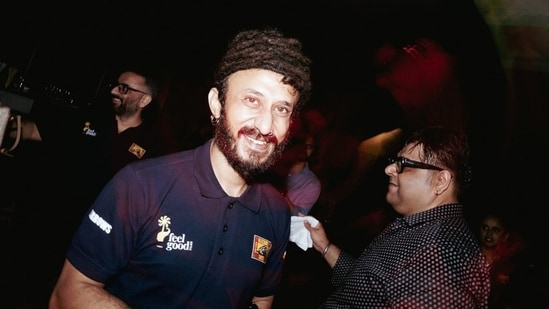
For Barun Kashyap, one of the writers of the recently-released series Operation Safed Sagar, revisiting that history was not simply about recreating a military operation. It was about understanding the people who made it possible.
“The true heroes of Safed Sagar prove that wars are not won just by advanced technology but by sheer defiance of the human spirit. In 1999, our pilots modified technology on the fly, adapted to altitudes that the world thought would be impossible for air combat and rewrote the global aviation rule book,” he tells us.
“That was basically a mission that no one thought would be possible in a combat operation at that altitude, but our heroes made it possible. We wrote this series not just to look back at history, but so that our next generation knows exactly whose legacy of courage they are inheriting. It is for the younger generation to know about the heroic acts of our soldiers and Air Force pilots who protected the country when the odds were stacked against them.”
The writers, however, did not come to the project with a defence background. That meant immersing themselves in the IAF’s world before attempting to dramatise it.
{{/usCountry}}The writers, however, did not come to the project with a defence background. That meant immersing themselves in the IAF’s world before attempting to dramatise it.
{{/usCountry}}“At a basic level, we knew about the MiG-21 and what the operation entailed in Kargil in 1999. But to write a show about Indian Air Force pilots, it required a lot of reading into what their culture is like, what their daily life is like and what they are flying, because technically we wanted to be as accurate as possible," says Kashyap.
The research went beyond books and archival material. Meeting veterans became an important part of understanding the lived reality behind the history.
“We did a lot of research. Actually meeting veterans, hearing things and hearing the anecdotes from their own mouths changed a lot of my perspective personally.”
The learning curve was steep enough that showrunner Abhijit Singh Parmar gave the writers a specific challenge.
“It required a lot of learning. Abhijit gave us a condition that by the end of the show, at least, you guys should be pilots on paper, in the sense that you should know everything about the machine, the lifestyle and the Indian Air Force in detail," says Kashyap.
That commitment also meant turning down other work.
“There were a lot of other projects that had come in, but I refused all of them, turned them down because this was, for me, an opportunity of a lifetime. I turned down a lot of projects during the course of Operation Safed Sagar and then exclusively worked on it.”
Getting the technology right
The technical demands of recreating the air campaign were particularly challenging. For Kashyap, translating those details to screen without losing the audience was a balancing act.
“We have tried to be as accurate as possible in terms of everything. Understanding the learning for Indian Air Force pilots, understanding the machine and how the story is actually technically, we wanted to get the story technically right. From the technical point of view, it was quite a lot of reading. We had to read a lot," he says.
Coming from a humanities background made some of the technicalities particularly daunting.
“I come from a humanities background, so for me to even understand the timing behind how they drop the bomb and what’s the calculation that goes into everything took me back to my maths and science class. But we took it up as a challenge.”
The writers also brought different personal connections to the project. “Nikhil (Ravi, co-writer) has a background — his grandfather served in the Royal British Army. He was also very excited to work on this project. Same goes for me, and it was an opportunity of a lifetime. So we put our heart and soul into it," Kashyap shares.
Accuracy required constant consultation with serving and former pilots.
“That’s the reason we had to work exclusively because there had to be a lot of reading on the technical aspects, and constantly we were consulting the pilots: are we getting this? There was a lot of back and forth in the technical aspect. Are we getting this? Because we also didn’t want to make it like a documentary. We wanted the audience to understand the technical aspects.”
Kashyap says the primary narrative remains rooted in the publicly documented history of the war, while the series adds personal dimensions.
Kashyap shares, “The primary narrative of the story is quite accurate to what it is in the public domain regarding the Kargil War, with personalised anecdotes of these pilots, and even of General Musharraf and Nawaz Sharif.”
Looking beyond the battlefield
Researching the conflict also took Kashyap deeper into the political dynamics on the Pakistani side.
“The politics that was unfolding in Pakistan, the tussle between Rawalpindi and Islamabad — I knew that they backstabbed us in the context of the Lahore bus yatra and the peace treaty. But as we started reading more about it, we got more nuances into the power struggle between General Musharraf and Nawaz Sharif.”
He continues, “I personally didn’t know that Nawaz Sharif was being dictated by a kitchen cabinet. It was called a kitchen cabinet, where his father and a few other higher-ranking politicians used to make the decisions and Nawaz Sharif would just be the face in front of the camera.”
But it was his interaction with Indian veterans and military families that seems to have left the deepest impression.
Kashyap recalls how the writers themselves became inspired while speaking to pilots.
“When we were speaking to the pilots, we were getting so excited. Then we were like, gosh, how many of us could have joined the Defence Services? They motivated us to become pilots and join the forces. We were very excited, but they were sweet enough to tell us, ‘We need writers like you.’ So that was also a very humbling response that we got.”
The experience also deepened his appreciation of the armed forces.
Kashyap says, “I am just very grateful to all the men in uniform, and I think the Indian Air Force, Indian Army and Indian Navy are the most professional defence services in the whole world. So I am very grateful to them.”
“I have seen the importance of the forces very closely. In fact, at some point of time I wanted to join the Army, as any young boy in India. So I have seen that very closely in my life, the importance of the forces. I also come from a police family. My grandfather was in the police services. So I have seen the importance of men in uniform. But working so closely with the Indian Air Force, and especially meeting the veterans, it just humbled me.”
The families behind the uniform
For Kashyap, one of the less visible aspects of military life was equally important to the series: the families who live with the risks faced by those in uniform.
“The meetings with the wives of these officers were also humbling and offered a fresh perspective, which we have included in the show. I don’t want to spoil it, but the role that the wives of these officers play is also so critical, and we have never projected that in mainstream Indian cinema till now," Kashyap tells us.
Meeting them offered another understanding of what it means to live alongside someone whose work involves life and death.
“Meeting them was also a very humbling experience — how they support their men who are constantly dealing with life and death, and how emotionally mature you need to be. There is no good time or bad time in life. Good news or bad news can come at any time. The whole philosophy that they have of celebrating life, knowing that anything might go wrong at any moment, is just so encouraging. Because we just keep thinking that our problems are bigger than anyone else’s, and when you meet them, then you realise that your problems are nothing.”
Ultimately, working on Operation Safed Sagar appears to have changed the writer as much as it challenged him professionally.
“Definitely, as I mentioned, it just makes me even more proud. After knowing all the details, it makes me feel very grateful that we are being protected by such a professional defence service. It was also a very humbling experience. That’s the least, probably, and I feel very grateful that I could contribute. At least this is my least contribution to the defence services," Kashyap ends.