
 E-Paper



The new language of queer cinema: Three Indian short films rewriting representation this Pride
On the final day of Pride Month, these three Indian short films cut through the noise, trading tired tropes for honest potrayals

 Prefer HTon Google


Queer stories always exist in liminal spaces, rarely fitting into the moulds created by mainstream art. On the last day of Pride Month, it’s worth looking beyond the rainbow-tinted filters of performative visibility to celebrate films that don’t rely on weepy arcs or tokenism. These three independent short films push the conversation further by exploring themes that are often overlooked in today's hyper-real Bollywood: queer rage, tender loneliness and the solitude of longing.
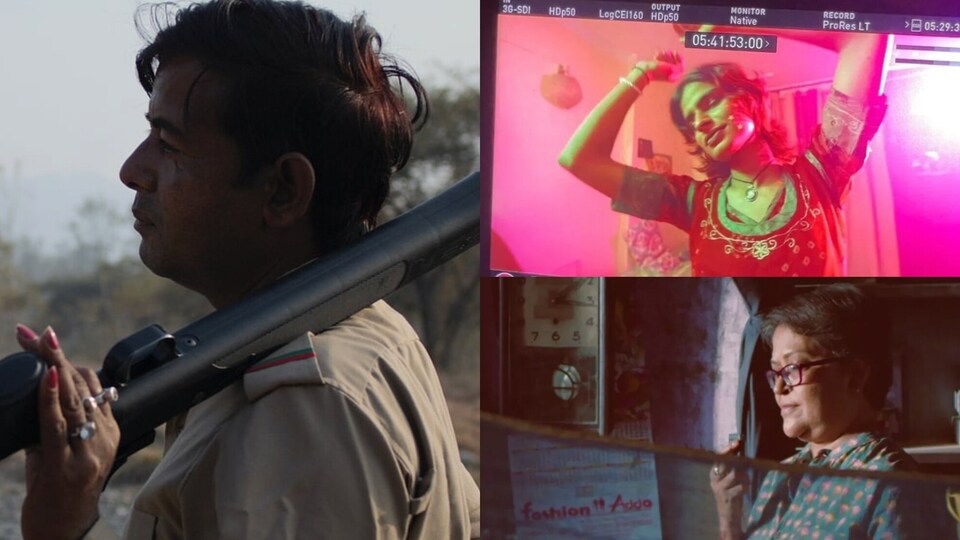
Anureet Watta: Just living, queer
When asked why they make films, director and poet Anureet Watta’s response was precise, as if it had been thought of a thousand times before. “I could not find representation in the films I watched,” they explain, “but I knew that if the world did not exist for me, I could make it up for myself.” An experimentalist in a template world, Watta’s films touch upon the tender, often damning aspects of being queer. It resists categorisation. Kinaara (2021) was described as a ‘poem in motion’, Oranges In The Winter Sun (2022) focused on small gestures of love like holding ‘hands and softer fruits’.
Their upcoming film, Don’t Interrupt While We Dance is more radical, a meditation on queer anger as a response to systemic erasure. “This kind of work does not exist in isolation…it exists in a society, in a wider range of films,” says Watta. “I think my first audience is people who are looking for themselves in these stories, that’s the job that I want to do in the world. Not like ‘oh! my film will change the world’ because no, I am only a small part of this art world, and there is a bit of liberation in accepting that. But I trust my peers to do the other work because there are so many of us now.”
Chandradeep Das: Love in the autumn of life
While Watta leans into the alternative, Bengali filmmaker Chandradeep Das uses a more classical lens to portray vulnerable intimacy. His film Jasmine That Blooms in Autumn recently won Best Indian Narrative Short at KASHISH 2025, and it’s not hard to see why. Set in an old-age home, the story follows two elderly women — Indira and Mira — who fall in love in the ‘autumn of their lives’. “This type of dynamic has long been ignored,” Das says. “Feelings have no age bar, and you can fall in love at the end of everything, in the autumn of your life. Solace and companionship. That’s what everyone is seeking.”
Indira, once trapped in an abusive marriage, is hesitant and reserved. Mira, by contrast, is bold and self-assured, though she carries her own pain. The film is rich in visual symbolism layered with Jasmine garlands, lingering glances, half-bitten paan; its slow pace adds to its poignancy. When I describe the film as “tender”, Das smiles. “I’ve heard this adjective over and over again, that the film is ‘tender and delicate’. And it is. You find inklings of this feeling throughout because they cannot be physically close, and at this age, both are coming to terms with newfound sentiments.” Das' film challenges the youth-centric nature of most queer cinema, offering a glimpse into how desire can evolve with age.
Neel Soni: A documentation of solitude
While Jasmine was a film sought after, Neel Soni, the director behind the only Indian documentary that made it to the 2025 Student BAFTA Awards this year —Babli By Night, claims his film found him much before he found it. “I never set out looking for someone to film,” says Soni from New York, where the film screened at the 2025 New York Indian Film Festival. “But after many trips into the forest and many conversations with Babban over the years, I realised there was something profound here.”
Babli By Night explores the heartrending journey of Babban, a trans forest officer who spends their life amidst the cooling flora of Uttarakhand in Jim Corbett National Park. At its core, the film observes healing amidst nature. “I deeply resonated with the concept of nature healing the human mind, and I saw that within my own life. That’s the story I set out to tell initially. This is something that’s real and happening in (Babban’s) life, but it was also about how nature has these tendencies that we don't notice,” he says. The documentary spans major life events like the pandemic and Babban’s HIV/AIDS diagnosis. “Babban said to me, ‘I just want to be happy, in the forest with my animals.’ I think that’s what stuck with me. It’s a film about someone choosing to be themself despite everything.”
Each of these three films was chosen to spotlight a reclamation of the narrative by people who care deeply about telling the story right. And while there’s still a long way to go, you have to admit that it's a little bit thrilling to finally see yourself on screen.


