
 E-Paper



Why the modern corset is a crown, not a cage
Whether it is crafted from soft, hand-spun silk or sculpted from hard metal, corsets no longer hide the body, they highlight the wearer’s strength

 Prefer HTon Google


Historically, the corset was a rigid cage designed to force the body into a specific shape. Today, it has been completely reimagined. No longer a tool of restriction, the modern corset has returned to the fashion world as a symbol of power, comfort, and self-expression.
Pop culture phenomena, such as the hit series Bridgerton and the 'Royalcore' aesthetic, have propelled the Empire waist silhouette back into the global fashion spotlight.
From the ateliers of India’s top designers, the "new" corset blends old-world charm with cutting-edge materials. Here is how this iconic garment evolved from a hidden undergarment into a bold statement of modern luxury.
Architecture for the body: The modern construction
In the past, the corset was a cleverly made garment used to force a person's body into the 'trendy' shape of the time, even if it made it very hard for them to breathe. In the 16th century, Italian-born French queen Catherine de' Medici popularised the "stiffened bodice" in the French court, utilising "busks" made of wood or whalebone. By the 1800s, the Victorian era introduced the "wasp waist," using rigid steel to enforce a dramatic hourglass.
Today’s designers have flipped the script. Divya Saini, founder of Bodements, who is redefining India's relationship with vintage fashion notes that the biggest shift is flexibility. "While earlier corsets relied heavily on rigid steel or traditional whalebone, today we work with lighter, bendable metal boning," she explains. This shift allows the garment to remain "responsive to movement," creating a structure Saini describes as "architecture for the body" that supports without restriction.
Yash Patil, founder and creative director of That Antiquepiece, a studio specialising in bespoke corsetry and couture agrees, highlighting the technological leap in materials. "Alternatives in bonings, from synthetic whalebone and carbon fiber to rigilene, are now available," he says. This evolution allows the corset to enhance natural curves rather than forcing the body into a "drastic mould."
From undergarment to statement piece
For centuries, the corset was a secret kept under layers of petticoats. Now, it has moved to the forefront, bridging the gap from technical undergarment to “end-to-end solution.”
For Surmai Jain, founder and creative director of Polite Society, the corset is a brand signature. By transforming it from a restrictive historical undergarment into functional modern streetwear, she has used this visibility to shift the 'gaze.' "Earlier it was about the male gaze, but now it’s more about dressing for ourselves," Jain shares. Her ninth chapter focuses on "owning your own femininity," emphasising that modern pieces are designed to let the wearer breathe.
The challenge of the craft
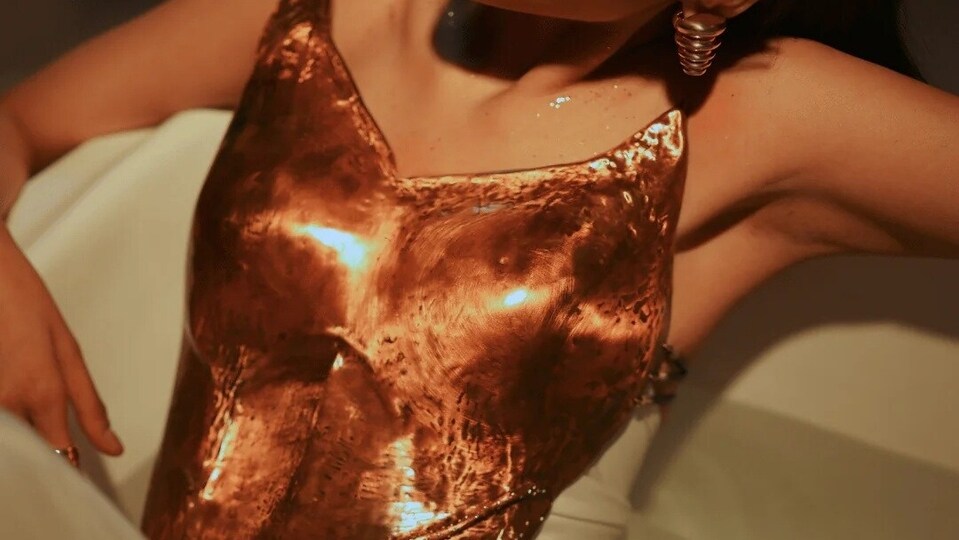
However, this mainstream explosion brings its own set of challenges. Alay Somani, founder and creative director of Mhari, who refers to his creations as "bodyplates" or "queen’s armour," warns against the loss of artistry in the age of mass production. He says, "A lot of labels are just doing 3D printing and calling it corsets... every stroke should have a meaning. Our 'Armour body plate' is a testament to slow fashion, taking 500 hours and 10 lakh (one million) strokes to complete by hand."
The Indian reinterpretation
Perhaps the most exciting frontier for corsetry is its integration into the Indian wardrobe. Self-taught dressmaker Nikhil Gajare has obsessively studied vintage European silhouettes to adapt them for Indian bodies and ceremonies. "Corsets today function as structured blouses. By re-engineering the traditionally rigid Victorian shape, he has made it possible to pair corsetry with fluid lehengas and saris, offering a global aesthetic that still feels rooted in Indian craft," he says.
The future: Empowerment through bespoke
The future of corsetry lies in the personal. Yash Patil emphasises that because body proportions change drastically from person to person, "bespoke is the only way for a corset to sit right." Ultimately, the modern corset is a celebration of the body as it is. As Divya Saini puts it, the act of a bespoke fitting "invites awareness of posture, comfort, and self-image." It’s no longer about achieving an "imposed ideal," but about quiet confidence and presence.


