The depiction of Karwachauth in Indian cinema has undergone a dramatic transformation. It has shifted from the grand, idealised romance of the late ‘90s and early 2000s where the festival served as a cinematic peak of devotion and longing to contemporary narratives. In recent years, the cinematic portrayal of Karwachauth has undergone a metamorphosis, shedding the hyper-glossy, festive veneer in favour of raw, grounded storytelling. Rewriting romance
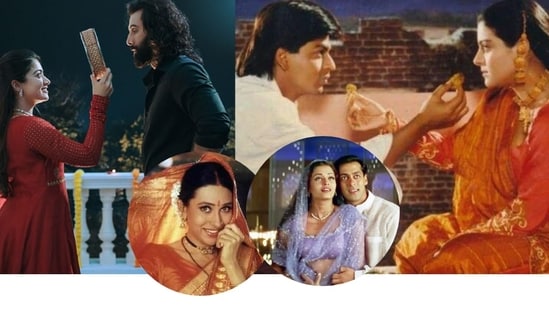
In the 1995 classic Dilwale Dulhania Le Jayenge, Simran (Kajol) pretends to faint in front of her fiancé, Kuljeet, so Raj (Shah Rukh Khan) can secretly help her break her fast with a sip of water on the terrace. The scene became an iconic moment in Indian pop culture, romanticising the idea of unmarried partners secretly observing the Karwa Chauth fast.Behind-the-Scenes Nostalgia — Hunger in Real Life:
During the shoot of the terrace scene, director Aditya Chopra was meticulous about getting the comic-meets-romantic timing just right. Shah Rukh Khan later famously recalled that shooting a sequence centered entirely around breaking a fast under heavy, hot studio lighting left both him and Kajol genuinely exhausted and ravenously hungry by the end of the day. Kajol kept bursting into laughter between takes while practising her dramatic “fainting spell,” and the off-screen comfort between the two turned a potentially melodramatic scene into effortless cinematic magic.Visual treat
In Hum Dil De Chuke Sanam (1999), Nandini (Aishwarya Rai Bachchan) and Sameer (Salman Khan) share a romantic moment during the song Chand Chhupa Badal Mein, wishing for the moon to stay hidden so they can spend more time together. Director Sanjay Leela Bhansali’s poetic visuals beautifully capture their longing. Another scene around the festival traces Nandini’s journey from secret romance.Behind-the-Scenes Nostalgia — The Heavy Ghaghra & Off-Screen Sparks:
{{/usCountry}}In Hum Dil De Chuke Sanam (1999), Nandini (Aishwarya Rai Bachchan) and Sameer (Salman Khan) share a romantic moment during the song Chand Chhupa Badal Mein, wishing for the moon to stay hidden so they can spend more time together. Director Sanjay Leela Bhansali’s poetic visuals beautifully capture their longing. Another scene around the festival traces Nandini’s journey from secret romance.Behind-the-Scenes Nostalgia — The Heavy Ghaghra & Off-Screen Sparks:
{{/usCountry}}Filmed during the height of Salman Khan and Aishwarya Rai’s real-life romance, the undeniable chemistry on screen reflected their genuine bond. The song required demanding night shoots, and Aishwarya’s stunning traditional red-and-gold ghaghra was immensely heavy, making the fluid dance steps physically taxing. Between relentless retakes to get every moonlit shadow right, as per reports from that time Salman was frequently spotted cracking jokes on set to keep her spirits up through the gruelling late-night schedules.Comic chaos
In Biwi No. 1 (1999), Prem (Salman Khan) rushes between his wife Pooja (Karisma Kapoor) and mistress Rupali (Sushmita Sen), both observing the Karwa Chauth fast for him. The comedy unfolds as he desperately tries to be present for both women to break their fasts, contrasting the ritual’s sanctity with his crumbling marriage.A Dramatic backdrop
In Animal (2023), Geetanjali (Rashmika Mandanna) waits on the terrace for her husband Ranvijay (Ranbir Kapoor) to break her fast. The quiet ritual takes a tense turn when Ranvijay confesses his infidelity, stripping the festival off its usual Bollywood glamour and romance to bring marital conflict and betrayal in the forefront.A ritual for young love
In Ishq Vishk (2003), college student Payal (Amrita Rao) observes Karwa Chauth for Rajiv (Shahid Kapoor). Their playful banter gives way to an emotional reconciliation when he arrives at night to help her break the fast, reflecting how the festival became a symbol of youthful romance in the early 2000s.Larger than life celebrations
In Kabhi Khushi Kabhie Gham (2001), the song Bole Chudiyan features three couples celebrating the festival in a grand London estate, dressed in red-and-gold festive attire. With lyrics such as “Apni maang suhagan ho”, lavish sets and elaborate choreography, director Karan Johar set a visual benchmark for grand, larger-than-life Karwa Chauth sequences in Indian cinema.Apart yet together
In Baghban (2003), Raj (Amitabh Bachchan) and Pooja (Hema Malini), separated by their children, observe the festival while connecting over a telephone call. Their emotional exchange shifts the festival’s focus from youthful romance to the devotion of a couple growing old together.