
Six key conspirators of the 26/11 Mumbai terror attacks, including Lashkar-e-Taiba (LeT) chief Hafiz Saeed and the outfit’s operations chief, Zaki-Ur-Rehman Lakhvi, operate freely in Pakistan and run their terror networks without facing any significant legal consequences.
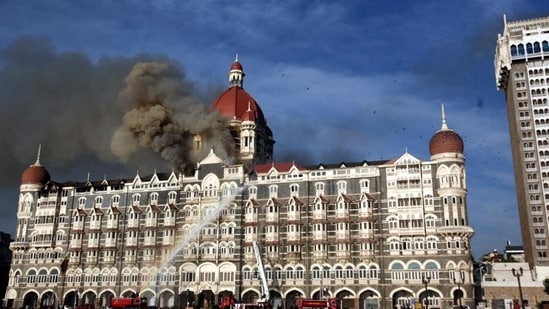
Saeed, Lakhvi and four other key players on Pakistani soil, Sajid Majeed alias Sajid Mir, a top commander of LeT who oversaw the attack, Abdur Rehman Hashim Syed alias Pasha, a retired major in the Pakistani military, Major Iqbal and Major Sameer Ali, ISI officers, not only escaped any punishment for 26/11 but got protection from the Pakistani state, according to Indian intelligence agencies.
Under pressure from the US, Saeed was sentenced to 78 years’ imprisonment in Pakistan in 2020. But Indian officials say that “he is under the protection of the ISI and freely carries out his group’s terror activities”.
Mir was reportedly arrested and sentenced to an eight-year jail term, but little is known about his whereabouts. Lakhvi was sentenced in 2021 to three consecutive five-year sentences for terror funding. Indian agencies said he can carry out his activities freely. No action has ever been taken against the two ISI officers and the one military officer.
“Seven out of 10 conspirators were based in Pakistan at the time of the 26/11 attacks, from the planning stage to managing the control room. We sent letters rogatory [judicial request] to the Pakistan government seeking information and evidence against them, but to date, there is no cooperation,” said an officer, who asked not to be named.
{{/usCountry}}“Seven out of 10 conspirators were based in Pakistan at the time of the 26/11 attacks, from the planning stage to managing the control room. We sent letters rogatory [judicial request] to the Pakistan government seeking information and evidence against them, but to date, there is no cooperation,” said an officer, who asked not to be named.
{{/usCountry}}India also sent an extradition request for Saeed to Pakistan, which remains pending.
Two other plotters, LeT’s former deputy head and Saeed’s brother-in-law, Abdul Rehman Makki, died in Lahore in December 2024. Ilyas Kashmiri, leader of al-Qaeda and its Pakistan-based affiliate Harkat-ul Jihad Islami, reportedly died in a US drone strike in June 2011.
Indian agencies gained access to only two of the 10 total conspirators: US national David Coleman Headley. The National Investigation Agency questioned Headley in 2011 even as Washington refused to grant his custody.
Headley’s childhood friend, Pakistani-Canadian physician Tahawwur Rana, was extradited to India last April and is lodged in Delhi’s Tihar jail. A fresh charge sheet was filed in the 26/11 attacks in July last year based on Rana’s interrogation.
NIA has, in its court documents, said that Rana was part of the 26/11 Mumbai attacks conspiracy since 2006 and visited India between November 13 and 21, 2008. Just before the attacks, he was in Dubai and met Pasha and later went to China. From China, he travelled back to the US on the first day of the attacks, November 26, 2008.
The broader 26/11 conspiracy involved 10 accused, with seven based in Pakistan during the attacks.
Abu Qahafa, Abu Alqama, Muzammil, Abu Anas, and Abu Hamza, who played key roles at different stages, from training the 10 terrorists to religious classes, etc, are also said to be in Pakistan.
Qahafa was identified as a senior LeT trainer and an expert in handling arms and explosives. He was involved in the physical and technical training of 10 terrorists. Abu Alqama was identified as a senior LeT commander in charge of the Kashmir setup until 2008. He was involved in the training and briefing of 10 terrorists.
Muzammil was identified as a close companion of Lakhvi. Abu Anas was in charge of a LeT safehouse in Rawalpindi.
ABOUT THE AUTHOR
Neeraj Chauhan is a senior journalist with Hindustan Times and an investigative reporter specialising in national security, terrorism, organised crime, narcotics, corruption, financial crime and complex investigations. With over 21 years of experience across Hindustan Times, The Times of India, The Indian Express and The Pioneer, he has built deep expertise in India’s internal security and law-enforcement landscape. Neeraj has extensively covered India’s principal investigative, intelligence and security agencies, including the NIA, CBI, ED, IB, R&AW, MHA and other central security forces. His work has included deeply reported investigations into terrorism, terror financing, cross-border crime, narcotics trafficking, cybercrime, financial fraud and political and corporate corruption. He has reported on some of the most significant terror attacks and security developments in India over the past two decades, including the Delhi serial blasts, the 26/11 Mumbai attacks, the 2019 Pulwama terror attack and the recent Pahalgam attack. His reporting has also chronicled the rise and decline of the Indian Mujahideen, the activities and subsequent crackdown on the Popular Front of India (PFI), Islamist extremist networks, the conflict in Jammu and Kashmir, insurgencies in the Northeast and Maoist violence. Some of Neeraj’s major breaking stories are in Aryan Khan drug case, Sushant Singh Rajput suicide, interception of a 3,000-kg Afghan heroin consignment worth about ₹21,000 crore at Mundra port, Sri Lanka easter bombings, Aarushi-Hemraj murders in Noida, 2G scam, coal block allocation scam, AgustWestland VVIP chopper deal and major bank frauds and extradition cases involving Mehul Choksi, Nirav Modi and Vijay Mallya. His reporting is marked by an ability to cultivate sources, analyse confidential and complex documents, and follow investigations over several years—from the initial breakthrough to chargesheets, trials and international legal proceedings. He specialises in making complicated security and investigative developments accessible while examining their wider implications for governance and public policy. A Chevening South Asia Journalism Programme Fellow at the University of Westminster, Neeraj also spent time at the Financial Times as part of the fellowship. He was also a Robert Bosch Media Ambassadors India-Germany Fellow, studying at the University of Tübingen and working with Der Tagesspiegel in Berlin. He has previously taught investigative journalism and crime reporting as a guest faculty member at the Times School of Journalism. Over more than two decades, Neeraj has established himself as an authoritative voice on India’s national security and investigative landscape, with his reporting closely followed by officials, investigators, lawyers, policymakers and readers seeking insight into some of the country’s most complex and consequential developments.