
 E-Paper



26 Maoists, 13 with ₹65 lakh bounty, surrender in Chhattisgarh’s Sukma
The cadres, including seven women, laid down arms before senior police and Central Reserve Police Force (CRPF) officers

 Prefer HTon Google


Raipur: At least 26 Maoists, 13 of them carrying a collective bounty of ₹65 lakh, surrendered in Chhattisgarh’s Sukma district on Wednesday, police said.
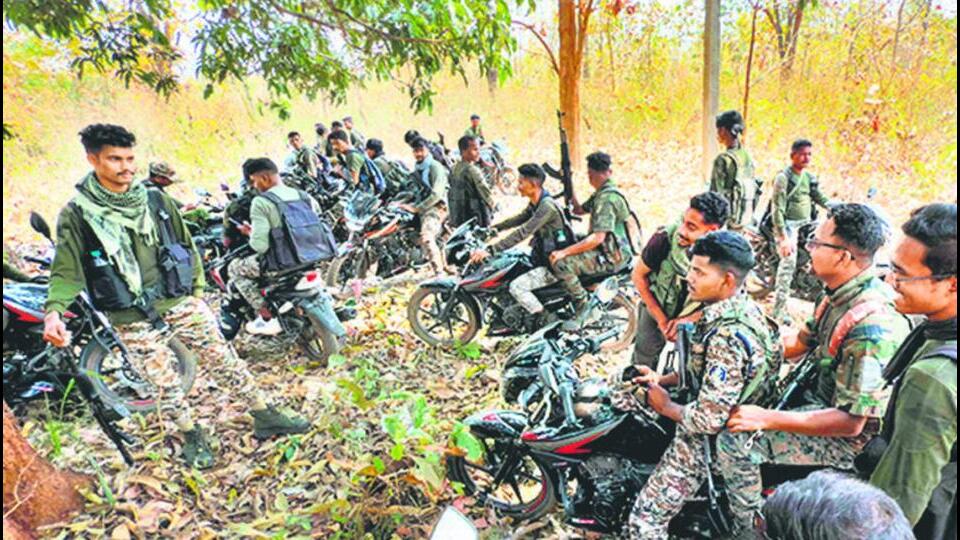
The cadres, including seven women, laid down arms before senior police and Central Reserve Police Force (CRPF) officers under the state’s “Poona Margem” (from rehabilitation to social reintegration) initiative, Sukma Superintendent of Police (SP) Kiran Chavan said.
The surrendered Maoists were active in the People’s Liberation Guerrilla Army (PLGA) battalion, South Bastar division, Maad division, and the Andhra–Odisha Border (AOB) division, and were involved in several incidents of violence in Abujhmad, Sukma, and adjoining areas of Odisha, he said.
Among them, Lali alias Muchaki Aayte Lakhmu (35), a company party committee member, carried a reward of ₹10 lakh. She was allegedly involved in multiple major incidents, including a 2017 IED blast on the Koraput road in Odisha that killed 14 security personnel.
According to the police, the cadres said they were influenced by sustained security operations as well as the state government’s surrender and rehabilitation policy.
Four other key Maoists—Hemla Lakhma (41), Aasmita alias Kamlu Sanni (20), Rambati alias Padam Jogi (21), and Sundam Pale (20)—each carried a bounty of ₹8 lakh. Lakhma was allegedly involved in the 2020 Minpa ambush in Sukma in which 17 security personnel were killed.
Among the remaining surrendered Maoists, three carried rewards of ₹5 lakh each, one ₹3 lakh, one ₹2 lakh, and three carried bounties of ₹1 lakh each, police said.
All the surrendered Maoists were provided immediate assistance of ₹50,000 each and will be rehabilitated further as per the government’s policy.
-kW0H-U20214218012MgB-250x250%40HT-Web.jpg)


