
 E-Paper



5 more bodies of Maoists found in Bijapur’s Indravati Park amid ongoing operation
This comes after the security forces killed top Maoist leaders Sudhakar and Bhaskar in the Indravati National Park area in Bijapur on Thursday

 Prefer HTon Google


Raipur: At least five more bodies of suspected Maoists, including those of two women, were recovered from the forests of Indravati National Park in Chhattisgarh’s Bijapur district on Saturday morning, amid an ongoing anti-Maoist operation.
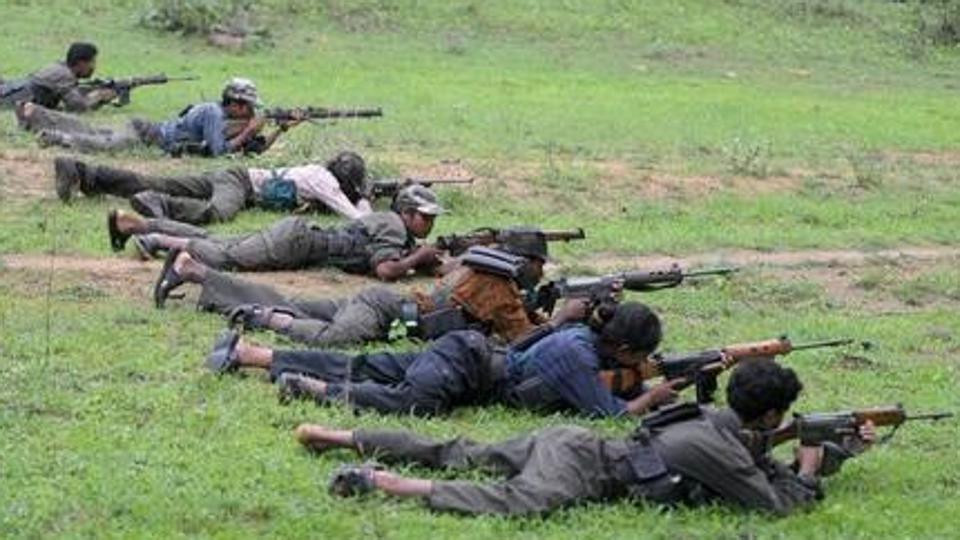
This comes after the security forces killed senior leader of the banned Communist Party of India (Maoist) and central committee member Sudhakar in an encounter in the forests of Bijapur, and top Maoist leader Bhaskar in the Indravati National Park area in Bijapur on Thursday.
“A total of seven Maoists, including two senior leaders — Central Committee member Sudhakar alias Gautam and Telangana State Committee member Mailarapu Adelu alias Bhaskar — have been killed during a major three-day-long anti-Naxal operation,” a statement issued by the police on Saturday said.
The security forces have reportedly intensified their combing and area domination operations from Thursday onwards in key Maoist stronghold areas bordering Telangana.
Also Read: Who was senior Maoist leader Sudhakar killed in Bijapur encounter?
“On Friday, security personnel recovered the body of Sudhakar, a senior Central Committee member and a top-ranking ideologue of the CPI (Maoist). The following day, on Friday, Mailarapu Adelu alias Bhaskar — a prominent Maoist leader from Telangana — was found dead at a nearby location. He was reportedly the secretary of the Mancherial-Komarambheem Division and carried a reward of ₹45 lakh ( ₹25 lakh from Chhattisgarh and ₹20 lakh from Telangana),” the statement read.
The statement added that operations during the intervening night of Friday and Saturday led to the recovery of five more bodies, including those of two women, whose identities are yet to be confirmed. “All of them are active cadres of the outlawed CPI (Maoist). Identification of the deceased is underway,” a police officer said.
Also Read: The inside story of how senior Maoist leader Basavaraju was killed in Abujmad
A cache of arms and ammunition, including two AK-47 rifles and explosive material, was seized from the encounter sites, according to the statement.
Some security personnel sustained minor injuries due to snake bites, honeybee stings, dehydration, and other field-related causes, but all injured are reported to be stable and under medical care.
“The operation — part of an intensified crackdown on Maoist presence in the National Park area — continues with ground forces conducting search and flush-out operations across the surrounding forest terrain,” the police statement added.
Meanwhile, civil rights activists and the Telangana civil rights association on Saturday alleged that Chhattisgarh police had taken Maoist leaders into custody in Bijapur and were killing them one by one in staged encounters. Police, however, dismissed the allegations, stating that all actions were lawful and carried out in strict accordance with operational protocols.
-kW0H-U20214218012MgB-250x250%40HT-Web.jpg)


