
 E-Paper



78 Maoist cadres, including 43 women, surrender in Chhattisgarh’s Bastar region
Each surrendered cadre in Sukma was provided immediate assistance of ₹50,000 and will be rehabilitated as per the government’s policy

 Prefer HTon Google


Raipur: At least 78 Maoist cadres, including 43 women, surrendered in three districts of Chhattisgarh’s Bastar region on Wednesday, police said.
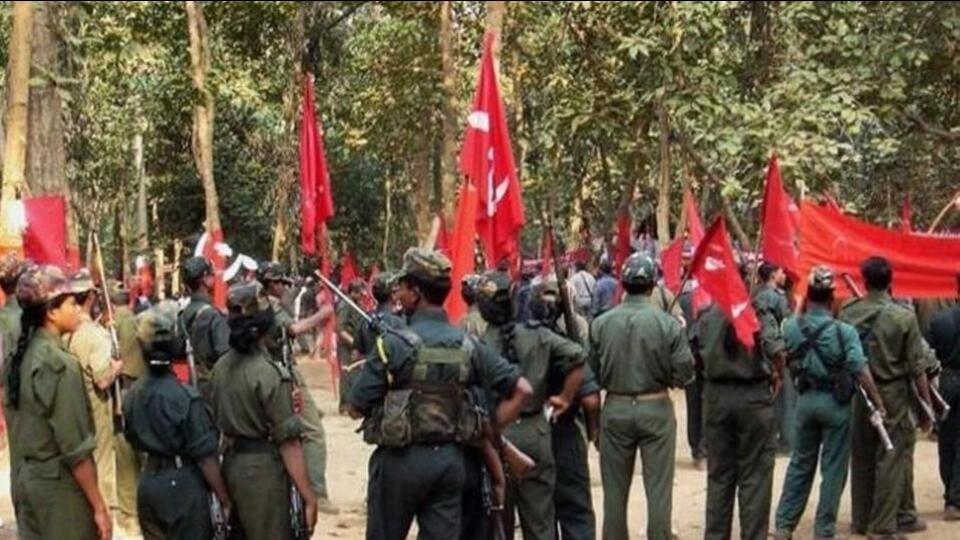
The development follows Tuesday’s mass surrender by senior Maoist leader Mallojula Venugopal Rao alias Bhupathi and 60 other cadres in Maharashtra’s Gadchiroli district.
A police officer said that around 27 Maoists, including ten women, laid down their arms in Sukma district. Among them, 16 carried a collective bounty of ₹50 lakh. “Among those who surrendered in Sukma was Oyam Lakhmu (53), a member of the People’s Liberation Guerrilla Army (PLGA) Battalion No. 1, carrying a reward of ₹10 lakh. Three others — Madvi Bhima (18), a member of a military platoon of PLGA Battalion No. 1, and Sunita alias Kawasi Somdi (24) and Sodi Mase (22), both members of Regional Military Company No. 2 — carried bounties of ₹8 lakh each. A cadre carrying a reward of ₹3 lakh, two others with ₹2 lakh bounty each, and nine others ₹1 lakh each were also among those who surrendered,” the officer said.
Sukma superintendent of police (SP) Kiran Chavan said, “In Sukma, the Maoists surrendered before senior police and Central Reserve Police Force (CRPF) officers, citing disappointment with the ‘hollow’ Maoist ideology, atrocities committed by Naxalites on innocent tribals, and the growing presence of security forces.”
Each surrendered cadre in Sukma was provided immediate assistance of ₹50,000 and will be rehabilitated as per the government’s policy, Chavan added.
Around 50 Maoists, including two members of the Dandakaranya Special Zonal Committee and 32 women cadres, surrendered at a Border Security Force (BSF) camp in Kanker district.
“A group of Maoist cadres led by Rajman Mandavi and Raju Salam, both members of the Dandakaranya Special Zonal Committee, reached the Kamtera camp of BSF’s 40th Battalion under the Koylaibeda police station limits in Kanker to surrender,” the officer said, adding that 39 weapons, including seven AK-47 rifles, two Self-Loading Rifles, four INSAS rifles, an INSAS light machine gun (LMG), and a Sten gun, were deposited.
The surrendered cadres include five divisional committee members — Prasad Tadami, Heeralal Komra, Jugnu Kowachi, Narsingh Netam, and Nande (wife of Rajman Mandavi) — as well as 21 area committee members and 21 party members, he added.
In Kondagaon, a woman cadre identified as Geeta alias Kamli Salaam, an area committee member who served as commander of the tailor team under the East Bastar Division, also surrendered. She carried a reward of ₹5 lakh.
SP Chavan said that the cadres who surrendered were influenced by the state government’s Niyad Nellanar (Your Good Village) scheme, aimed at promoting development in remote areas, and by the new surrender and rehabilitation policy.
In a post on X, chief minister Vishnu Deo Sai said Maoism, which once challenged the country’s internal security, “is now collapsing on every front and is in its final stage.”
Sai said he was confident that under the guidance of Prime Minister Narendra Modi and union home minister Amit Shah, the government’s resolve to make India free from Maoist violence by March 31, 2026, would be achieved.
-kW0H-U20214218012MgB-250x250%40HT-Web.jpg)


