On Wednesday, the NDA pledged to spend Rs 1 lakh crore more on government salaries, perks and pension in line with the seventh Pay Commission’s recommendations. However, this led to junior employees threatening to go on strike, left non-IAS civil servants seething, and defence personnel certainly aren’t celebrating either.
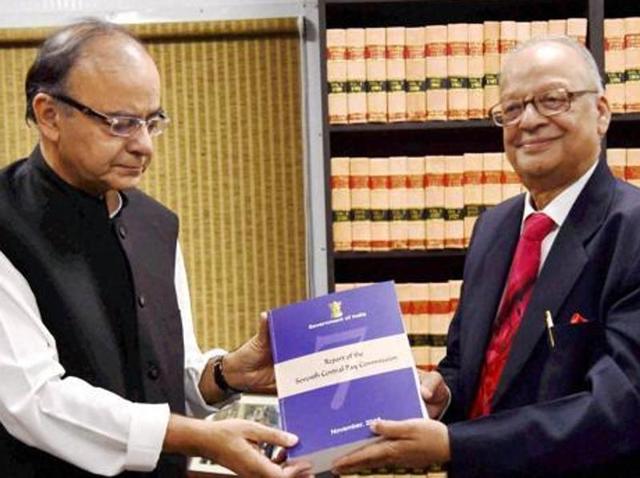
Within hours of the government’s decision, junior employees – who get the smallest hikes of 14% under the pay panel’s recommendations – announced their call to go on strike. The highest raise – approximately 25% – went to top civil servants, secretary to the government and the cabinet secretary.
“We had asked the government to improve upon the recommendations but it stuck to the panel’s recommendations... This is very disappointing,” said Shiva Gopal Mishra, convenor of the National Joint Council of Action that has representatives from federations of government employees. The council has called for an indefinite strike from July 11.
Read | Seventh pay panel: Centre clears big hike for staff to boost spending
The pay panel, and the Centre’s decision was driven by a study that concluded government employees at the lowest levels were paid a lot more than what a comparable job in the private sector fetches. For instance, a driver in the government gets a salary of over Rs 30,000. It costs less than half as much to hire a driver in the market.
{{/usCountry}}The pay panel, and the Centre’s decision was driven by a study that concluded government employees at the lowest levels were paid a lot more than what a comparable job in the private sector fetches. For instance, a driver in the government gets a salary of over Rs 30,000. It costs less than half as much to hire a driver in the market.
{{/usCountry}}“But why compare with the private sector. We are demanding that our salaries be at par with employees in public sector firms,” is Mishra’s argument.
Defence personnel, on the other hand, worry that the panel and the government diluted their parity vis-a-vis the civilian employees. Defence minister Manohar Parrikar earlier conceded that some of his suggestions had not been accepted. For one, defence officers complained that the rule for premier services, such as the IAS, that entitles officers to increments even if they have not been promoted had not been extended to them. Also, hardship allowances were tilted in favour of civilian officers who were paid more for serving in, say Leh, than the army officer serving at extreme places such as Siachen glacier.
Read | 7th pay panel: A good salary hike is half the job done
Non-IAS officers – who had come to believe that they were just inches away from ending the monopoly IAS officers have over key government posts – were unhappy too about the cabinet decision.
“All that we asked for was an equal opportunity to serve the government in senior positions... to remove the glass ceiling that blocks us from moving up the ladder,” Mishra said.
The provision could have enabled the government to cast a wider net to select the best officer for key posts.
A revenue service officer said the demand for parity with the IAS essentially seeks to ensure that the best officer is selected for each post rather than reserve them for the IAS only. Under the cabinet decision, for instance, the department of personnel and home ministry consider the panel’s recommendation for parity with the Indian Police Service.
But it isn’t that all government servants are sulking. Nobody will mind the extra money that will come with the salary in July.
At an individual level, an official said salaries in the government had improved over the last two decades and were enough to lead a comfortable lifestyle.
In 2007, a year before a pay hike, a survey of government employees for the sixth pay commission revealed that half of them did not mind the lower salary and counted their association with the government as a significant non-monetary benefit.
Curious decision
Some of the resentment among employees may have to do with expectations fuelled by the generous pay hikes in 2008 when the government gave more than the panel recommended.
The government’s curious decision to implement the seventh pay commission’s report in a piecemeal manner does not help either. Nobody really knows the extent of their own pay hikes. As Justice AK Mathur, who headed the pay panel, put it, the increase on account of allowances was a significant proportion of the pay slips.
The cabinet’s decision only dealt with quantum of increase in the basic pay and pension part of the report. For allowances and pension related issues, it set up four committees, and gave departments concerned a free hand to implement the remaining recommendations on “administrative issues” or quietly chuck them into the bin.
There is no clarity yet on why this was done.
The finance ministry insists the government only wanted to give employees the benefit of the hike as soon as possible. But if the sixth pay commission could be processed in five months, why does the government believe it is more efficient not do the same now?