E-Paper



‘Adverse event’ won’t delay Serum vaccine plan: Centre
The remarks were made by Union health secretary Rajesh Bhushan and Indian Council of Medical Research head Dr Balram Bhargava at a weekly government briefing on Covid-19.

 Prefer HTon Google


Initial assessments after a volunteer’s illness suggested the trial of the Oxford-AstraZeneca vaccine did not need to be halted and the incident will not affect the time lines for the emergency approval process in the country, top officials said on Tuesday — the first reaction from the government on a controversy that had appeared to dampen hopes for an early coronavirus inoculation.
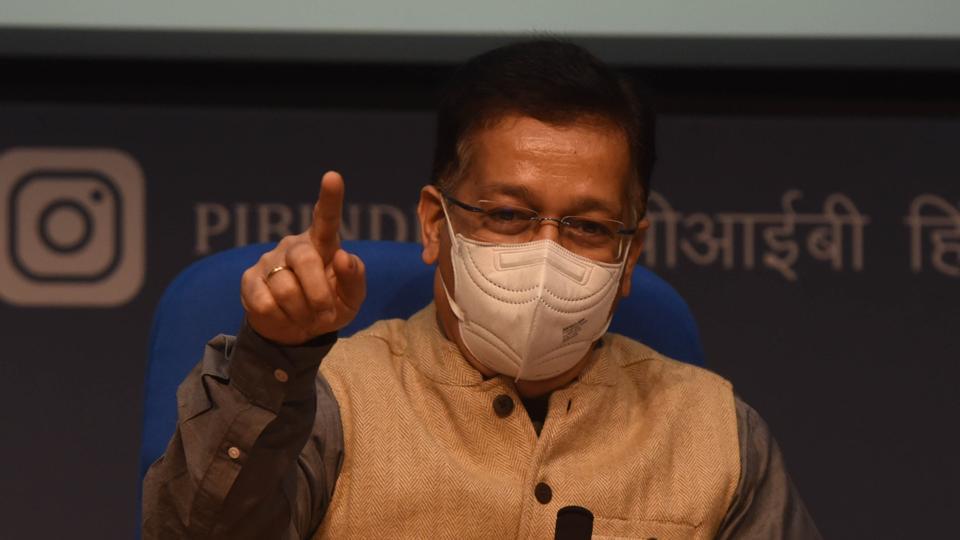
The remarks were made by Union health secretary Rajesh Bhushan and Indian Council of Medical Research head Dr Balram Bhargava at a weekly government briefing on Covid-19.
The officials also indicated that the country may not need to vaccinate all of India’s population to contain the spread of the disease. “I just want to make this clear that the government has never spoken about vaccinating the entire country. It’s important that we discuss such scientific issues, based on factual information only,” secretary Bhushan said while responding to a question on when a vaccine can be provided to everyone in the country.
Explaining the remark, Bhargava, the ICMR director general, said vaccinating the entire population may not be required if “critical mass of people” is vaccinated and the chain of virus transmission is broken.
Earlier in the briefing, both the officials addressed the controversy triggered by allegations by a Chennai-based man that the clinical trials – sponsored by Serum Institute of India, which is manufacturing the Oxford-AstraZeneca vaccine – left him with serious neurological symptoms.
The Oxford-AstraZeneca vaccine candidate is largely believed to be the first that could be cleared for use among people, with an emergency approval expected in the next couple of months. India is targeting shots for 250-300 million health care workers and essential services staff in its first phase of vaccinations, which it targets to be over by June, 2021.
“This event will not affect timelines in any manner whatsoever. But since there is now a court case, so we will not comment on specifics relating to the case,” Bhushan said, before enumerating five safeguards that are a part of clinical trials in India.
These, according to him, include monitoring by two independent groups of experts, a process of informed consent and detailed vetting of data and review of such incidents by India’s regulators.
“The drugs controller has the authority to not allow vaccine trial to proceed to the next level if the data produces a doubt regarding the vaccine candidate. Currently, Serum Institute’s Covid-19 vaccine candidate has entered the phase 3 stage of the clubbed phase 2/3 trials after receiving necessary approvals post review of all relevant documents. Similarly, Bharat Biotech’s vaccine candidate has also entered the phase 3 clinical trial stage after review of all data they submitted,” said Bhushan.
The volunteer who took ill has sued SII for ₹5 crore in damages, drawing a legal notice by the Pune-based vaccine maker seeking ₹100 crore. SII issued a new statement on Tuesday, reiterating the vaccine was safe and produced an immune response and said that its notice was meant to protect the company against attempts to malign it.
Adverse effects, as they are referred to technically, are when trial volunteers develop any serious illness following an inoculation and during the period for which they need to be monitored – usually, this is two months. In this case, the side effects experienced by the volunteer has been said to not have been connected to the vaccine – although the detailed data is being studied.
“All serious adverse events do not need to be informed to every participant. Let us be very clear that many serious adverse events are coincidental. In fact, that is more often the case than causally related serious adverse events, for which, of course, information must be shared,” said Dr Gagandeep Kang, one of the prominent researchers in the field of vaccines in India.
“A trial that we did for illustration, we had 1,462 serious adverse events of which three were considered possibly related (and none of the three were hospitalized), with similar serious adverse events rate in intervention and placebo recipients.”