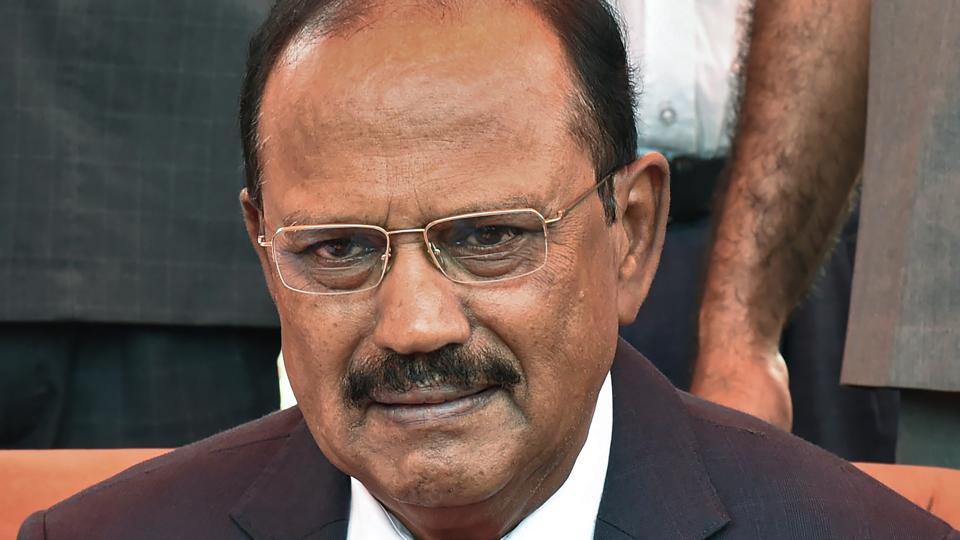
The security situation in Afghanistan, terrorism emanating from that country and the scourge in general, countering the threat of radicalisation, and improving connectivity with Central Asian states will top the agenda of the inaugural meeting between national security adviser Ajit Doval and his counterparts from Kazakhstan, Kyrgyzstan, Tajikistan and Uzbekistan, people familiar with the matter said on the eve of the summit.
The fifth Central Asian country, Turkmenistan, will be represented by its ambassador to India.
The maiden one-day NSA level meet on Tuesday comes on the back of the first summit in January 2022 between Prime Minister Narendra Modi and the presidents of Kazakhstan, Kyrgyzstan, Tajikistan, Turkmenistan and Uzbekistan. The developments reflect India’s growing engagement with Central Asia, which New Delhi perceives as part of its extended neighbourhood.
“The Afghanistan security situation and the evolving dynamics there will figure in the talks. India and the Central Asian countries have shared interests in peace and security in that region. Central Asian countries that share land borders with Afghanistan have been at the receiving end after last year’s events,” said one of the officials, referring to the Taliban’s takeover of the country in mid-August 2021. Tajikistan, Uzbekistan and Turkmenistan share land borders with Afghanistan.
The tactics and techniques used by different terror outfits, including their actions in cyberspace, are a shared concern between India and Central Asia and will up for discussions, HT has learnt.
{{/usCountry}}The tactics and techniques used by different terror outfits, including their actions in cyberspace, are a shared concern between India and Central Asia and will up for discussions, HT has learnt.
{{/usCountry}}Improving connectivity with the Central Asian countries, including the importance of Iran’s Chabahar port, is also on the agenda, the official said, seeking anonymity. “Integrating Chabahar will the International North South Transport Corridor (INSTC, a 7,200km multimode route spanning 13 countries) and other alternatives for improving connectivity with Central Asia will be discussed,” he added.
Chabahar port, where an Indian state-run firm operates a terminal, is a key part of India’s plans to enhance connectivity to Afghanistan and the Central Asian states. India believes improving connectivity with the region will not only boost trade and commerce, but also strengthen people-to-people links.
“We regard the Central Asian countries as the heart of Asia and the Shanghai Cooperation Organisation (SCO). It is important to take forward our cooperation in a comprehensive manner,” the official said. India is also marking the 30th anniversary of establishment of diplomatic ties with the Central Asian nations.
India and the Central Asian states decided at their first summit in January to create a joint working group for cooperation on Afghanistan and an institutionalised framework for collaboration in diverse areas ranging from connectivity to security.
Modi had then listed the summit’s three main objectives – to make it clear that mutual cooperation between India and Central Asia is essential for regional security and prosperity, to create an effective structure for cooperation, and to create an ambitious road map for future collaboration.
The summit was organised virtually as the leaders of the Central Asian states were unable to attend India’s Republic Day celebrations on January 26 because of a surge in Covid-19 infections. The five presidents were invited to be chief guests at the event, though no formal announcement was made by any of the countries.
India has sharpened it focus on the Central Asian states both to counter China’s growing presence in the region and to strengthen cooperation on Afghanistan following the Taliban takeover of that country.