Army chief General Bipin Rawat is scheduled to meet National Security Advisor (NSA) Ajit Doval this week to discuss military measures to keep the 3,488-kilometre-long Line of Actual Control (LAC) with China incident-free, following up on one of the key decisions of the informal summit between leaders of the two countries at Wuhan last week.
According to people familiar with the matter, who asked not to be identified, that may mean less aggressive patrolling, albeit without lowering the guard.
They added that the Chinese military is expected to do the same.
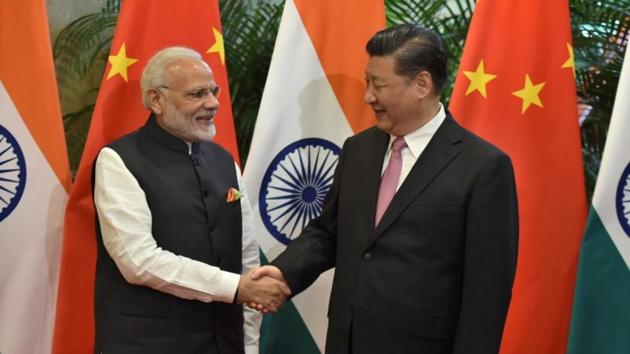
The move comes after a successful Wuhan summit, where both Prime Minister Narendra Modi and President Xi Jinping issued strategic guidance to their respective militaries to build trust and mutual understanding.
People familiar with the matter said that General Rawat informally discussed the ways and means to maintain a tranquil border with China with his corps commanders over the weekend with the dictum of ‘trust, but verify’. Special measures on how to enforce and further build on existing confidence-building measures with the Peoples Liberation Army (PLA) on equal security footing will be discussed with NSA Doval this week with a possible meeting later on between the Army chief and Modi.
The meeting between NSA Doval and General Rawat is scheduled for May 2.
{{/usCountry}}The meeting between NSA Doval and General Rawat is scheduled for May 2.
{{/usCountry}}With both Modi and Xi agreeing to the creation of an information-sharing mechanism to prevent incidents in border regions, the decks have now been cleared for a hotline between the Indian Director General Military Operations (DGMO) and a PLA three-star general handling overall operations in the PLA command headquarters in Beijing to ensure that no local army commander on either side displays undue aggression. There is also a distinct possibility of the two Special Representatives on India-China boundary talks, namely Ajit Doval and his Chinese counterpart Wang Yi, having access to strategic communications to prevent any flare-up between the two aspiring global powers, people familiar with the matter said
Although the Modi government is tight-lipped about the strategic guidance to military, Hindustan Times learns that steps are being contemplated to avoid any jostling, fisticuffs or stand-offs between patrols of the Indian Army and the PLA. One way to totally keep the LAC tranquil and without any possibility of flare-up is that army patrols on both sides do joint patrolling to achieve military objectives in disputed or sensitive areas along the LAC.
Explaining this, an army commander told HT on condition of anonymity that face-offs usually occur when either side does not allow the other to complete patrolling objectives. This is frequent in disputed or sensitive areas as there is no demarcated border and both armies are disciplined enough to follow instructions to the last military letter. The proposal suggested is that if PLA wants to complete its patrolling objective in a disputed area, then an Indian Army platoon will escort a small troop contingent to complete its military objectives and then escort it back. This ensures there is no aggression or unruly behavior on either side. The same holds true for Indian patrols, from the Trig Heights in Ladakh sector to the Dichu sector in Arunachal Pradesh.
According to Army commanders, this limited joint patrol concept has been experimented with in the Pangong Tso lake sector in eastern Ladakh and Fish Tail area in Arunachal Pradesh with successful results. The agreed disputed and sensitive areas along the LAC are: Trig Heights, Depsang bulge, Pangong Tso, Dumchele, Demchok, Chumar in Eastern Ladakh, Namkha Chu, Sumdrong Chu, Yangste, Asaphilla, Long Ju, Fish Tail I and II, Dichu in Arunachal Pradesh.
While the Indian Army is all for keeping the LAC peaceful and tranquil, it is wary of any aggressive local PLA commander with intentions of unilaterally changing the situation on the ground.