Air India will shift more of its Europe- and US-bound capacity to Mumbai from Delhi as the continued closure of Pakistani airspace hits its western-bound network harder from the national Capital, the airline’s chief executive officer (CEO) Tewolde Gebremariam said on Tuesday. He said a restructuring of the airline’s international network is part of efforts to regain overseas market share.
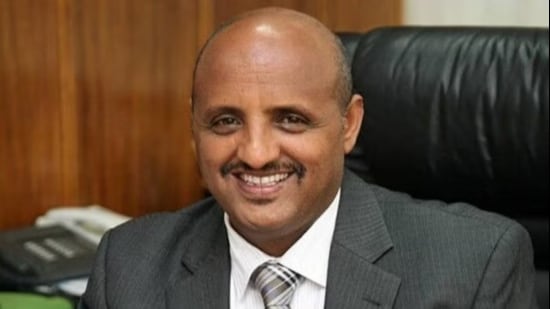
“Most of our network, unfortunately, in Europe and America, has been affected by the airspace closure,” Gebremariam said at the Aviation India and South Asia 2026 conference in New Delhi. Gebremariam said the airline would continue operating flights to Europe and the US from the Capital, but move a larger share of the capacity to Mumbai.
He said the airline is exploring Bengaluru as a third hub in addition to Delhi and Mumbai, as it looks to build its international connectivity. Gebremariam said India has the geographical advantage, a large and young population, a growing economy and a sizeable diaspora to emerge as a global aviation hub.
“India can establish itself as a global hub. The only one hub, multiple hubs,” he said. He added that cities such as Bengaluru and Hyderabad could also serve as international gateways.
Gebremariam acknowledged that profitability remained a concern and said the airline needed to bring down its cost per available seat kilometre, which was currently too high. He added the immediate priority is to improve the airline’s financial performance.
{{/usCountry}}Gebremariam acknowledged that profitability remained a concern and said the airline needed to bring down its cost per available seat kilometre, which was currently too high. He added the immediate priority is to improve the airline’s financial performance.
{{/usCountry}}Gebremariam said that Air India has set up a multi-functional team to work on costs. The airline is looking to improve efficiencies by bringing its full-service and low-cost operations, Air India and Air India Express, closer together in areas such as common corporate functions.
Air India wants to regain its share of international passenger traffic travelling to and from India, which Gebremariam said was business that rightfully belonged to the airline. “Our immediate focus is to regain market share from the competition on India to the rest of the world,” he said.
He added that the airline would simultaneously work on building connecting traffic through India. He said that such traffic currently accounts for around 10% of its business, expressing the ambition to increase that share over time.
The airline plans to grow its eastern and southeastern network largely through Delhi. “The eastern side and the southeastern side of our network are not affected by the airspace closure. So those growths will be by and large in Delhi. And Europe and America will be in Mumbai,” he said.
Gebremariam described the closure of Pakistani airspace as a specific disadvantage for Air India, unlike challenges such as high fuel prices and geopolitical tensions in West Asia, which affect carriers across the industry.
“We have unique problem of the airspace closure here in the Pakistan airspace closure. That is affecting us and our competitors, they are not affected by the same problem,” he said, describing these challenges as short-term headwinds the airline needs to navigate.
As part of its longer-term expansion plans, Air India is looking to increase its order for wide-body aircraft.