The Indian government will have an opportunity to highlight its position on the country’s new citizenship law and discuss regional issues such as the situation in Afghanistan when external affairs minister S Jaishankar visits Germany and Belgium later this month.
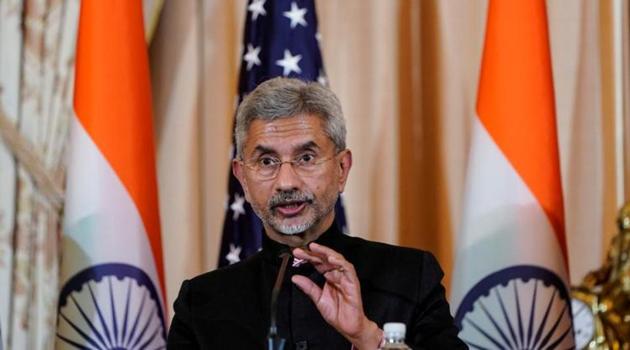
Jaishankar is expected to attend the Munich Security Conference, which will bring together top leaders from around the world during February 14-16, and to travel to Brussels for meetings with leaders of European Union (EU) states, people familiar with the developments said.
The trip to Brussels will also help prepare the ground for the India-EU Summit that is expected to be held on March 13, the people cited above said.
The Munich Security Conference, which bills itself as the world’s leading forum for debating global security policy, will be attended this year by Iran’s foreign minister Javad Zarif, Canada’s Prime Minister Justin Trudeau and other leaders. There will also be informal meetings between leaders at the conference.
Jaishankar is expected to be in Munich on February 15 and then travel to Brussels on February 17, the people said. “At both locations, there will be opportunities for the minister to engage with European and other leaders and to speak about various issues, including India’s position on the Citizenship (Amendment) Act (CAA),” said a person who declined to be named.
{{/usCountry}}Jaishankar is expected to be in Munich on February 15 and then travel to Brussels on February 17, the people said. “At both locations, there will be opportunities for the minister to engage with European and other leaders and to speak about various issues, including India’s position on the Citizenship (Amendment) Act (CAA),” said a person who declined to be named.
{{/usCountry}}The Munich meet will also allow India to highlight its concerns related to terrorism emanating from Pakistan and the need for concerted international efforts to combat the menace. The situation in Afghanistan and tensions in the Persian Gulf are also expected to figure at the meeting.
Several European countries have been critical of the CAA and the government’s handling of Kashmir, with German Chancellor Angela Merkel saying last year that the situation in the erstwhile state is not sustainable.
On January 29, the European Parliament debated a resolution critical of the CAA, which proposes to fast-track grant of citizenship to Hindu, Christian, Jain, Buddhist, Sikh and Parsi migrants from Afghanistan, Bangladesh and Pakistan, but put off a vote till a session to be held in March. The move was apparently the outcome of hectic lobbying by Indian diplomats in Brussels and also aimed at ensuring the India-EU Summit goes ahead without any hitches. India is expected to be represented at the summit by Prime Minister Narendra Modi.
While the government has insisted that the CAA is an internal matter, it has also offered to engage with the Members of the European Parliament (MEPs) who had sponsored and supported the resolution on the citizenship law so that they can get a full and accurate assessment of the facts.