
 E-Paper



Amid ‘freebies’ debate, Andhra defends welfare schemes in SC
In the affidavit, the YSRCP argued that it would not be appropriate to call the welfare initiatives of the government in areas, such as education, health, woman empowerment, agriculture, housing, poverty eradication and support to the old and needy, as freebies.

 Prefer HTon Google


Hyderabad
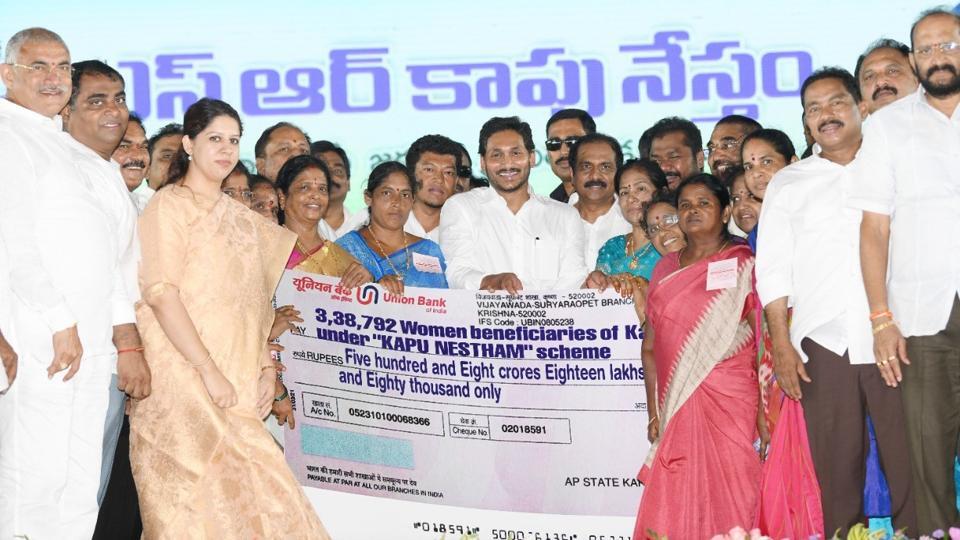
Amidst the ongoing debate over doling out of “freebies” by the state governments to the people for alleged electoral gains, the ruling YSR Congress party in Andhra Pradesh has strongly defended implementation of its welfare agenda through direct benefit transfer (DBT) schemes.
The YSRCP filed an affidavit on Wednesday in the Supreme Court which is hearing a petition filed by Bharatiya Janata Party leader Ashwini Kumar Upadhyay.
In the affidavit, the YSRCP argued that it would not be appropriate to call the welfare initiatives of the government in areas, such as education, health, woman empowerment, agriculture, housing, poverty eradication and support to the old and needy, as freebies.
Schemes like Nadu-Nedu (improvement of school infrastructure), Jaganna Amma Vodi (providing a cash incentive of ₹15,000 per year to mothers who send their children to schools), Gorumudda (upgraded midday meals scheme) and Vidya Deevena (fee reimbursement scheme) cannot be treated as freebies, it argued.
“Many such programmes are being implemented for various sections of people. With total disregard to the purpose or the impact of these programmes, they are reduced to being described as populist measures,” the YSRC said.
AP No. 2 in country in expenditure on freebies
The Centre is of the view that the growing preference to freebies is the potential source of fiscal risk to the states amidst decline in their own tax revenues and increase in expenditure.
In a study paper published in June, the Reserve Bank of India pointed out that the states have started delivering a portion of their subsidies in the form of freebies, such as provision of free electricity, free water and free public transportation, waiver of pending utility bills and farm loan waivers.
“They potentially undermine credit culture, distort prices through cross-subsidisation eroding incentives for private investment, and disincentivise work at the current wage rate leading to a drop in labour force participation,” it said.
According to the RBI report, Andhra Pradesh stands in the second position in the country, after Punjab, in spending money on “freebies.” Quoting figures from the state budgets for 2022-23, the RBI said the expenditure on freebies by Andhra Pradesh is 2.1% of the Gross State Domestic Product (GSDP), compared to 2.7% in Punjab. In terms of percentage of the states’ own tax revenues, the expenditures on freebies account for 30.3%, compared to 45.4% in Punjab.
The RBI also pointed out how the state government had resorted to off-budget borrowings, which it called “contingent liabilities”, to fund its welfare schemes or freebies. These are the loans raised by the state-owned entities, corporations and special purpose vehicles, for which the state government stands as guarantee. In the case of default by these entities and corporations, the state is liable to pay the principal and interest amounts.
While power sector accounts for almost 40% of these guarantees – the Andhra Pradesh government provides free power to farmers -- there are other sectors like irrigation and infrastructure development. The state government has floated the AP State Development Corporation and borrowed ₹18,500 crore from various public sector banks during 2020-21 by pledging its future tax revenues.
The RBI report says such off-budget borrowings went up to 9%of the GSDP in 2020 in Andhra Pradesh, compared to a national average of 4.5%.
During the recent monsoon session of Parliament, Union finance minister Nirmala Sitaraman said the total outstanding debt of Andhra Pradesh crossed ₹3.98 lakh crore by March 2022.
She also pointed out that the state governments, including AP, are resorting to off-budget borrowings by state public sector undertakings (PSUs), special purpose vehicles (SPVs) and other equivalent instruments. She said the Centre decided that such borrowings shall be considered as borrowings made by the state government itself.
Flawed system, says YSRC
YSRC general secretary V Vijay Sai Reddy, who sought to implead in the case on the freebies being heard by the Supreme Court, said just because the expenditure on welfare schemes was not tangible, it cannot be called a wasteful expenditure or a freebie.
“Expenditure on sectors, such as education, health, agriculture and poverty eradication, have a vast potential to create and strengthen long-term human capital and assets of vast socio-economic significance, though no tangible asset is created from it,” he said.
Special secretary (finance) in the chief minister’s office Duvvuri Krishna also clarified at a recent press conference that Andhra Pradesh had taken loans only by following the norms set by the central government. He said as per the provisional figures of the Comptroller and Auditor General (CAG) for 2021-22, the fiscal deficit and debt situation of the state was well within the limits.
Retired IAS officer and former Union finance secretary E A S Sarma also strongly opposed the argument of the Centre that the state was doling out “freebies” in the name of welfare.
“There is nothing wrong in giving free power supply to agriculture and crop loan waiver for farmers, because they contribute to the food security of the nation. So are the subsidies to various other poorer sections. These are insignificant compared to the subsidies and incentives being given to the corporates, who are only growing richer, resulting in severe disparities in the society,” Sarma said.


