Three people who previously recovered from Covid-19 were protected during a major outbreak of the disease onboard a fishing vessel that left from Seattle, US, according to a new study that offers the first confirmation that having antibodies are enough to prevent a second infection.
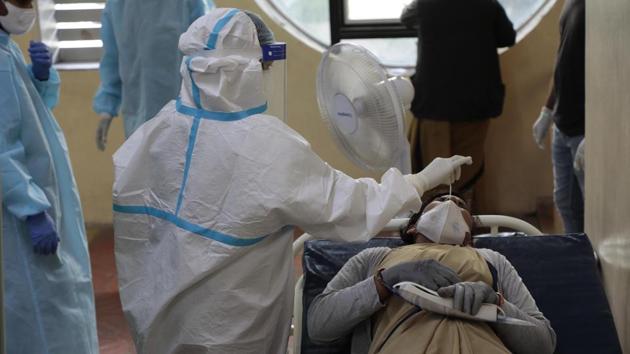
The findings were based on antibody (serological) as well as viral detection (reverse transcriptase-polymerase chain reaction, or RT-PCR) tests that were conducted before the vessel departed and upon its return. During its 18 days at sea, 104 of the 122 crew members contracted the virus from a single source.
“This suggests that neutralising antibodies are a correlate of protection for Sars-CoV-2, with obvious caveat that more study is needed since the N (number of people with antibodies) was small,” Alexander Greninger, the assistant director of the University of Washington (UW) Medicine Clinical Virology Laboratory and one of the authors of the study, said in an email response to HT.
Also read| Covid-19:What you need to know today
The study was posted on Friday on the preprint server medRxiv and the researchers were from UW as well as Seattle’s Fred Hutch Cancer Research Center,
{{/usCountry}}The study was posted on Friday on the preprint server medRxiv and the researchers were from UW as well as Seattle’s Fred Hutch Cancer Research Center,
{{/usCountry}}The findings are significant since they are the closest confirmation yet that the world’s main strategy of using vaccines to trigger immune response could indeed work to stop the pandemic. This addresses a complicated question of whether antibodies are enough to prevent disease, and ensure symptoms are mild, or have no effect at all.
Deriving such data is normally challenging since scientific ethics prohibit an intentional infection of a person with antibodies to check whether they are safe from the virus.
Also read: India eyes global front runners in Covid-19 vaccine plan
“A total of 104 individuals had an RT-PCR positive viral test... yielding an attack rate on board of 85.2%. Only three crewmembers tested seropositive prior to departure in initial serological screening and also had neutralizing and spike-reactive antibodies in follow-up assays... None of these crewmembers showed evidence of bona fide viral infection or experienced any symptoms during the outbreak,” the researchers said in their paper.

The analysis involved detailed follow-up tests for 50 days. The researchers also carried out a genomic analysis of 39 genomes from the outbreak and determined that the outbreak was caused by a single source.
Since in all 18 people did not contract the virus, the authors acknowledge a faint chance that the three crew members with antibodies may not have had close contact. “There is always a possibility that they were not exposed but [that is] unlikely given the high attack rate,” said Greninger.
The study also highlights how some antibody tests may be more reliable than others. In the initial serological sampling, six people appeared to have antibodies.
This difference is a result of the human body mounting a varied counterattack against a virus, and detecting these is a complicated process. For instance, in this case, the pre-departure samples were tested using the Abbott Architect kit that looks for antibodies to a specific protein of the virus known as the Nucleocapsid (N).
Once the researchers found out there was an outbreak on the vessel, they took leftover samples from the six people who had N protein antibodies and subjected them to more detailed antibody tests: particularly those that detected antibodies to a more intrinsic parts of the virus -- the spike protein.
Click here for complete coronavirus coverage
In this second round of testing, only three of the six had antibodies. “Therefore, we speculate that the [other] three individuals without neutralizing activity [in later tests] were false positives in the initial serological screening... However, they could have been in the early stages of active infection... Alternatively, they could have experienced a mild or asymptomatic infection,” the authors wrote.
This, the researchers said, makes it crucial to select the right kind of antibody test for serological analysis. “The key is neutralizing antibodies, which anti-RBD binding antibodies are a pretty good surrogate of. We also used blocking of binding assay for ACE2. So, yes, lots of tests here,” Greninger said.
RBD, or receptor binding domain, refers to the ‘spike’ protein the virus uses to infect a cell.
In all, there are close to 200 vaccines under development across the world. Of these, 29 are in clinical trial phases where they are being given to health volunteers to check for any adverse reaction and whether they are unsafe.
“Vaccines currently in development against SARS-CoV-2 have been shown to elicit levels of neutralizing antibodies comparable to those observed in naturally infected persons. However, the protective nature of both vaccine- and infection-elicited neutralizing antibodies in humans remains unproven, with animal models being used to make inferences about protection,” the authors write in the study. “Human challenge trials, which could provide rapid information about the protection conferred by neutralizing antibodies are controversial due to the severity and unknown long-term impacts of Sars-CoV-2 infection and concerns over ethical administration of such trials,” they note.
They add that this can be overcome by retrospective analyses of outbreak events, particularly those on confined shipping vessels. “The high population density and large degree of contact between people on ships contributes to a high attack rate,” they said, adding: “In some cases nearly all passengers will have 69 been exposed”.