The controversial anti-conversion bill will not be tabled during the monsoon session of the Goa assembly, which began on Monday, days after the state Cabinet cleared it, a ruling Bharatiya Janata Party (BJP) lawmaker said. The government decided against introducing the Goa Prohibition of Unlawful Conversion of Religion Bill after lawmakers, including from the BJP, met chief minister Pramod Sawant and opposed its introduction, he added.
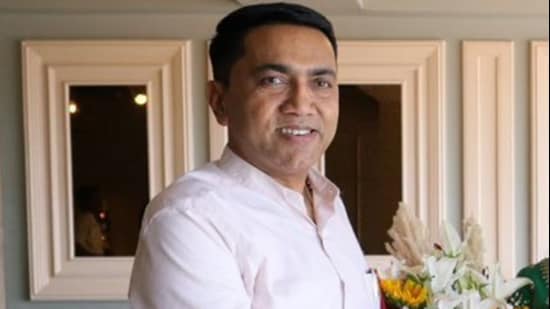
BJP lawmaker Michael Lobo said the government acted in haste in having the bill cleared in the Cabinet. He cited the meeting with Sawant and said it was decided there that it would not be introduced. “We need to study [the bill], and everyone’s views need to be taken into account. We need to know what the bill is all about. What is happening is wrong. Every person’s religious beliefs are important. There should be respect for all religions. Sooner or later there needs to be a discussion on what is good for Goa. Things are moving in the wrong direction,” Lobo said.
Independent legislator Aleixo Lourenço said he would oppose the legislation if introduced, even as it was agreed at the meeting with Sawant that the bill would not be introduced. He maintained there is no data to show a high number of religious conversions in Goa. “Our religious minority organisations are involved in helping the vulnerable sections of society. There is no evidence, nor have we heard that this has resulted in conversions.”
He emphasised Goa is a peace-loving state. “This is certainly not expected from the government. No doubt I supported this government, but this [bill] does not have my support,” Lourenço said. He added that the idea of having thought of such a bill for Goa is distasteful.
{{/usCountry}}He emphasised Goa is a peace-loving state. “This is certainly not expected from the government. No doubt I supported this government, but this [bill] does not have my support,” Lourenço said. He added that the idea of having thought of such a bill for Goa is distasteful.
{{/usCountry}}Also Read | Anti-conversion law: Maharashtra churches seek prayer consent forms from worshippers
Christians and Muslims make up over 35% of the population in Goa. Twelve of 28 states in India have anti-conversion laws.
The Goa Cabinet last week cleared the anti-conversion bill, proposing up to 14 years of imprisonment and outlawing conversion through force, coercion, undue influence, allurement, or marriage. It provides for up to 10 years’ imprisonment for offenders, including religious figures such as priests, karmkandis, and maulvis. The punishment could go up to 14 years of imprisonment if they unlawfully convert a person with a disability or mental illness, a woman, a minor, or a member of the Scheduled Caste or Scheduled Tribe community.
The bill says that those wishing to convert must file a declaration with the district magistrate stating they are doing so of their own will.
In July last year, Sawant pushed for an anti-conversion law in the assembly. He cited Uttar Pradesh’s anti-conversion law and so-called love jihad, a term right-wing groups use to describe an alleged Muslim conspiracy to woo Hindu women. Courts and the Union government do not officially recognise the term.
Also Read | Postpone implementation of state anti-conversion law, demand civil society groups
The Catholic Church and Catholic Association of Goa were among the groups that protested the decision to clear the anti-conversion bill, warning that the passage of such legislation posed a grave threat to communal harmony.
The Council of Social Justice and Peace (CSJP), the social arm of the Catholic Church in Goa, said that the proposed legislation risks irreparably damaging that precious inheritance by replacing mutual trust with suspicion, and social harmony with surveillance and fear.
It added that Goa must not import divisive legislation merely because similar laws have been enacted in BJP-governed states. Constitutional governance cannot be reduced to political bandwagoning, the CSJP said in a statement. It added that “its own Canon Law explicitly requires that an adult seeking baptism must do so freely and after proper instruction.”
In 2022, a Christian pastor was arrested twice in an alleged unlawful conversion case before a court quashed two cases against him and his wife after Goa Police admitted they had no evidence against them.
Also Read | UP varsities told to form anti-conversion cells
The neighbouring Maharashtra became the 12th state to notify an anti-conversion law. The controversial Maharashtra Freedom of Religion Act took effect after the state government published the legislation in its official gazette on July 30.
Civil rights groups have opposed anti-conversion laws as a violation of an individual’s right to freedom and personal privacy. They are seen as an attempt to curb interfaith marriages, particularly instances involving a Hindu woman marrying a non-Hindu man, where conversion to the latter’s faith may take place.