...
...
Next Story

Arun Jaitley clears major military reforms proposal

The reforms are based on a report by the Lt General (retired) DB Shekatkar committee, which made recommendations on enhancing the combat potential of India’s three armed forces, rationalising the defence budget, and improving the teeth-to-tail ratio.

Updated on: Mar 25, 2017, 07:33:11 IST
Hindustan Times, New Delhi | By
Prefer HTon Google
Advertisement

Union finance minister Arun Jaitley, who got the additional charge of the defence ministry a week ago, has given the green light to widespread military reforms.
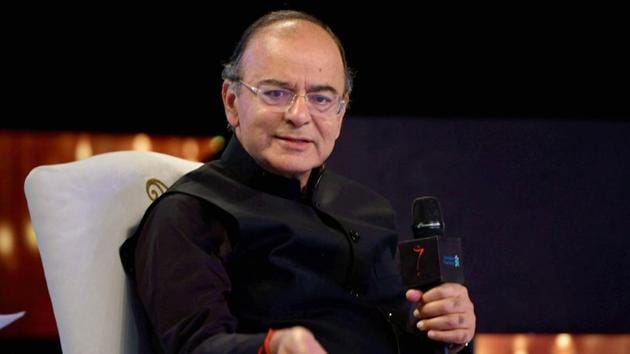
Finance minister Arun Jaitley at an award function in New Delhi on Thursday. (PTI)

The reforms are based on a report by the Lt General (retired) DB Shekatkar committee, which made recommendations on enhancing the combat potential of India’s three armed forces, rationalising the defence budget, and improving the teeth-to-tail ratio.

The committee set up by then defence minister Manohar Parrikar in 2015 submitted its report on December 21 last year.

Sources at the defence ministry headquarters in South Block said Jaitley reviewed on March 18 a presentation on a new strategic partner policy, plans to create a chief of defence staff (CDS) post, and restructuring of higher defence structures along with the Shekatkar committee report.

Two days later, he approved about 90 key recommendations of the Shekatkar committee.

“The Shekatkar committee had apparently exceeded its brief with some 200 recommendations. The defence ministry whittled it down to 120, of which some 90 were approved by Jaitley. The ministry expects all the proposals to be implemented in the next two years,” a senior official said.

The ball park figure of Rs 25,000 crore is expected to be saved if the committee’s proposals for rebalancing military expenditure are implemented.

The panel wants the military to move out of non-core areas such as the National Cadet Corps (NCC), remove duplicity among the three services, and make institutions such as the Defence Research and Development Organization (DRDO) and ordnance factory boards more accountable through project audits and by shelving outdated concepts.

“For instance, an entire Signals unit was tasked to listen to radio broadcasts from the 1962 war. This unit will be disbanded with the troopers redeployed into other tasks. The recommendations are not aimed at cutting jobs but making the military lean and thin,” the official said.

The Narendra Modi government is expected to clear soon the creation of a CDS post and the strategic partner policy, which will boost the “Make in India” campaign in the defence sector.

A major recommendation is that the defence budget should be 2.5% to 3% of the GDP. The committee called for redefining the revenue and capital heads in the budget.

In broad terms, revenue means money required to maintain the military, while capital is spent on acquisition and modernisation.

The army, with 1.3 million personnel, could get the major chunk of the budget — above navy that has around 55,000 men and women, and the air force, which employs around 150,000.

 
ABOUT THE AUTHOR
Shishir Gupta

Shishir Gupta is Executive Editor at Hindustan Times and one of India's top journalists covering national security, strategic affairs, foreign policy and geopolitics. Over the past three decades, he has extensively reported on India's military, diplomatic and security landscape, covering every major conflict and national security challenge, from the 1999 Kargil War and the 2020 East Ladakh standoff to Operation Sindoor in 2025. He has also covered major terror attacks, including the IC-814 hijacking, the 26/11 Mumbai attacks and the 2025 Pahalgam terror strike, along with numerous Pakistan-backed terrorist incidents in the Kashmir Valley and across India. He has reported on national and state elections for more than three decades. A recognised authority on strategic affairs, Gupta has covered India's nuclear programme since the Pokhran-II (Shakti series) tests in May 1998 and has written extensively on global nuclear issues, Indian diplomacy and the country's expanding global outreach. He has also reported widely on international conflicts and terrorism, with a special focus on the Indian subcontinent. Gupta has interviewed Prime Minister Narendra Modi more than four times, including Modi's first interview with the print media after becoming Prime Minister in May 2014. His other interviews include three with the Dalai Lama, as well as conversations with Benjamin Netanyahu, Amit Shah, Yogi Adityanath, S. Jaishankar, Nirmala Sitharaman and Piyush Goyal. He is the author of Indian Mujahideen: The Enemy Within (Hachette, 2011) and Himalayan Face-off: Chinese Assertion and Indian Riposte (Hachette, 2014). He was awarded the Chevening-Wolfson Joint Scholarship at Wolfson College, University of Cambridge, UK, in 1998 and participated in the International Visitor Leadership Program (IVLP) of the US State Department in 2006. He received the Ben Gurion Prize from Israel in 2011 and the K. Subrahmanyam Prize for Strategic Studies in 2015 from the Manohar Parrikar Institute for Defence Studies and Analyses (MP-IDSA). Since 2024, he has hosted Point Blank, Hindustan Times' weekly YouTube show on global geopolitics.

Get the latest India News, breaking headlines and real-time updates from across the country. Stay informed about politics, government policies, crime, weather and major national developments.
SHARE THIS ARTICLE ON
Hindustantimes wants to start sending you push notifications. Click allow to subscribe