
 E-Paper



As 6 Maoists surrender, govt to review plan to disband anti-LWE force
BJP MLA and state general secretary V Sunil Kumar questioned the motives and transparency of the surrender process


The surrender of six Maoists before chief minister Siddaramaiah in Bengaluru has led the Karnataka government to re-evaluate its anti-Maoist strategy. The government is contemplating disbanding or downsizing the Anti-Naxal Force (ANF), with a decision anticipated, following a high-level security review meeting.
Describing the surrender as a pivotal step toward making Karnataka a “Naxal-free” state, Siddaramaiah on Wednesday said, “We have taken a big step. A review meeting with our officers will decide whether to dissolve the ANF.”
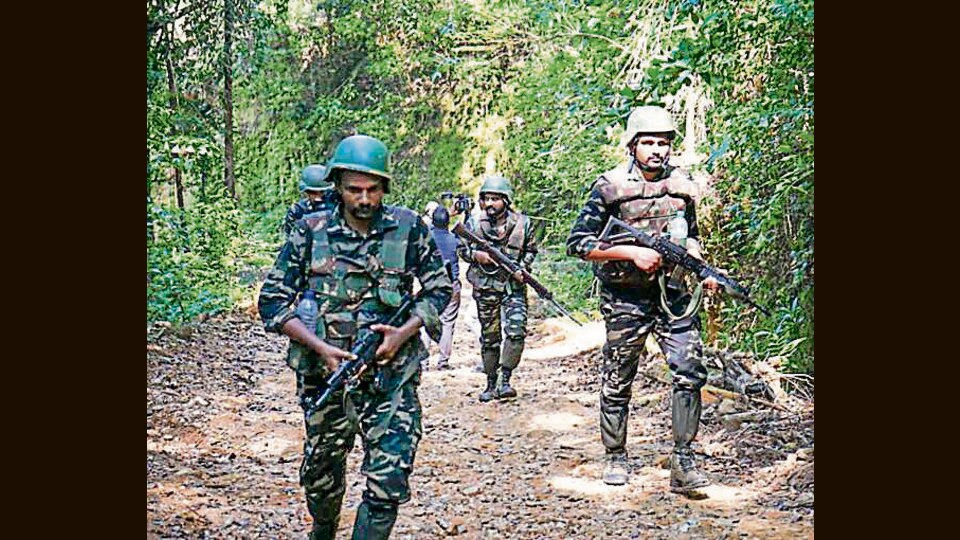
The ANF was established in 2005 in response to a surge in Maoist violence, including the killing of seven Karnataka State Reserve Police Force (KSRP) personnel in Pavagada, following the death of Maoist leader Saketh Rajan. Formed with personnel from the Special Task Force (STF) that successfully killed forest brigand Veerappan in 2004, the ANF was tasked with countering Maoist activity, particularly in the Western Ghats and the Karnataka-Kerala-Tamil Nadu tri-junction.
Headquartered at Karkala in Udupi district, the ANF operates with over 500 personnel across 15 camps. Over the years, its presence has been credited with curbing Maoist influence in the Malnad region.
The home minister confirmed the absence of active Maoists in Karnataka but acknowledged potential threats from neighbouring states such as Odisha and Kerala. “We will closely monitor any movement from these regions to prevent a resurgence of Naxal activities,” he said.
Despite a seven-year lull in Maoist activity within the state, senior police officials have expressed reservations about disbanding the ANF. “We can’t stop patrolling these areas because there are no Naxals. Maintaining our presence is crucial,” a senior officer said, adding that the force would likely oppose any move to dissolve it.
The government, however, is reportedly considering reducing the ANF’s strength, with plans to cut approximately 250 personnel and close six camps, a proposal expected to be discussed in the review meeting.
The surrendered Maoists were identified as Mundagaru Latha,Vanajakshi Balehole, Sundari Kutluru, Mareppa Aroli, Vasantha K, and N Jeesha. Police cited internal divisions and the recent encounter killing of their leader, Vikram Gowda, as factors influencing their decision.
The senior officer also shared audio recordings, allegedly of Gowda, which revealed his staunch opposition to surrender. “Surrender would mean betraying the souls of those who died fighting. We cannot fix the system by elections; we need to bring change through our own methods,” the voice said. Gowda’s death inNovember 2024near Peetabailu in Udupi district reportedly deepened fissures within the group, ultimately leading some members to lay down arms.
An officer involved in the operation claimed the ANF’s efforts were instrumental in facilitating the surrender. “The tape makes it clear that Gowda was against surrender and the surrender was possible due to the ANF’s operation that killed him,” he said.
Meanwhile, the Opposition continued to attack the government over the surrender. BJP MLA and state general secretary V Sunil Kumar on Saturday questioned the motives and transparency of the process. He described the surrender as a “stage-managed drama” and posed several questions to the Congress-led government. Kumar further demanded clarity on the state’s claim of being “Naxal-free”.
“How did the surrender happen so swiftly? Were their weapons handed over, as required by protocol? If not, where are the firearms now? Were they discarded, or are they being stored in hideouts?” Kumar asked. He also raised suspicions about Gowda’s encounter, suggesting the possibility of a tip-off from those orchestrating the surrender.
The Citizens’ Initiative for Peace (CIP), which played a vital role in mediating the surrender, urged the government to focus on rehabilitation and reintegration of the surrendered Maoists.
“These individuals have left the forests but have yet to fully reintegrate into society. The government must prioritise their release and rehabilitation,” CIP member Noor Sridhar said at a press conference. Sridhar also called for a judicial inquiry into Gowda’s encounter and sought cooperation with Kerala and Tamil Nadu to ensure a smooth transition for former Maoists.


