
 E-Paper



‘How can any kid use this?’: Dipke flags dirty toilets at govt school in his native Maharashtra village
The CJP convenor was in his native village in Hingoli for the flag hoisting ceremony on Independence Day and the launch of ‘School Thik Karo’ campaign.

 Prefer HTon Google


Cockroach Janta Party (CJP) founder Abhijeet Dipke on Saturday launched the 'School Thik Karo' campaign from his native village in Maharashtra’s Hingoli district, accusing the government of neglecting state-run schools and alleging that students from underprivileged families were bearing the brunt even after 80 years of independence.
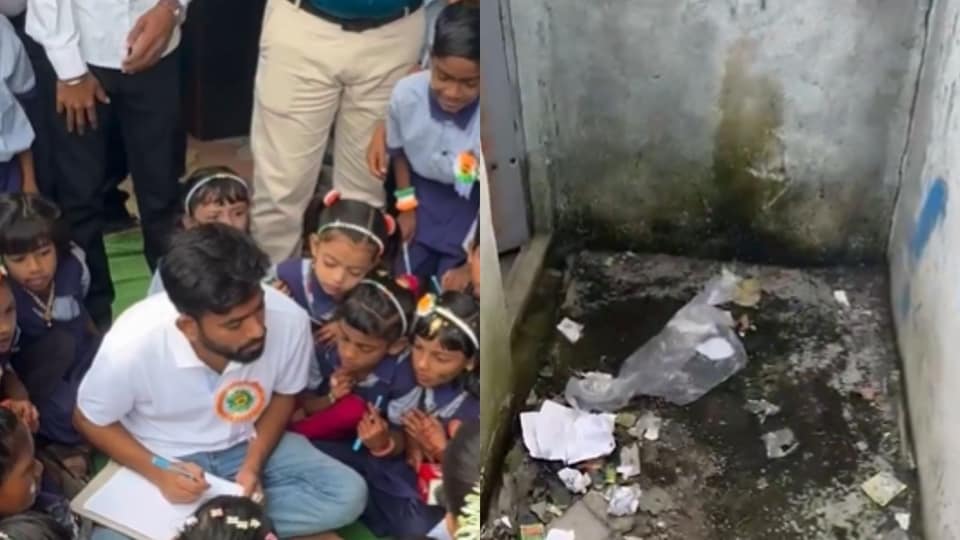
Dipke travelled 234 km from his residence in Chhatrapati Sambhajinagar, formerly Aurangabad, to Santuk Pimpri village to attend an Independence Day flag-hoisting ceremony. He later visited a district council school in the village to inspect its basic facilities.
“Even after 80 years of independence, our government schools still lack basic amenities,” Dipke said.
Sharing videos of the school’s condition, he listed the shortcomings: “No drinking water, no benches, dirty washrooms, broken windows, no water supply.”
In one of the videos, Dipke showed a broken window at the government school covered with banners featuring Deputy Chief Minister Eknath Shinde. He also showed the condition of the toilets and questioned whether such facilities were fit for children. “How is any kid supposed to use this toilet?” he asked, showing a commode covered with dirt and garbage.
Deep Dive

Another video showed Dipke sitting among students, asking them about the problems they faced and noting down their responses. He said he had spoken to the village head, who assured him that the issues would be addressed at the earliest.
“The head of my village has assured that the village panchayat will resolve all these issues within a week,” Dipke said, adding, “Change is possible when we come together and act.”
On August 10, Dipke announced the 'School Thik Karo' campaign to audit government-run schools in rural areas. Under the initiative, he urged parents to personally inspect schools in their villages, assess the availability of basic infrastructure and record videos highlighting deficiencies.
Dipke said parents could submit the videos, along with details of the shortcomings, to the CJP for follow-up.
As part of the campaign, he announced that he would visit his native village on August 15 to meet the village head and push for improvements at the government school.
He also said the party would recognise and encourage village heads who participate in the campaign and ensure that basic facilities are provided in government schools in their villages.
On Saturday, Dipke called the condition of government schools a serious concern and questioned whether students from underprivileged families were being denied equal access to quality education. He also demanded a cap on private school fees and announced that the CJP would launch a similar campaign against the poor condition of public hospitals.
CJP, born as a response to Chief Justice of India (CJI) Surya Kant’s “cockroach” remarks, was launched as a satirical outfit on social media by Dipke. It also led at Delhi’s Jantar Mantar that led to the resignation of Union education minister Dharmendra Pradhan on July 25.
On August 5, CJP announced that it would continue to act as a 'pressure group' and shift its focus to other issues faced by the public. Dipke also announced the 'Kya Bolti Public' campaign to understand people's concerns.


