The Assam government has directed all district commissioners and senior superintendents of police to ensure that ambulances and other emergency vehicles are not obstructed for VIP convoy movements, following a row over an ambulance being halted in Silchar to make way for chief minister Himanta Biswa Sarma’s convoy.
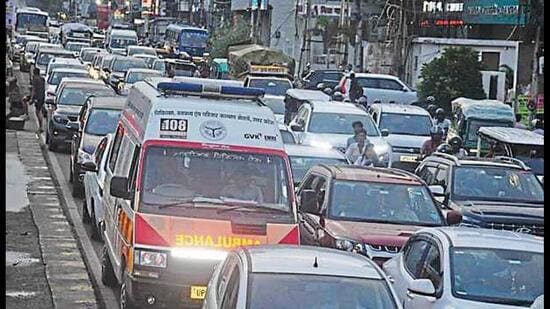
The directive, issued through a formal order by the Chief Minister’s Office (CMO), also states that the chief minister’s convoy may be paused, if required, to allow emergency vehicles to pass immediately.
Sarma had apologised on Wednesday to a patient and his family after the ambulance carrying them was stopped to make way for his convoy in Silchar, following which four police personnel were suspended for alleged negligence of duty.
“Today in Silchar, an ambulance was halted to make way for my convoy. This is unacceptable, and I apologise to the patient and their family,” he wrote on X.
The 42-year-old patient inside the halted ambulance was identified as Rasaraj Chakraborty from Sribhumi district. He died while undergoing treatment at Silchar Medical College and Hospital (SMCH) early on Thursday morning, after which many people on social media blamed the convoy halt for his death.
However, the SMCH principal and the deceased’s family said the death was not directly related to the traffic delay.
{{/usCountry}}However, the SMCH principal and the deceased’s family said the death was not directly related to the traffic delay.
{{/usCountry}}SMCH principal Abhijit Swami said Chakraborty was suffering from liver cirrhosis and described it as a chronic case. “He was suffering from cirrhosis and it was a chronic case. He died during treatment at around 6 am,” Dr Swami said.
The patient’s family said that while the delay was agonising, his condition was already critical, and they did not blame the halt for his death. “We were shifting him to Silchar and he was already critical. It is true that we were irritated by the halt of nearly half an hour yesterday, but he did not die due to this,” a family member said.
Addressing an election campaign meeting in Nagaon on Thursday, Sarma said that emergency care must always take precedence over VIP protocols. “The patient was suffering from liver issues and I do not believe that the ambulance halt was connected to the death, but I am strongly against this culture of halting emergency services to pass VIP convoys,” Sarma said.
He said he doesn’t support such VIP arrangements and blamed local district authorities for creating them.
“I do not support this. The DCs and SPs create such rules, and we have instructed them never to do it again,” he said.
The CMO order addressed to all DCs and SSPs emphasised that “under no circumstances should the movement of ambulances or other emergency vehicles be impeded on account of VIP carcade arrangements.”
The state government said clear directions had already been issued requiring emergency vehicles, particularly ambulances, fire tenders and police response units, to be given unhindered passage at all times. It added that traffic regulation during VIP movement must be managed without causing delays or obstruction to such vehicles, adding that “the carcade may be paused, if required, to facilitate their immediate passage.”
In the fresh direction, the state government has ordered that the size of the chief minister’s carcade be restricted strictly to the minimum number of vehicles required for security and essential operational purposes.
The order further directed that ministers, MLAs, officials and other dignitaries attending the same programme should not form part of or move alongside the Chief Minister’s carcade.
“Hon’ble Ministers, MLAs, officials and other dignitaries attending the same programme(s) as the Hon’ble Chief Minister shall not form part of, or move alongside, the Hon’ble Chief Minister’s carcade,” the order said.
It directed that such vehicles must either proceed in advance or travel separately, while prohibiting escort and pilot vehicles of accompanying dignitaries from merging into the main convoy. Any deviation from the directions, it added, would be viewed very seriously.