Delhi’s international airport on Thursday began a pilot programme to automate immigration clearance for passengers travelling out of the country through gates that will scrutinise them and their documents without any human intervention — a move the authorities hope will cut down travel time and address staffing issues.
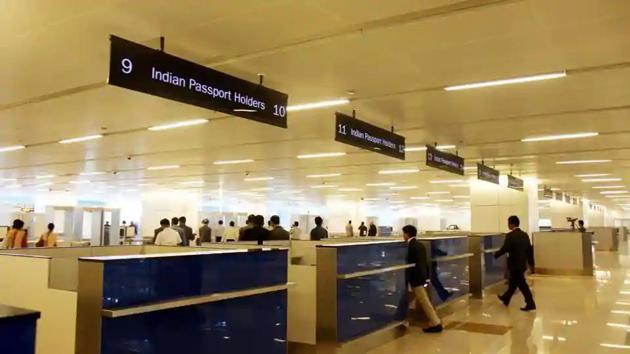
The facility, called the Trusted Travelers Program (TTP), has been designed on the lines of the US’s Global Entry Program, which allows pre-approved immigration clearance for low-risk travellers.
Experts, however, warned that without proper awareness, the facility could lead to congestion at the gates instead. An officer involved in the process said on condition of anonymity that to get immigration clearance at the “e-gates”, passengers will need to scan their passports and boarding passes themselves.
“After reading that the passport and the boarding pass are genuine, a camera attached to the scanner will click a picture of the passenger’s face. The passengers will also require recording their biometrics by scanning their fingerprints. Within seconds, this information will be matched with a database of the prohibited or blacklisted passengers. Once found cleared, the e-gates will open, allowing the passenger to proceed,” the officer said. An IB official, who asked not to be named, said: “Yes there is a plan to have technology-based immigration centres, which usually have long queues due to shortage of manpower in immigration.”
On Thursday, a team of officials from the ministry of home affairs visited the Indira Gandhi International Airport, where four such e-gates have been installed on a trial basis for three months. Another officer said the initiative will be made fully operational in three phases.
{{/usCountry}}On Thursday, a team of officials from the ministry of home affairs visited the Indira Gandhi International Airport, where four such e-gates have been installed on a trial basis for three months. Another officer said the initiative will be made fully operational in three phases.
{{/usCountry}}In the first phase, the e-gates will be used by diplomats, government officials and foreign dignitaries. In the second phase, it will be made available for all Indian passengers, and in the third, foreign passengers will be able to use the facility. The first phase is likely to begin by March 2021, the official added.
On average, the immigration clearance process currently takes about 1.5 minutes for a passenger at counters staffed by immigration officials at the Delhi airport. “This is the time taken at the counter, not inclusive of the time taken in the queue. With the e-gates in place, as manual intervention will be zero, a passenger will be able to gain immigration clearance within 30-40 seconds. Initially, there will be staff present to assist the passengers in the process,” the officer said. The passengers’ data will also be recorded with the bureau of immigration for future usage, he added.
However, aviation expert Mark D Martin said the concept works well at airports in Singapore, Dubai and in European countries. He added that e-gates for India at this juncture is premature. “E-Gate is excellent for frequent flyers and airline crew but offering such a service to a country that has a large expat worker diaspora will be a handing nightmare, with the clearance time exceeding more than 10 minutes per passenger...,” Martin said.